
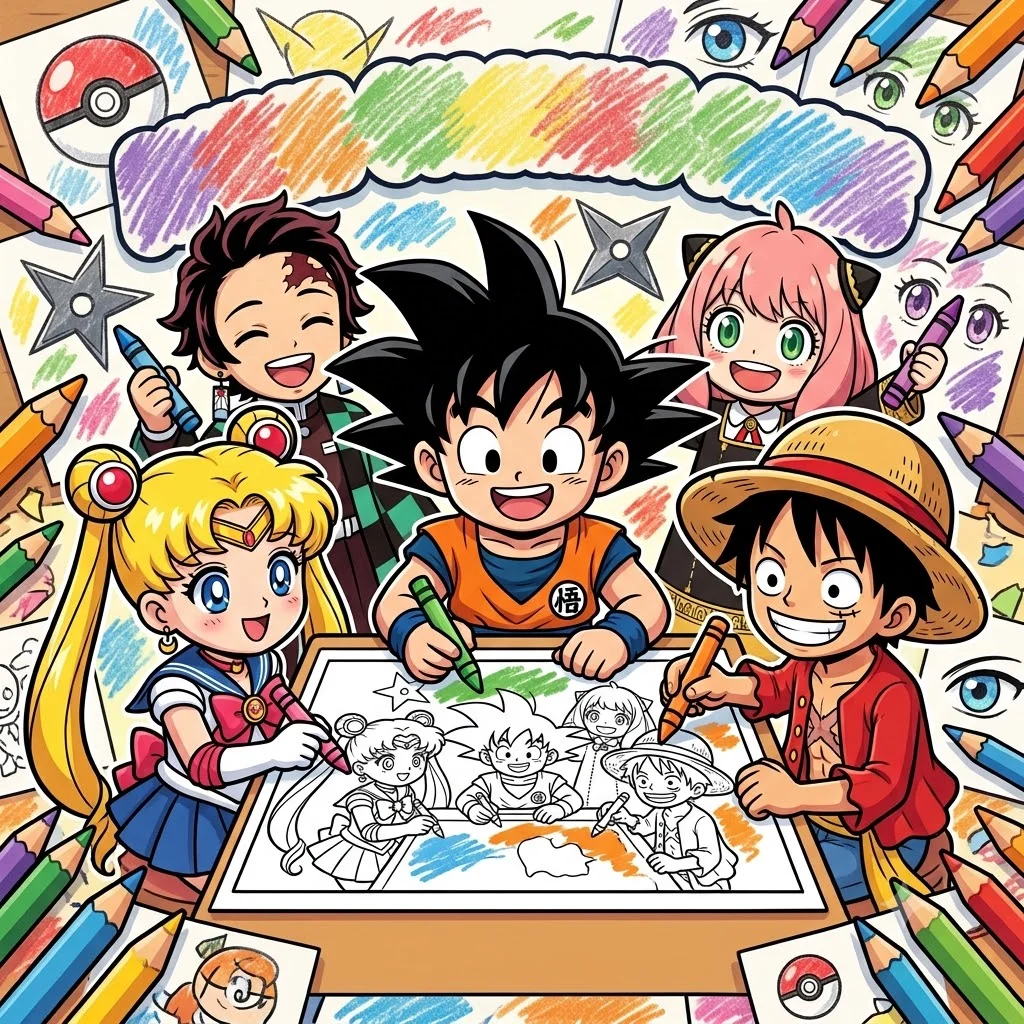
Stop smudging soft gradients across anime faces. The fastest way to ruin a stack of anime coloring pages is treating a Japanese character like a Western oil portrait with smoky, blended cheek transitions. Because anime character design relies on simplified facial planes, scrubbing three shades of peach and gray together just makes your hero look bruised. Colorists at studios like Ufotable, MAPPA, and Kyoto Animation build crisp dimension by pairing flat base washes with razor-sharp two-tone shadows and unpainted white highlight ribbons.
Five Distinct Anime Styles From Cozy Chibi Mascots to Shonen Battle Frames
Half the frustration beginners experience with anime printables starts before a single marker cap comes off. Search engines routinely mix true animation-style line art with raw manga comic scans that are already covered in heavy black crosshatching and gray Ben-Day screentone dots.
When we curate our master library of printable coloring pages for character fans and classroom art clubs, we strip out muddy greyscale comic scans and sort clean Douga (production line art) sheets into five distinct sub-genres. Knowing which style sits on your desk tells you immediately whether to grab broad brush markers or needle-sharp colored pencils.
- Pocket-Sized Chibi and Kawaii Mascots: Drawn with two-head-tall proportions, oversized eyes, and 8 to 14 generous shapes that pair effortlessly with our cute and easy coloring pages for a stress-free fifteen-minute marker session.
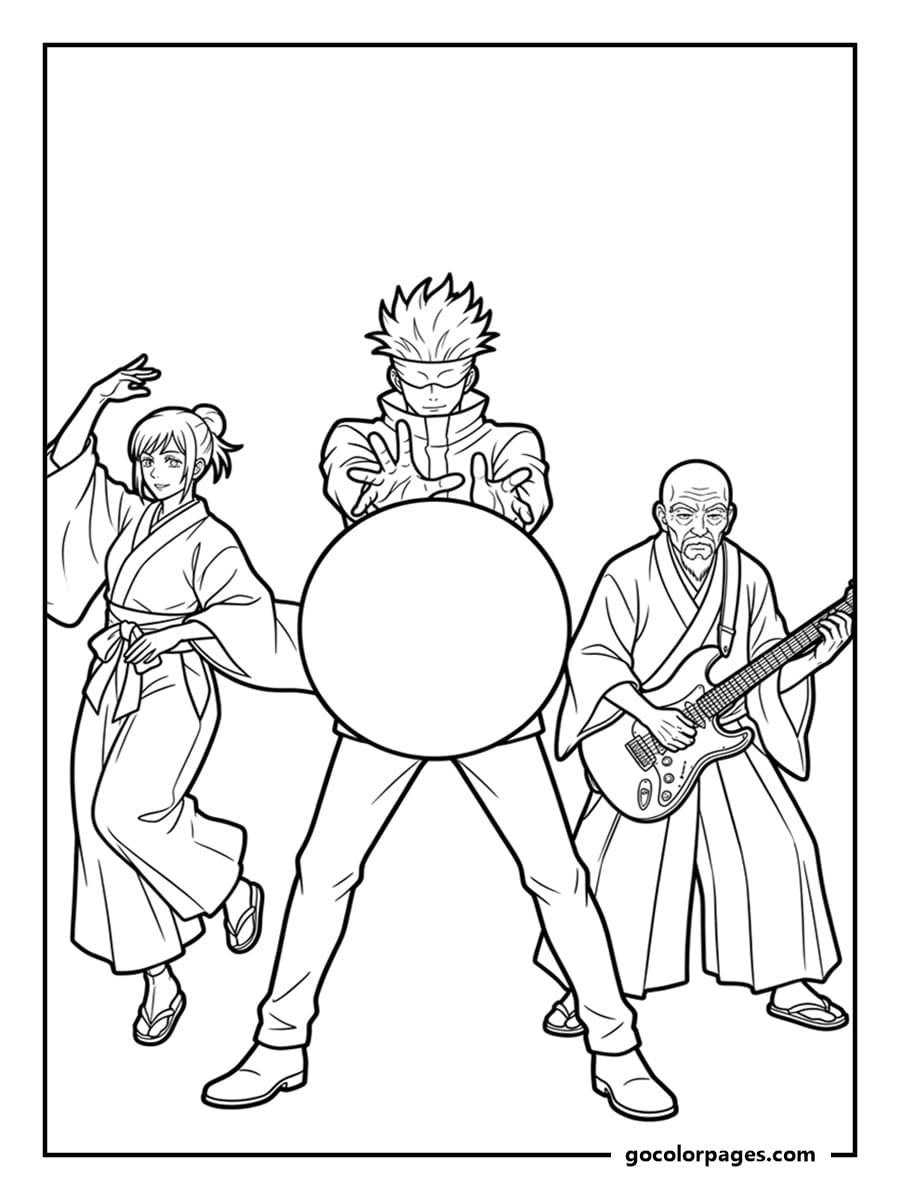
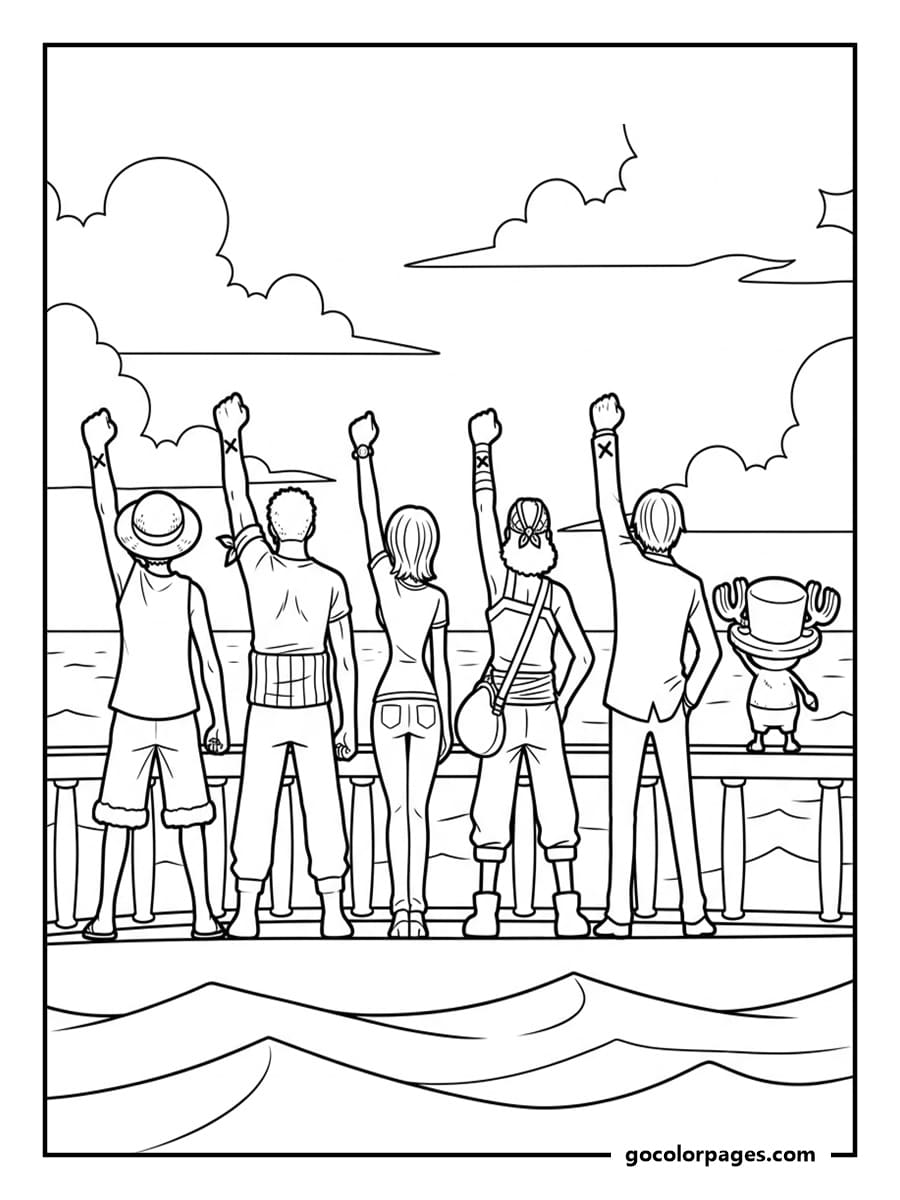
- Shonen Action Heroes and Elemental Battle Poses: High-energy martial artists, ninja squads, and swordfighters frozen mid-leap with foreshortened fists and spiky hair a perennial favorite inside our printable coloring pages for kids for ages seven to twelve.
- Shojo Romance, Magical Girls, and Flowing Ribbons: Expressive character portraits featuring multi-layered eyelashes, star-dusted irises, fluttering school skirts, and botanical frames that reward soft pastel layering.
- Cozy Slice-of-Life Cafes and Studio Ghibli Inspired Scenery: Steaming ramen stalls, rainy Tokyo train platforms, and cloud-draped summer hillsides where glowing lanterns, food textures, and lush foliage take center stage.
- Dark Fantasy Mecha Armor and Ornate Seinen Portraits: High-density mechanical suits, dragon-scale kimono weaves, and gothic alchemy circles engineered for fans of intricate adult coloring pages who enjoy multi-hour pencil detailing.
"Always check whether a sheet is a raw manga comic scan or open animation line art before uncapping your markers pre-printed gray screentone dots turn bright ink into muddy soup."
Why Soft Blending Ruins Anime Art and How Studio Cel Shading Works
Watch a first-time colorist tackle an anime portrait and you will see them try to blend three shades of peach across the cheek like a classical oil painting. Five minutes later, the paper pills up and the character's face looks swollen.
Traditional Japanese 2D animation was engineered around transparent acetate cels where painters applied one flat base color (iro) and one hard-edged shadow layer (kage). Because an anime face uses a minimalist tick mark for the nose and omits realistic cheekbone contours, soft mid-tone gradients have no anatomical structure to hang onto.
Whether you use a budget box of colored pencils or a desk caddy of Copic Sketch and Ohuhu Honolulu markers, your characters will jump off the sheet the moment you switch to a strict two-tone cel workflow.
- Enforce the 80/20 Base-to-Shadow Split: Fill 80% of any skin, cape, or jacket zone with a single flat, even base coat, let alcohol ink dry completely for thirty seconds so the edge stays crisp, and lay one unblended shadow shape across the remaining 20%.
- Use the Warm Coral-Rose Skin Trio Instead of Gray: Shading pale anime skin with gray or brown makes characters look like zombies; lay down a sheer porcelain peach base (such as Copic
E000orE00) and carve sharp triangular cast shadows under the bangs, nose tip, and jaw using warm coral-pink (R20) or salmon (E11). - Carve Periwinkle and Lavender Triangles Into White Uniforms: Never leave a white sailor collar, lab coat, or ninja headband completely blank, and never smudge it with dirty lead pencil; keep 80% of the fabric bare white paper and drop crisp geometric wedges of icy lavender or cool blue-gray (
C2) inside the elbow creases and collar folds.
Three Signature Details That Make Anime Hair, Eyes, and Battle Auras Pop
Anime characters carry ninety percent of their personality in three exaggerated visual zones: gravity-defying hair clumps, oversized gemstone irises, and kinetic energy effects. If you fill those three areas with flat, edge-to-edge pigment, even a dynamic battle pose feels lifeless.
Professional manga cover illustrators map out their white highlight zones before touching color to paper. Spend two minutes setting up these three light traps and your finished sheet will look like it stepped off a theater screen.
Carving the Zigzag Angel Halo Across Spiky and Flowing Hair
Western portrait artists render hair by drawing thousands of individual threads, whereas anime designers sculpt hair into ten to fifteen thick, tapering banana-shaped locks. Coloring each lock solid black, yellow, or blue turns a dynamic hairstyle into a heavy helmet.
Before you uncap your marker or press hard with a pencil, lightly sketch a curved, jagged ribbon known in Japanese studios as the "angel ring" running horizontally across the crown of the hair. Flick your color strokes downward from the top part line and upward from the pointed hair tips toward the middle, leaving that jagged two-millimeter band completely bare white paper (or tinted whisper-light lemon yellow on dark hair).
Layering Concave Jewel Tone Irises With Dual Catchlights
Anime eyes follow the exact opposite lighting physics of a solid sphere. Because the thick upper eyelashes act like a deep roof awning over a curved glass bowl, the top of an anime iris sits in deep shadow while trapped light bounces out of the bottom curve.
Color the top third of the iris right underneath the upper lash line with your darkest shade such as deep indigo, plum, or espresso and blend your brightest neon cyan, emerald, or golden amber across the bottom crescent. Before filling the central pupil, leave two asymmetrical bare-white catchlights: one large oval straddling the upper-left boundary of the pupil and one tiny pinpoint spark diagonally across in the lower-right glow zone.
Leaving Bare White Cores Inside Elemental Flames and Cursed Auras
If you have ever practiced how to draw swirling fire, lightning bolts, or magical girl ribbons on Shonen action sheets, you know how tempting it is to color a flame solid orange from edge to edge. Solid pigment immediately kills the illusion of heat and light.
White paper is the brightest light source on your desk, so keep the innermost 50% of every flame tongue, sword slash, or energy sphere completely uncolored. Trace a narrow inner border of fluorescent yellow, lime, or icy cyan right around that bare white core, and push your darkest crimson, cobalt, or violet strictly to the outer jagged tips.
Navigating Screentones, Speed Lines, and Black Manga Fills Without Mud
Many printable anime sheets adapt dramatic frames straight from serialized manga chapters, which means the line work includes radial speed lines, floating sparkle bursts, and solid black beta ink zones. Treating those graphic comic marks like standard background scenery quickly overwhelms the character.
Instead of fighting the ink work, use translucent glazes and tiny white edge gaps to turn busy manga panels into high-contrast focal points.
- Glaze High-Value Pastels Over Pre-Printed Screentone Dots: When a character's cloak or skirt already contains printed gray dot patterns, swipe a single pale pastel marker like mint, lilac, or sky blue over the dots so the pattern reads as woven fabric texture instead of mud.
- Wash Radial Action Speed Lines With Whisper-Light Cyan: Never color individual stripes between background impact lines with heavy dark markers; sweep a pale icy blue or soft lavender wash across the outer edges of the speed lines while leaving the center behind the character's head bare white.
- Stop One Millimeter Short on Solid Black Cloaks for Rim Lighting: When coloring dark ninja gear, demon-slayer haori coats, or raven hair with charcoal or navy, leave a razor-sharp one-millimeter sliver of uncolored white paper along the sunlit outer shoulder edge to create dramatic backlit separation.
- Drop Floating White Gel Pen Sparks Over Dried Ink: Once your markers or pencils are completely dry, tap a
0.8mmwhite Posca paint marker or Sakura Gelly Roll pen across dark hair and energy auras to restore flying embers, sweat droplets, and starlight.
"In anime lighting, pure white paper is your brightest LED bulb once you cover the core of an energy beam with dark ink, no marker on earth can make it glow again."
Turning Colored Anime Sheets Into Manga Wall Panels and Acrylic Standees
Collector-grade acrylic character standees and wall scrolls easily run twenty to forty dollars apiece at conventions. Because anime line art features bold outer silhouettes and self-contained action poses, a finished coloring sheet needs only a pair of scissors and ten minutes to become custom desk merch.
When we run weekend studio sessions with teen hobbyists and middle-school art clubs, these three otaku craft builds consistently turn paper printouts into long-term keepsakes.
- Laminated Acrylic-Style Desk Standees: Cut around your finished character while leaving an even three-millimeter white die-cut border, seal the cutout inside a 5-mil thermal laminating pouch (or glue it onto stiff cereal-box cardstock), and grip the bottom edge inside a small black binder clip with the silver wire arms removed so the character stands upright beside your keyboard.
- Diagonal Split-Panel Manga Wall Collages: Slice three colored action sheets at dynamic fifteen-degree diagonal angles and mount them onto a sheet of black poster board with crisp five-millimeter black gutters between each strip to build a multi-character battle sequence.
- Custom 2.5-by-3.5-Inch Trading Card Sleeves: Open your printer layout settings and select "4 Pages per Sheet" (25% scale) to shrink full-page chibi or shonen templates down to standard trading card dimensions, color the miniature heroes with fine-liner pens, and slide them into clear TCG deck protectors.
Frequently Asked Questions About Anime Coloring Pages
Why do my markers turn anime faces blotchy and orange?
Standard peach markers look neon and streaky when scrubbed slowly in circles across thin copy paper. Sweep one fast, wet layer of pale porcelain peach (E000 or E00) from edge to edge, let it dry completely for thirty seconds, and add a crisp coral-pink shadow strictly underneath the hair bangs and chin.
What is the difference between manga scans and anime coloring pages?
Raw manga scans are photographed comic book pages packed with pre-printed gray halftone dots, speech balloons, and heavy black ink shadows that clash with wet markers. Dedicated anime coloring pages are drawn as open Douga animation line art, giving you clean, unshaded compartments built specifically for color.
How do you color glowing anime hair and magical effects without special pens?
Glowing effects rely on contrast rather than expensive neon ink. Leave the central 50% of the hair highlight band, sword slash, or magical aura completely bare white paper, then halo the outer edges with bright yellow, cyan, or magenta colored pencils so the uncolored center radiates light.
Which anime coloring pages are best for younger kids versus teens?
Children ages four to eight have the most fun with two-head-tall chibi mascots, kawaii pets, and cozy ramen bowls drawn with 8 to 15 wide shapes. Older kids, teens, and adults gravitate toward dynamic shonen battle frames, intricate magical girl dresses, and detailed mecha armor.
Pull One Anime Sheet and Test the Hard Edge Shadow Rule Tonight
You don't need a seventy-two-piece set of Japanese brush markers to make your next character printout look like a screen capture from your favorite studio. Grab one anime sheet right now and test these two ten-minute studio upgrades at your desk.
- Carve the Forehead Bang Shadows on One Portrait (4 minutes): Print any character face, lay down your flat peach or tan skin base, wait thirty seconds, and draw crisp triangular coral-rose shadows directly underneath each lock of hair touching the forehead without smudging the border.
- Map the White Zigzag Hair Halo First (3 minutes): Before touching a dark marker or pencil to your character's hair, lightly sketch a narrow zigzag ribbon across the crown and leave that band bare white paper while filling the upper roots and lower tips.
When you flip through a stack of anime coloring sheets, do you reach first for high-voltage shonen battle poses with glowing energy auras, expressive shojo portraits, or cozy Studio Ghibli-inspired slice-of-life scenes?