
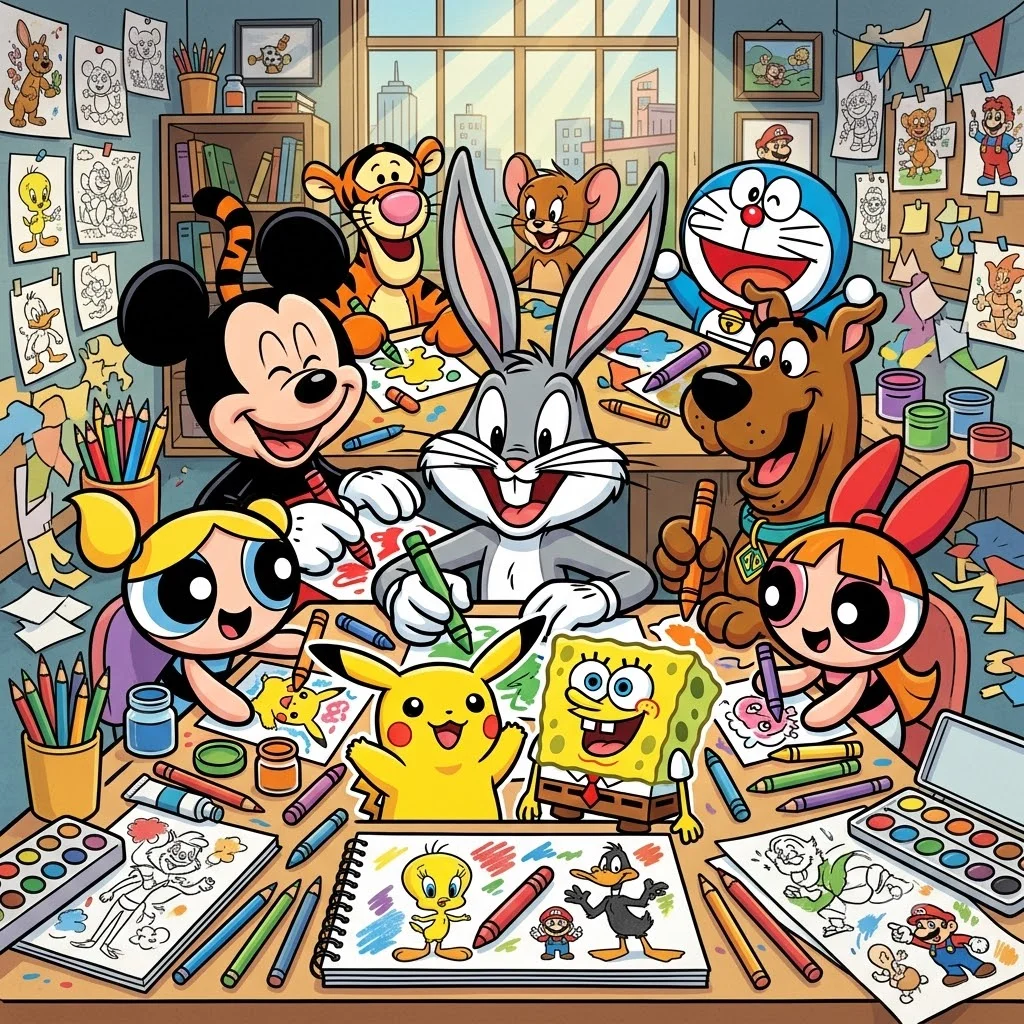
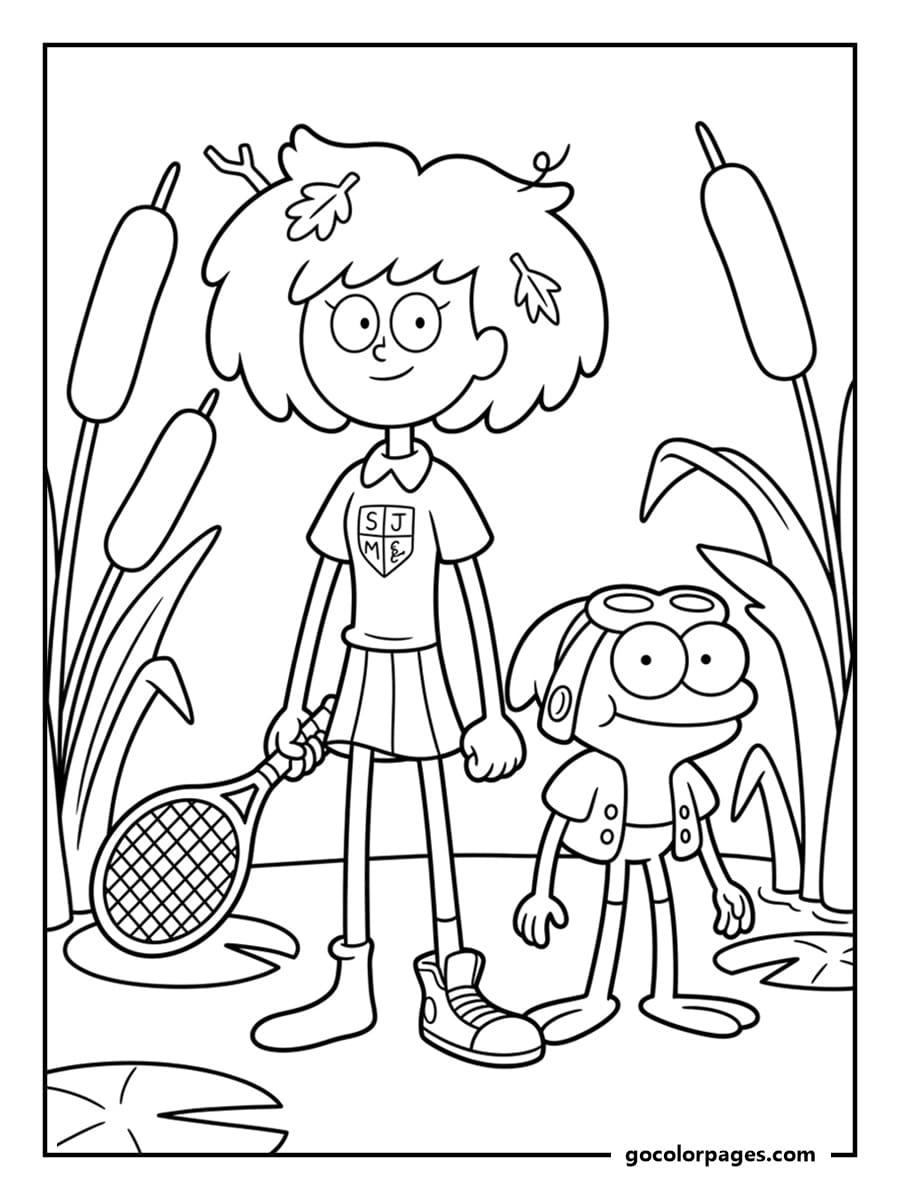
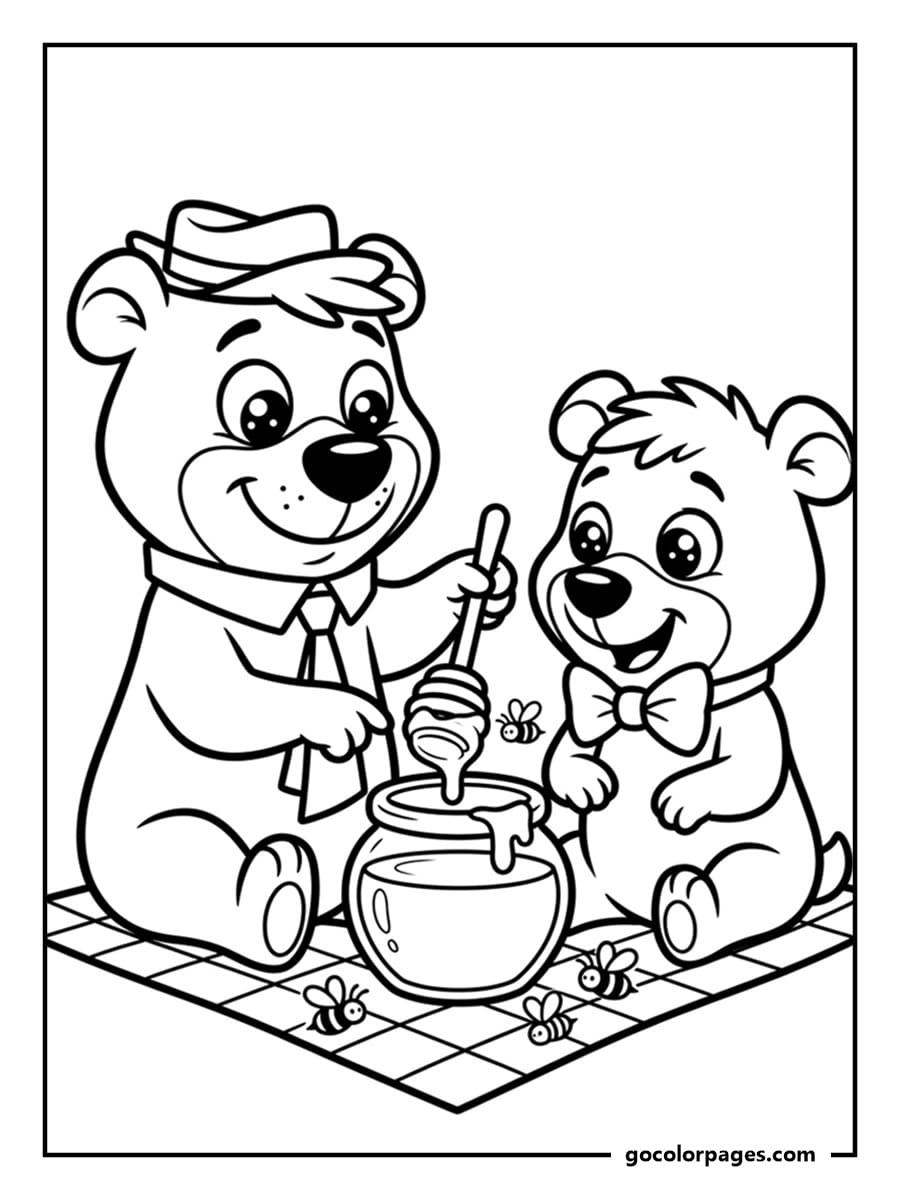
Fuzzy pencil shading ruins a great cartoon. When you color cartoons coloring pages with the same soft, blended gradients you use on a realistic forest portrait, the character instantly loses its graphic punch. Traditional television cartoons were painted on clear acetate sheets where bold black ink met flat color blocks and razor-sharp shadow edges. Once you swap blurry blending for crisp two-tone cel shadows and a three-color costume script, every character on your table pops like a Saturday-morning broadcast.
Five Distinct Cartoon Styles and How to Pick the Right Character Pack
Dumping eight hundred random television, comic, and anime sheets into a single folder guarantees kids and adults will spend more time arguing over characters than uncapping markers. Every decade of animation developed its own line geometry to solve specific screen challenges, from early theater projectors to handheld tablets.
When we organize our master vault of printable coloring pages for families and art classrooms, we sort cartoon sheets by their structural drawing style rather than alphabetical show titles. Matching the animation era to the person holding the pen ensures the hand movements feel effortless from the very first stroke.
- Preschool and Early-Reader TV Companions: Friendly rescue pups, talking locomotives, and curious neighborhood buddies built with oversized 60%-head-to-body ratios and 8 to 14 wide, forgiving color zones.
- Golden-Age Rubber-Hose and Slapstick Classics: Vintage 1930s-style characters featuring pie-cut eyes, looping noodle limbs, and giant four-fingered white gloves that thrive on bold primary reds, yellows, and blacks.
- 90s and Saturday-Morning Retro Ensembles: Skateboard crews, backyard kid inventors, and spiky-haired icons packed with jagged geometric silhouettes, checkerboard sneakers, and punchy neon color blocking.
- Dynamic Superhero and Comic-Book Action Frames: Mid-air leaps, billowing capes, foreshortened fists, and radiating speed lines designed for older kids and teens testing high-contrast comic shadows.
- Chibi Mascots and Kawaii Anime Expressives: Pint-sized heroes with huge starry irises, floating emotion symbols, and miniature pastry props that pair naturally with our cute and easy coloring pages.
"A great cartoon character is recognizable from its solid black silhouette alone and that outer contour tells you immediately whether to reach for broad markers or fine-liner pens."
The 60 30 10 Animation Color Script That Keeps Custom Characters Clean
Watch a seven-year-old or an enthusiastic adult invent a custom "multiverse" colorway for a favorite hero, and you will usually see them pull fourteen different markers out of the bin. Ten minutes later, every boot buckle, stripe, and hair spike is fighting for attention, leaving the character looking like scrambled confetti.
Legendary Disney color stylist Mary Blair and Hanna-Barbera's television layout directors solved this exact problem using strict studio Color Scripts. Because an animated figure has to read clearly against painted backgrounds in less than half a second, professional character designers lock almost every iconic costume into a 60-30-10 color proportion.
Whether you want broadcast-accurate nostalgia or a wild neon remix, sticking to three core color buckets keeps any cartoon sheet looking studio-designed.
- 60% Dominant Signature Anchor: Assign one unmistakable hero shade like canary yellow, electric cobalt, or bubblegum pink to the largest continuous area of skin, fur, or primary bodysuit.
- 30% Secondary Structural Contrast: Pick a complementary or split-complementary color from the opposite side of the wheel for pants, vests, or capes so the torso never blurs into the legs.
- 10% High-Voltage Focal Spark: Save your brightest neon yellow, hot magenta, or metallic gel pen strictly for the tiny 10% focal points chest emblems, laser visors, bowties, or magic wands.
How to Pull Off Crisp Two Tone Cel Shading and Comic FX
Before digital computers took over studios in the late 1990s, Ink and Paint departments traced black outlines onto the front of transparent celluloid acetate and painted flat, opaque acrylic colors on the reverse side. Because wet paint dried fast on plastic, animators never scrubbed soft, hazy gradients across a character's cheek.
Instead, they used hard-edge cel shading pairing one flat base color with a single, razor-sharp shadow shape. Bringing that two-tone habit to paper takes half the time of traditional pencil shading and makes printed characters look like glowing television frames.
The Three Millimeter Hard Edge Shadow Band That Simulates a TV Screen
Forget feathering your pencil pressure from dark to light. Start by filling the character's entire cape, helmet, or glove with one smooth, flat base layer from edge to edge.
If you are using alcohol markers or water-based pens, pause for fifteen seconds so the base ink sets cleanly into the paper fibers. Then pick a marker or crayon roughly 20% darker or simply make a second pass with the exact same marker and draw a crisp, unblended three-millimeter shadow ribbon down the unlit side of the form.
Shading Iconic White Cartoon Gloves, Big Eyes, and Grins Without Dirty Gray
From classic rubber-hose mice to modern video-game mascots, cartoon characters constantly wear oversized white gloves and flash wide, bright white grins. Reaching for a standard gray crayon or pencil to shade those white areas instantly makes your character look like they dipped their hands in fireplace ash.
Leave 85% of every white glove, tooth row, and giant eye sclera completely bare white paper. To give the fingers and eyeballs roundness, tuck a razor-thin crescent of icy Robin's-egg blue, cool periwinkle, or pale lavender strictly along the bottom knuckle folds and under the upper eyelid.
Coloring Speed Lines, Starburst Impacts, and Floating Emotion Symbols
If you have practiced how to draw comic characters in motion, you know that cartoonists rely on visual shorthand called manpu in Japanese manga to show sound, speed, and mood on silent paper. Coloring straight over those background motion arcs or "POW!" impact bursts with a heavy dark marker buries the action.
Treat every floating symbol like a source of light rather than a solid wall. Fill jagged impact starbursts with canary yellow in the center stepping out to hot tangerine at the tips, trace motion speed lines with alternating streaks of electric cyan, and tint floating sweat drops or music notes in whisper-light pastels.
"Soft gradients make an illustration look like a painting; a razor-sharp shadow edge makes a character look like it just stepped off a Saturday-morning television screen."
Turning Finished Cartoon Printouts Into DIY Comic Strips and Stop Motion Shows
Unlike silent botanical wreaths, cartoon characters are built to talk, leap, and pull exaggerated faces. Leaving a finished stack of cartoon sheets flat in a desk drawer wastes their best feature built-in visual storytelling.
When we test our printable coloring pages for kids and funny sidekick animals coloring pages in after-school comic clubs, three simple paper-engineering builds consistently turn twenty minutes of coloring into a two-hour animation studio.
- Three-Panel Kitchen-Table Comic Strips: Print three different poses from the same character pack at 50% scale using your printer's "2 pages per sheet" setting, glue them left-to-right across a strip of poster board, and tape on cutout paper speech bubbles so kids can write their own gag episode.
- Brass-Fastener Articulated Toon Puppets: Cut a colored cartoon character out on medium cardstock, slice the arms and legs apart at the shoulder and hip circles, and join the overlapping limbs with 8-millimeter brass brads (split pins) to film frame-by-frame stop-motion movies on a phone.
- Clear Acetate Window Animation Cels: Slip a transparent plastic sheet protector or acetate film over any printed cartoon sheet, trace the bold black contours with a fine-point permanent marker, and color the flip side with opaque acrylic paint pens to hang a real light-catching animation cel on a sunny window.
Frequently Asked Questions About Cartoons Coloring Pages
What is the difference between cel shading and regular shading on cartoon coloring pages?
Regular shading blends soft, gradual transitions from dark to light to mimic realistic photography. Cel shading pairs a completely flat base color with a single, hard-edged shadow band replicating how traditional animation studios painted two-tone shadows on transparent acetate sheets.
How do I help kids color cartoon characters with custom colors without the page looking messy?
Introduce the 60-30-10 character color script before they start coloring. Let them pick any wild color they want for 60% of the main body or suit, one contrasting shade for 30% of the secondary outfit, and one bright neon or metallic pen for 10% of the small emblems or props.
How do you shade white cartoon gloves, teeth, and big eyes so they don't look dirty gray?
Skip standard lead-gray crayons and markers, which make white cartoon features look muddy and dingy. Leave 85% of the glove or eye bare white paper, and draw a crisp two-to-three-millimeter crescent of icy sky blue or pale periwinkle along the bottom shadow edge.
What can kids make with finished cartoon coloring pages besides hanging them on the fridge?
Because cartoon sheets freeze expressive poses and reactions, kids can shrink three printouts to half-size to assemble a three-panel comic strip complete with handmade speech bubbles. You can also cut a character's limbs apart and pin the joints with brass paper fasteners to create movable stop-motion puppets.
Pick One Cartoon Sheet and Test the Two Tone Cel Shadow Band Tonight
You don't need a light table or a forty-marker animation kit to make your next cartoon printout look like an official studio frame. Grab one character sheet right now and run these two quick Ink and Paint drills in under ten minutes.
- Run the 15-Second Cel Shadow Band Test (4 minutes): Fill one cartoon cape, boot, or helmet with a flat marker coat, wait fifteen seconds for the ink to settle, and trace a single three-millimeter shadow ribbon down the unlit border without blending the edge.
- Draft a Three-Color Multiverse Remix (4 minutes): Pick any familiar cartoon character, put away every pen except three one 60% hero shade, one 30% outfit contrast, and one 10% neon focal spark and watch how clean the costume reads across the room.
When you sit down with a fresh stack of cartoon sheets, do you prefer matching the exact broadcast colors from the original show, or inventing wild custom "multiverse" palettes of your own?