
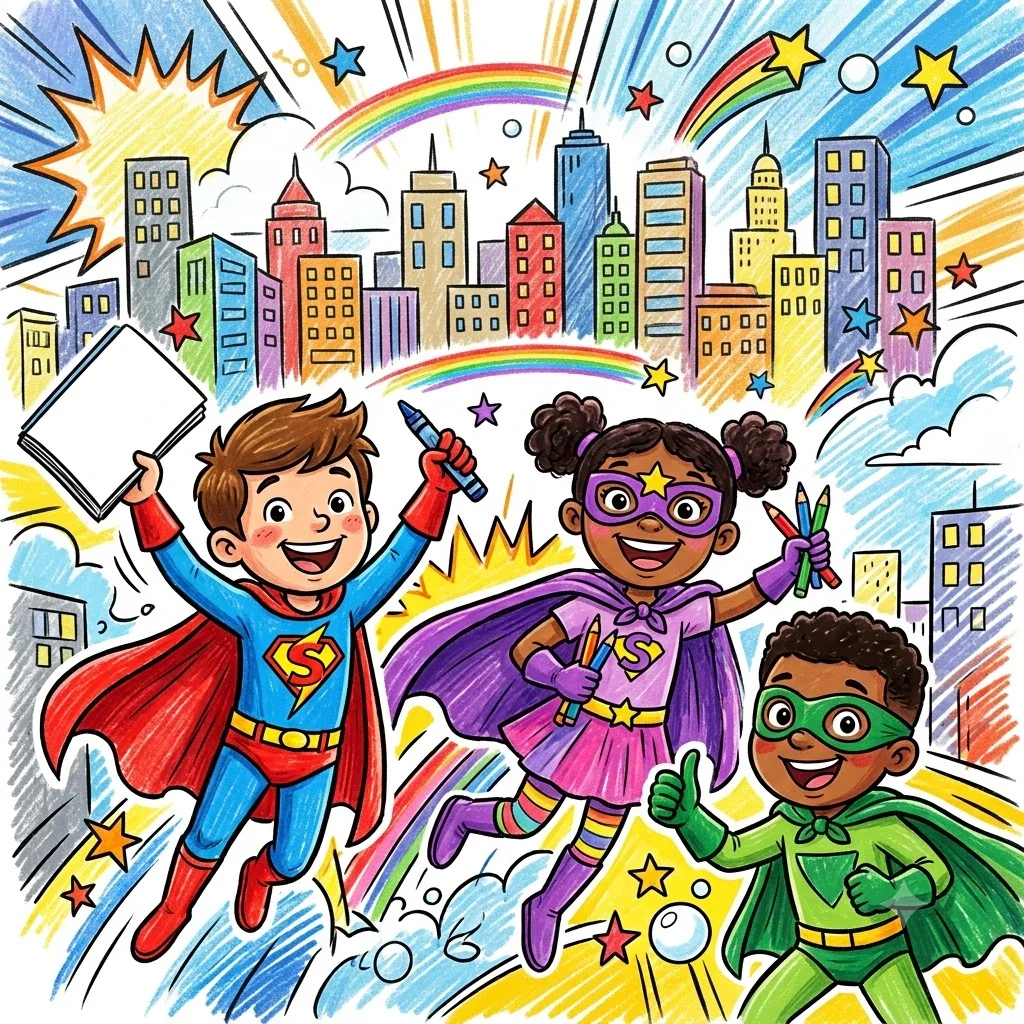
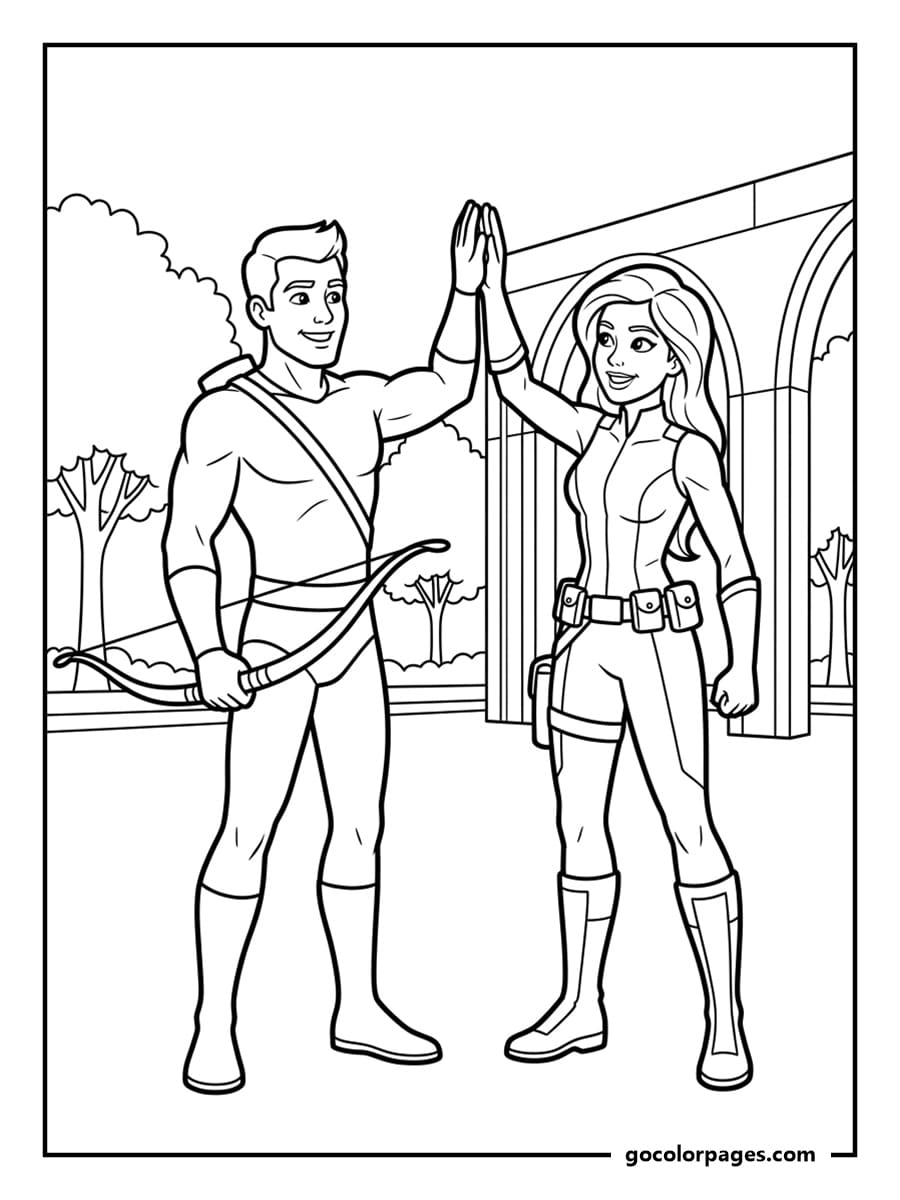
Superheroes coloring pages rank among the fastest ways to turn a rainy afternoon, an after-school comic club, or a birthday party table into a full-scale illustration bullpen. Yet two classic mistakes ruin most hero printouts within the first five minutes. When kids or adults grab a pure black marker for a dark vigilante like Batman, Black Panther, or Miles Morales, the heavy pigment swallows every chest emblem, utility belt buckle, and muscle contour in a flat ink puddle. Fill a red or blue bodysuit at one uniform pressure from shoulder to boot, and even the mightiest titan looks like they are wearing baggy cotton pajamas.
Across more than two hundred comic-art workshops and family table tests, we found that making printable heroes look like published Marvel and DC covers comes down to three classic bullpen habits. When you shade dark suits with cobalt blue, highlight anatomical muscle cylinders, and place dark shadows directly beside bare white armor reflections, flat black-and-white outlines leap off the desk.
- Use the Comic-Book Blue-Black Illusion on Dark Suits: Leave pre-printed black ink shadow patches untouched and shade the lit planes of dark cowls, capes, and vibranium armor in cobalt blue, midnight indigo, or cool slate.
- Sculpt Vacuum-Sealed Muscle Cylinders and Hero Triads: Leave a 2-millimeter high-value ridge down the center of deltoids, pectorals, and quads while pairing primary hero colors (red, blue, yellow) against secondary villain palettes (green, purple, orange).
- Render Chrome Armor, Web Grids, and Kirby Krackle: Place dark espresso or charcoal bands directly beside bare white reflection slits for metallic armor, wash scarlet base coats smoothly across entire web grids before shading, and keep plasma cores pure white.
Hide the black crayon right now. Hand someone a fresh stack of superheroes coloring pages featuring Batman, Black Panther, or Miles Morales, and their first instinct is scrubbing solid black wax from cowl to boot. Thirty seconds later, the bat emblem, utility belt, and sculpted muscle plates disappear into a flat, featureless ink hole. Classic Marvel and DC bullpen colorists solved that exact trap decades ago by shading dark vigilantes with cobalt blue, carving cylindrical highlights down every muscle group, and abutting dark shadows directly against bare white metal reflections.
Five Heroic Archetypes From Agile Web Slingers to Armored Titans
Dumping three hundred random comic sheets into one messy pile guarantees everyone at the table will spend more time arguing over characters than uncapping pens. A street-level acrobat swinging between brick fire escapes, a gleaming titanium mech suit, and a thunder god summoning cosmic lightning all demand completely different color palettes and hand motions.
When we organize our master vault of printable coloring pages for families, classrooms, and comic book fans, we sort superhero templates into five distinct power archetypes. Knowing which archetype sits in front of you tells you immediately whether to reach for primary red and blue markers, cool metallic grays, or neon energy highlighters.
- Agile Web-Slingers and Street-Level Acrobats: Mid-air rooftop leapers including Spider-Man, Miles Morales, Ghost-Spider, Daredevil, and Teenage Mutant Ninja Turtles built around extreme foreshortened limbs, gargoyle perches, and geometric suit webbing.
- Caped Justice Titans and Mythic Defenders: Classic Golden- and Silver-Age powerhouses like Superman, Wonder Woman, Batman, Supergirl, and The Flash featuring sweeping cape drapery, bold chest insignias, and towering Metropolis or Gotham skylines.
- High-Tech Mech Suits and Armored Avengers: Engineered battle suits led by Iron Man, War Machine, Black Panther's vibranium weave, Cyborg, and Blue Beetle packed with interlocking titanium plates, glowing chest arc reactors, and repulsor jets.
- Cosmic Guardians, Mutant Squads, and Thunder Gods: High-voltage ensemble splash pages starring Thor, Guardians of the Galaxy, Wolverine, Storm, Captain Marvel, and Green Lantern surrounded by crackling lightning arcs and deep-space nebulae.
- Pint-Sized Super-Pets, Sidekicks, and Everyday Community Heroes: Preschool-friendly hero squads (Spidey and His Amazing Friends, PJ Masks, Krypto the Superdog) alongside real-world firefighters and rescue medics that bridge effortlessly into our cute and easy coloring pages and printable coloring pages for kids.
"A superhero suit isn't ordinary clothing it is vacuum-sealed anatomy dipped in primary ink, where every chest emblem and cape fold points your eye straight toward the action."
The Comic Colorist Secret for Black Suits and Heroic Muscle Plates
Watch a group of kids or adults tackle a muscular superhero sheet and you will almost always spot two heartbreaking mistakes. Either they color a dark-suited vigilante solid black until every interior line vanishes, or they scrub one flat red crayon across a hero's torso until a sculpted titan looks like he is wearing flannel pajamas.
During the Silver Age of comics, legendary Marvel colorist Stan Goldberg and later multi-Eisner Award winner Dave Stewart worked alongside inkers who had already filled the deepest shadow recesses with solid black India ink a production step known as "spotting blacks." Because the black shadows were already printed on the page, coloring the rest of a suit black erased the drawing; instead, bullpen artists used optical color illusions and cylindrical shading to make four-color paper look three-dimensional.
Apply these three bullpen color rules on your next sheet and your characters will read like newsstand cover art from across the room.
- The Blue-Black Vigilante Rule for Dark Cowls and Capes: Never touch a black marker or crayon to Batman's cape, Black Panther's vibranium suit, Venom's symbiote, or Superman's raven hair; leave the pre-printed black ink patches untouched, sweep cobalt blue, midnight indigo, or cool slate across the mid-tones, and leave a crisp sky-blue highlight ridge along the sunlit shoulder and cowl ear.
- Cylindrical Muscle-Plate Highlighting Over Flat Fills: Because classic comic suits fit like a vacuum-sealed second skin, treat every bicep, quadricep, deltoid, and abdominal brick as a rounded cylinder press firmly with dark crimson or royal navy in the outer muscle valleys and feather out to a pale tint (or a two-millimeter bare white strip) down the center ridge of each muscle belly.
- Primary Hero Triads Versus Secondary Villain Palettes: Borrowing from 1960s four-color newsprint psychology, anchor classic heroes in bold primary triads (crimson red, cobalt blue, canary yellow) and dress arch-villains like Green Goblin, Lex Luthor, Magneto, or The Joker in secondary combinations (toxic lime green, imperial purple, and pumpkin orange) so chaotic battle scenes separate at a glance.
How to Render Chrome Armor, Web Grids, and Kirby Krackle Energy
Superhero comics push physical textures harder than any other illustration style on earth. Within a single eight-by-ten-inch sheet, your pencil might have to jump from polished gold-titanium armor to fine costume web piping and exploding plasma beams.
Trying to fake those effects with messy metallic glitter paint or slow, box-by-box marker dabs only warps the paper. Instead, professional comic illustrators rely on sharp contrast seams and continuous base washes to trick the human eye.
Non Metallic Metal Horizon Banding for Iron Man and Shields
You don't need metallic gold or silver ink to make Iron Man's faceplate, Captain America's vibranium shield, or Wonder Woman's bracers gleam like polished steel. Comic painter Alex Ross and miniature figure artists create blinding metallic shine using a technique called Non-Metallic Metal (NMM) horizon banding.
Because polished metal acts like a curved mirror reflecting the dark ground and bright sky, smooth gradients actually make armor look like dull plastic. Instead, place your darkest espresso brown or charcoal shadow band directly beside a razor-sharp two-millimeter bare white reflection slit, then blend golden ochre and lemon yellow (for gold armor) or icy steel blue and silver-gray (for chrome and shields) outward from that high-contrast seam.
Coloring Spider Man Web Lines and Fine Costume Piping Cleanly
Nothing exhausts a young artist or a patient adult faster than trying to color eighty tiny red compartments inside a Spider-Man mask one square at a time. Stopping and starting an alcohol marker or crayon inside every miniature web box leaves dark, blotchy overlap puddles across the face.
Treat the entire webbed mask, chest, and boots as one unified 3D form rather than a patchwork quilt. Sweep a smooth, continuous base wash of bright scarlet marker or medium-pressure red pencil straight over the printed black web lines from edge to edge, let the base dry for twenty seconds, and curve a deeper carmine-red shadow strictly along the outer jawline and ribcage while keeping the nose bridge and center chest bright.
Igniting Arc Reactors, Laser Beams, and Jack Kirby Cosmic Krackle
Whether you are practicing how to draw comic book action scenes or detailing high-density splash pages from our intricate adult coloring pages, energy blasts obey one strict rule: pigment cannot glow unless the center stays white. In the 1960s, comic king Jack Kirby invented "Kirby Krackle" clusters of solid black ink spheres floating around energy beams to make static paper vibrate with plasma heat.
Never fill the center of Iron Man's chest arc reactor, Thor's hammer lightning, or Green Lantern's ring blast with heavy blue or green wax. Leave the innermost 60% of every energy beam, laser visor, and glowing eye slit completely bare white paper, trace a tight neon cyan, lime, or magenta halo around the outer border, and leave the surrounding black Kirby dots untouched so the white core radiates blinding heat.
"Polished comic armor and glowing plasma beams share the exact same secret jam your darkest shadow right up against bare white paper and let the eye invent the shine."
Turning Finished Superhero Sheets Into Wearable Masks and 3D Action Stands
Superhero illustrations are built around kinetic leaps, foreshortened fists, and iconic chest insignias that practically beg to break out of a flat sheet of paper. Stuffing a finished stack of caped crusaders into a desk drawer wastes half the fun of a comic-book session.
When we test superhero printables with elementary classroom teachers, birthday party hosts, and weekend family art tables, three hands-on paper builds consistently turn twenty minutes of coloring into an afternoon of imaginative play.
- 3D Z-Fold Accordion Cityscape Action Stages: Color two sheets one background skyline of Gotham or Metropolis buildings and one mid-air leaping hero then cut out the hero with a narrow white border, fold a one-inch strip of stiff cardstock into a three-step "Z" accordion spring, and glue the hero over the buildings so they leap two inches off the page.
- Wearable Hero Wrist Bracers and Reinforced Cowl Masks: Print superhero gauntlets or an angled cowl mask on heavyweight cardstock, reinforce the left and right temple tabs with a one-inch square of clear packing tape before punching holes for a ten-inch elastic cord, or wrap colored wrist cuffs around your forearms with adhesive Velcro dots.
- Custom Issue #1 Comic Book Binder Covers: Hand-draw a classic rectangular comic corner box in the upper-left margin of a finished splash page complete with a vintage
25¢price tag, anIssue #1badge, and the artist's signature then slip the sheet into the clear front sleeve of a three-ring binder to store a full season of original adventures.
Frequently Asked Questions About Superheroes Coloring Pages
How do you color black superhero suits like Batman or Black Panther without losing the outlines?
Never scrub a pure black crayon or marker across the entire suit, which buries the printed muscle lines and chest emblems in a solid dark blob. Leave the pre-printed black ink shadow patches alone, color the main suit panels with cobalt blue, midnight indigo, or cool dark slate, and leave a thin sky-blue highlight ridge along the top shoulders and cowl ears.
Why are classic superheroes usually red, blue, and yellow while villains are green and purple?
Silver-Age comic book colorists like Stan Goldberg used four-color newsprint psychology so readers could track fast fight scenes in a split second. Heroes were anchored in bold primary triads crimson red, cobalt blue, and canary yellow while arch-villains were dressed in secondary triads toxic lime green, purple, and orange ensuring good and evil never blurred together on the page.
How can I make Iron Man's armor or superhero shields look like shiny metal with regular pencils?
Use the Non-Metallic Metal horizon trick instead of messy metallic paint. Place your darkest espresso brown or charcoal pencil stroke right next to a two-millimeter strip of bare white paper, then blend golden ochre and lemon yellow (or icy steel blue for silver) outward from that sharp seam to mimic a curved mirror reflection.
What is the easiest way to color Spider-Man's web lines without making the red look blotchy?
Skip coloring each tiny square inside the web grid one box at a time, which causes streaky marker overlaps. Sweep one continuous, even base coat of bright scarlet straight over the printed black web lines across the whole mask or torso, then add a deeper carmine-red shadow strictly along the outer cheek and rib edges.
Suit Up One Hero Sheet and Test the Blue Black Cowl Trick Tonight
You don't need a professional comic inker's desk or a hundred-dollar marker case to make your next superhero printout look like a collector's variant cover. Pull one sheet off the printer right now and test these two bullpen habits in under ten minutes.
- Shade One Dark Cowl With Cobalt Blue Instead of Black (4 minutes): Pick any dark-suited vigilante, leave the black crayon in the box, and sweep medium cobalt blue or indigo across the lit side of the mask while leaving a crisp two-millimeter sky-blue highlight along the top ear and shoulder ridge.
- Cut a High-Contrast Reflection Slit Across One Armor Plate (4 minutes): On any armored chest plate, hammer, or round shield, fence off a diagonal three-millimeter strip of bare white paper and lay your darkest charcoal or espresso shade directly beside it before blending out to gold or steel gray.
When your table prints a fresh stack of superhero sheets, do you reach first for agile rooftop web-slingers, high-tech armored avengers, or caped cosmic titans and do you stick to canon comic book colors or invent your own custom hero suits?