

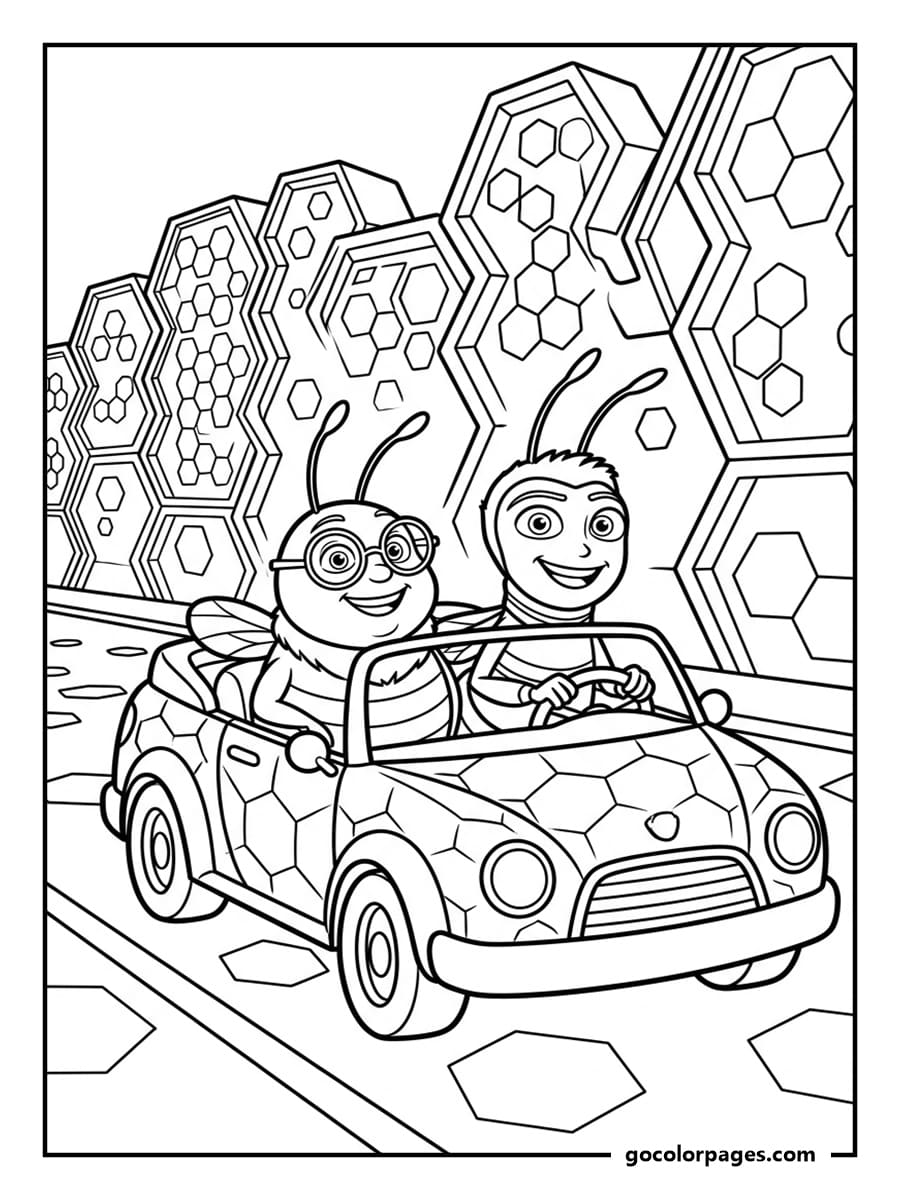
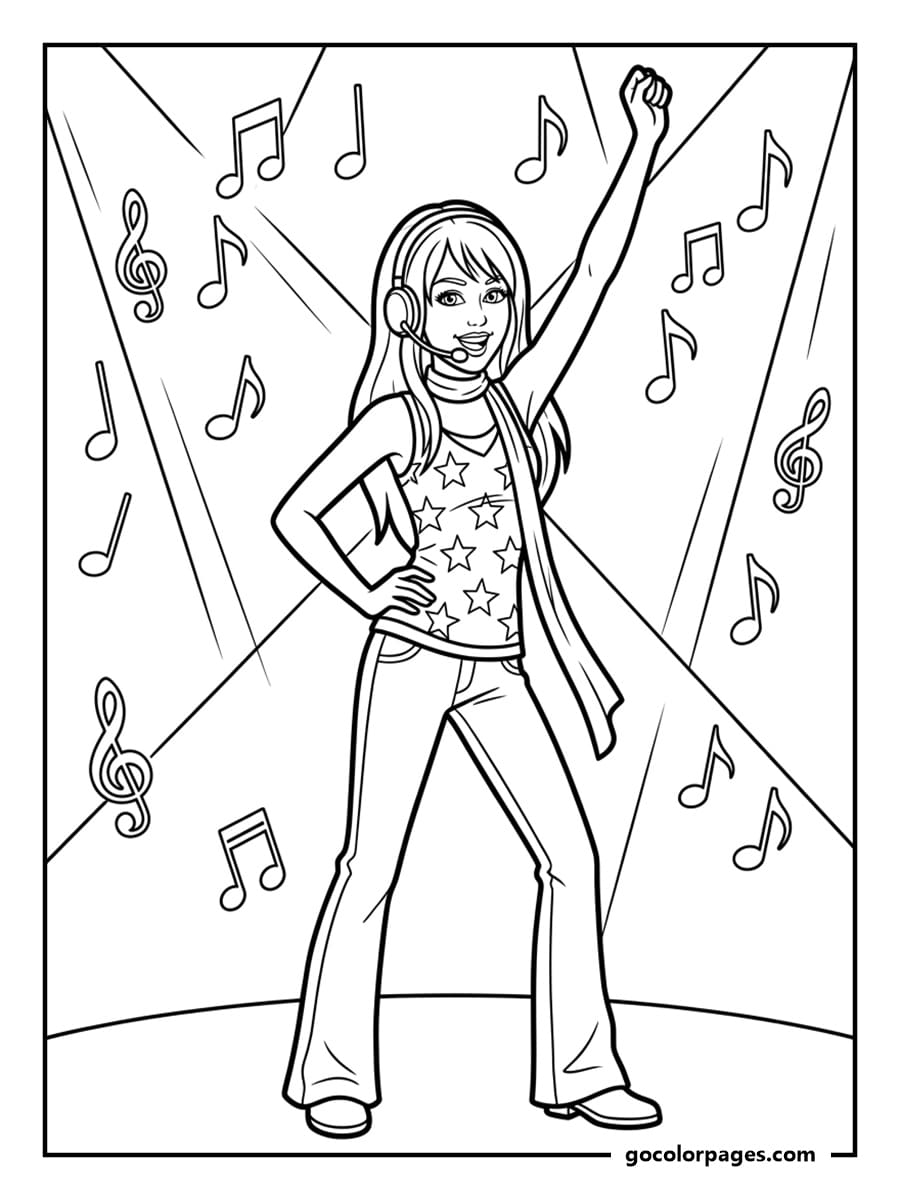
Noon sunlight ruins a blockbuster scene. Watch someone color a stack of TV & movie coloring pages featuring a midnight wizard duel or a cosmic space battle, and they almost always grab a cheerful sky-blue crayon for the background. Within three minutes, a moody silver-screen cliffhanger looks like a backyard school play lit by fluorescent cafeteria tubes. Once you swap daytime fills for Hollywood teal-and-orange color grading and cast neon prop glow across your hero's face, flat paper captures true theatrical suspense.
Five Screen Genres That Turn Chaotic Franchise Folders Into a Home Theater
Dumping four hundred random television and film sheets into one alphabetical folder guarantees your family will spend twenty minutes arguing over what to print while the popcorn gets cold. A preschooler looking for a friendly talking racecar, a tween obsessed with a gothic streaming mystery, and an adult shading an armored space bounty hunter all need completely different line density and lighting setups.
Unlike traditional 2D cartoons coloring pages that rely on flat ink-and-paint color blocks, live-action and 3D computer-animated productions are built around virtual camera lenses, physical set architecture, and directional stage lights. When we curate our master vault of printable coloring pages for movie nights and classroom clubs, we sort every title into five distinct theatrical genres so you know which pencil palette to pull before the opening credits roll.
- 3D Animated Family Blockbusters and Plush Worlds: Volumetric, rounded character scenes inspired by Pixar, DreamWorks, and modern Disney hits spanning Toy Story, Inside Out, Encanto, Frozen, and How to Train Your Dragon engineered for soft, curved pencil gradients.
- Sci-Fi Galaxies, Mechs, and Superhero Showdowns: High-contrast action frames featuring plasma blades, armored visors, robotic plates, and cosmic starfields inspired by Star Wars, Marvel cinema spectacles, Transformers, and Dune.
- Fantasy Kingdoms, Wizard Schools, and Mythic Quests: Candlelit stone corridors, winged dragons, leather-bound spellbooks, and emerald-and-gold theatrical sets inspired by Harry Potter, The Lord of the Rings, and Wicked.
- Cult Streaming Series, Cozy Sitcoms, and Gothic Mysteries: Instantly recognizable small-screen sets from Wednesday stained-glass dorm windows and Stranger Things basement campaigns to iconic Friends coffeehouse couches and Bridgerton Regency ballrooms.
- Vintage Cinema Classics and Monster Matinee Posters: Bold theatrical compositions celebrating The Wizard of Oz yellow brick roads, Jurassic Park dinosaur breakouts, and retro creature-feature title cards.
"In a great movie or television sheet, the background isn't leftover white space it is the stage lighting that tells your eye whether to feel cozy, terrified, or ready for liftoff."
The Hollywood Color Grading Secret That Makes Flat Paper Look Like a Movie Poster
Have you ever wondered why almost every modern action trailer, sci-fi poster, and fantasy finale looks unmistakably cinematic before a single actor speaks? In Hollywood post-production suites, senior colorists like Stefan Sonnenfeld at Company 3 and cinematographers like Roger Deakins rarely leave shadows neutral gray or skies plain blue.
Instead, film studios run footage through Color Lookup Tables known on set as LUTs that push background shadows and foreground skin tones into opposite sides of the color wheel. When you apply one of these three studio grading trios with standard colored pencils or markers, even a ten-minute printout carries the visual punch of a theatrical IMAX poster.
- The Blockbuster Teal-and-Orange Split for Action and Sci-Fi: Because human complexions, torchlight, desert sand, and explosions naturally sit in the warm orange-amber spectrum, shade all surrounding corridor walls, night skies, and armor shadows in deep Prussian blue or teal cyan so the hero leaps three feet forward off the sheet.
- The Gothic Velvet and Candlelight Grade for Mystery and Fantasy: When coloring shadowed castles, boarding-school dungeons, or nocturnal rooftops, put your black and brown crayons away; wash stone walls in cool slate gray and dusty amethyst violet, then drop a single warm pool of golden ochre around floating candles or lanterns.
- The 1980s Synthwave Dual-Rim Split for Retro Streaming Hits: To capture the supernatural nostalgia of Stranger Things, Spider-Verse, or neon arcade scenes, fill the deep background in midnight indigo, then trace a two-millimeter rim highlight of hot magenta down the left edge of every figure and electric turquoise down the right edge.
How to Make Lightsabers Wizard Wands and Power Shields Glow Without Neon Ink
Ask any eight-year-old or adult sci-fi fan what frustrated them most on their last movie sheet, and they will point straight to a dull, lifeless lightsaber or magic wand. When you fill the inside of a plasma blade or a Lumos spell tip edge-to-edge with a dark blue, green, or red marker, you erase the luminosity and turn an energy weapon into a painted wooden stick.
On a real cinema camera sensor, any intense light source overexposes at its hottest center to pure, blinding white, while its signature color only appears in the surrounding atmospheric haze. Miniature painters and visual-effects artists call this Object Source Lighting (OSL) a lighting trick anyone learning how to draw dramatic scenes can replicate on paper in three quick rings.
- Ring One Protects a 60 Percent Bare White Inner Core: Never color the center of a lightsaber blade, a wizard's wand spark, an arc reactor, or a floating magic portal; leave the innermost 60% of the shape completely untouched white paper so it acts as the brightest point on your desk.
- Ring Two Halos the Outer Contour With Saturated Pigment: Trace a two-to-three-millimeter glowing band immediately outside the black outline of the blade or spell using your brightest cyan, lime green, scarlet, or canary yellow pencil, feathering your hand pressure softly into the darker background.
- Ring Three Casts Matching Light Spill Across Nearby Faces and Fists: Complete the optical illusion by lightly glazing that exact same cyan, green, or red pencil across the side of the character's nose bridge, cheekbones, curled knuckles, and cloak folds that directly face the glowing weapon.
"A lightsaber colored solid blue from edge to edge looks like a foam pool noodle; a bare white blade that casts blue light across the hero's knuckles looks like it can cut through steel."
Shading 3D Animated Plush Textures Chrome Armor and Torchlit Castle Stone
Modern film and television sheets ask your pencils to render surfaces that never existed in classic 1960s Saturday-morning cartoons. When Pixar and DreamWorks engineers built their RenderMan digital shaders, they replaced flat 2D outlines with plush monster fur, translucent skin, brushed chrome helmets, and rough medieval stone.
If you scrub every surface on a movie page with the same flat, back-and-forth pencil stroke, a metallic robot and a knitted sweater end up lookingentical. Switching how you angle and curve your pencil tip across these three signature movie textures immediately unlocks three-dimensional depth.
Building Round 3D Pixar Volume With Curved Cross Contour Strokes
Characters from 3D animated hits like Toy Story, Inside Out, Minions, and Encanto are sculpted from virtual spheres and cylinders rather than flat paper cutouts. Coloring straight up and down across a rounded cheek or snout flattens that computer-generated volume in seconds.
Steer your pencil in gentle, curving arcs that follow the roundness of the character's cheeks, nose, and belly like latitude lines wrapping around a globe. To mimic the warm inner glow that digital animators call subsurface scattering, blend a narrow ribbon of warm coral or tangerine right along the border where the sunlit skin meets the cooler shadow, a technique that also elevates bold cute and easy coloring pages.
The Horizon Line Reflection Trick for Chrome Helmets and Droids
Coloring shiny metallic armor whether you are tackling The Mandalorian's beskar helmet, C-3PO's golden plating, or Iron Man's faceplate does not require metallic silver or gold markers. Polished metal acts like a curved mirror that reflects the ground below and the sky above.
Lightly pencil a curved horizontal line right across the middle of the helmet visor, breastplate, or robot shoulder pad. Shade the strip immediately below that horizon line with dark espresso brown returning to warm golden ochre at the bottom edge to represent reflected earth, blend cool sky blue into slate gray across the top half, and leave a razor-sharp two-millimeter band of bare white paper right above the dark center line.
Dry Brushing Weathered Castle Stone and Dragon Scales
Fantasy movie sets and dinosaur adventures are packed with rugged, pitted surfaces from Hogwarts dungeon blocks and ancient ruins to dragon hide and leather dusters. Coloring every individual stone block with heavy, solid gray pressure takes hours and makes ancient walls look like freshly poured sidewalk cement.
When working on dense architectural frames or intricate adult coloring pages, tilt a slightly dulled colored pencil almost flat at a fifteen-degree angle and sweep the side of the lead lightly across the zone. The microscopic bumps in the paper will catch the pigment while leaving tiny uncolored white pits in the valleys, giving you instant weathered castle mortar or pebbled reptile skin in ten seconds.
Turning Finished Movie Sheets Into Watch Party Bingo Cards and Popcorn Marquees
Most families treat coloring pages as a quiet pre-game activity that gets cleared off the coffee table the moment the television turns on. Because film and series sheets capture dramatic costumes, famous props, and iconic sets, they are much more fun when you weave them directly into the screening itself.
When we host Friday-night watch parties using our printable coloring pages for kids alongside red-carpet celebrities coloring pages, three interactive paper builds consistently turn passive screen time into a lively home-theater event.
- Interactive Color-When-It-Happens Watch Party Bingo: Before pressing play on a family movie, assign five signature on-screen moments to specific zones on the printout such as coloring the castle tower when thunder rumbles, the hero's boots when they make a leap, or the sidekick's hat when they grab a snack.
- Backlit Shoebox Home Theater Marquees: Carefully trim away the background sky behind a finished superhero skyline, spaceship, or wizard castle, tape a piece of translucent kitchen parchment paper across the back opening, and stand the cutout in front of a battery LED tea light beside the popcorn bowl so the scene glows in the dark living room.
- Half-Size Blu-Ray Slipcovers and Watchlist Rating Binders: Use your printer's "2 Pages Per Sheet" setting to print 5.5-by-8.5-inch mini sheets, draw five empty stars along the bottom margin for family members to color in their official rating after the credits roll, and slide the finished reviews into a three-ring "100 Movies We Watched Together" binder.
Frequently Asked Questions About TV and Movie Coloring Pages
How do you make a lightsaber or magic wand look like it is glowing on a coloring page?
Never fill the inside of the blade or wand tip with solid dark ink. Leave the central 60% of the weapon completely bare white paper, trace a bright two-to-three-millimeter neon cyan, green, or red halo around the outside of the black outline, and lightly shade that same color onto the character's nearby cheek and fingers.
Why do my movie coloring pages look flat instead of dramatic like the real film?
Most movie sheets lose their atmosphere when you color the background with daytime sky blue and neutral gray shadows. Borrow Hollywood's Teal-and-Orange color grading rule by shading background walls, night skies, and shadows in deep teal or Prussian blue while keeping the characters, torches, and foreground action in warm amber, orange, and red tones.
How can I color shiny metal helmets and robot armor without metallic pens?
Create the illusion of polished chrome or gold by drawing a faint horizontal horizon line across the middle of the curved armor plate. Shade dark brown blending into golden tan below the line to mimic reflected ground, blend cool blue-gray above the line for reflected sky, and leave a crisp two-millimeter white highlight strip right across the center.
What is a fun way to use TV and movie coloring pages during a family movie night?
Turn any character or scene sheet into an interactive "Color-When-It-Happens" watch game before the opening credits start. Assign specific parts of the page to common movie tropes like coloring the cape when the theme music swells or the dragon's tail when fire appears so kids stay engaged with both the film and their markers.
Pick One Iconic Scene and Test the Three Ring Prop Glow Before Tonight's Credits Roll
You don't need a Hollywood visual-effects budget or a fifty-piece marker briefcase to make your next film printout look like a theater lobby poster. Pull one sci-fi, fantasy, or animated movie sheet off your printer right now and try these two quick cinematography drills in under ten minutes.
- Run the Three-Ring Lightsaber or Wand Spill Test (4 minutes): Pick any sheet with a glowing weapon, lantern, or spell, leave the inner core 100% bare white paper, halo the outer border with a bright cyan or lime pencil, and brush a matching tint across the side of the hero's nose and knuckles.
- Try a Two-Pencil Teal-and-Orange Poster Split (4 minutes): Choose one action frame, restrict your foreground character and props strictly to warm orange, red, and golden yellow pencils, and shade the entire background wall or night sky in deep teal blue to watch the figure pop forward.
Which iconic movie scene or streaming series set is hitting your coloring table this weekend and are you team neon sci-fi glow or team candlelit fantasy castle?