
For more than two hundred years, holiday candy canes didn't have a single red stripe on them. Folklorists trace the hooked J-shape back to 1670 in Germany, when the choirmaster at Cologne Cathedral asked a local confectioner to bend white sugar sticks into tiny shepherds' crooks to keep fidgety children quiet during the Christmas Eve nativity service. When German-Swedish immigrant August Imgard decorated a blue spruce tree in Wooster, Ohio in 1847, he hung plain white sugar canes from the branches and it wasn't until Georgia candy maker Bob McCormack began hand-twisting peppermint batches in 1919 and his brother-in-law, Father Gregory Keller, invented an automatic twisting machine in the 1950s that the striped red-and-white stick became a global December staple.
When we organize our seasonal holiday sheets inside our master printable coloring pages library alongside our celebration coloring pages and foods coloring pages collections, we never lump every peppermint stick into one generic folder. A three-year-old practicing an alternating pattern with jumbo crayons and an adult relaxing with fine-liner pens need completely different stripe widths.
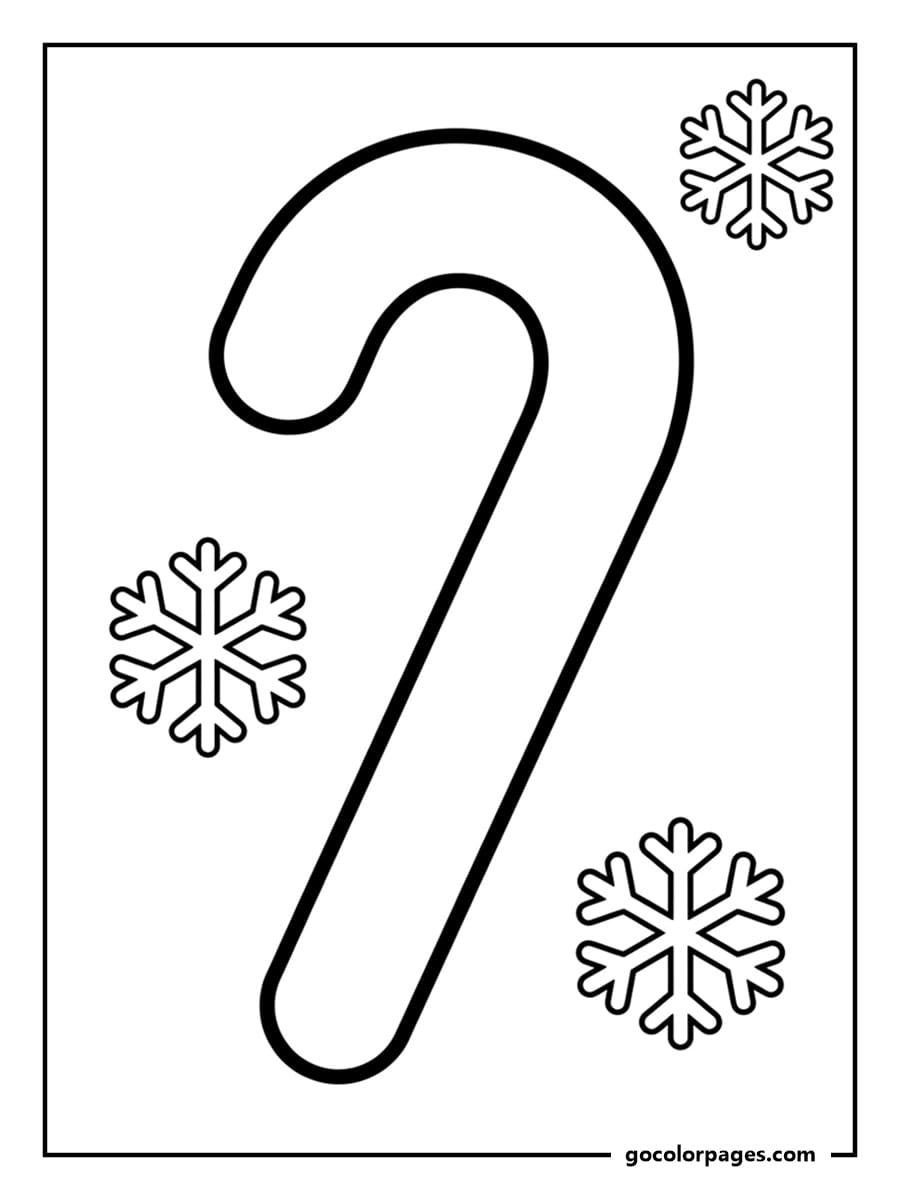
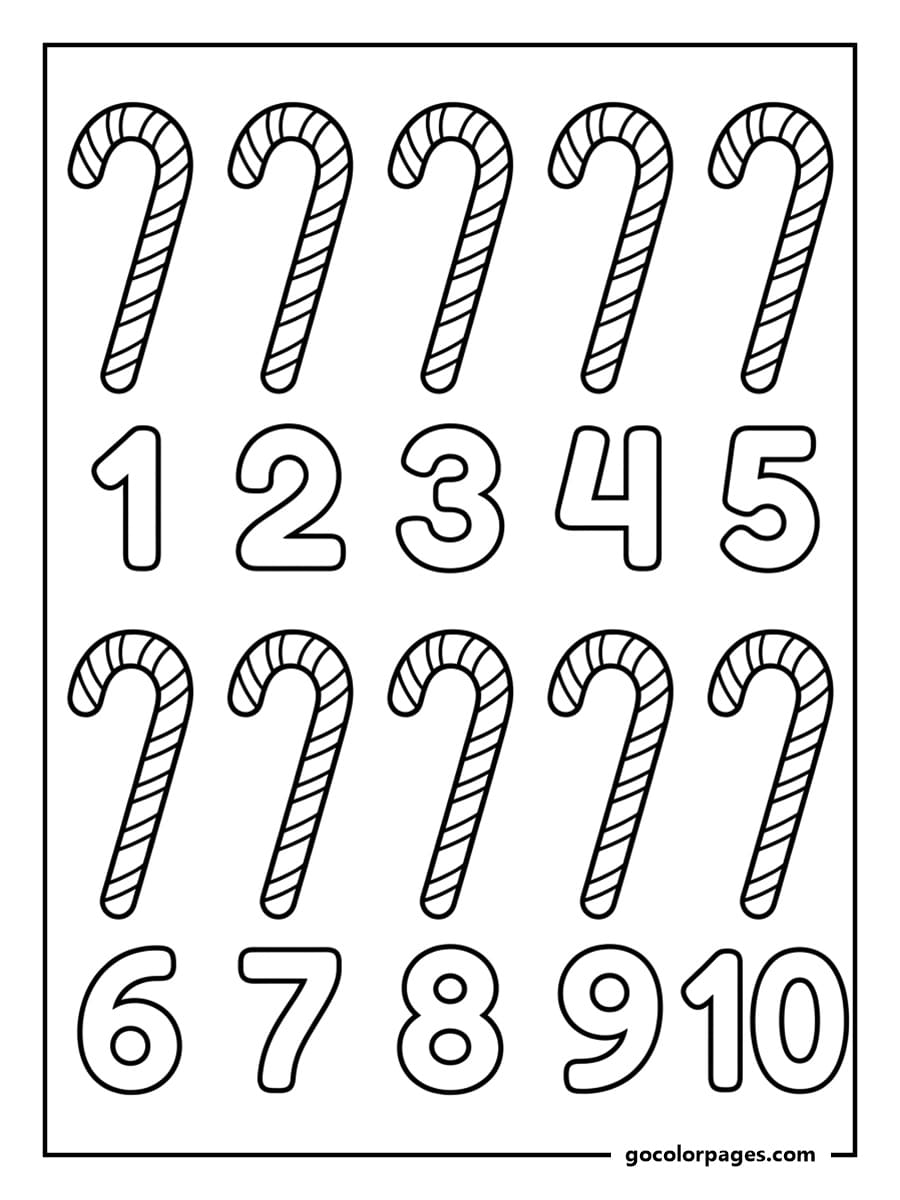
- Jumbo Single Candy Cane Outlines for Toddlers and Preschoolers: Drawn with extra-thick contours and six to eight wide diagonal segments, these starter templates pair seamlessly with our cute and easy coloring pages for ages two to five.
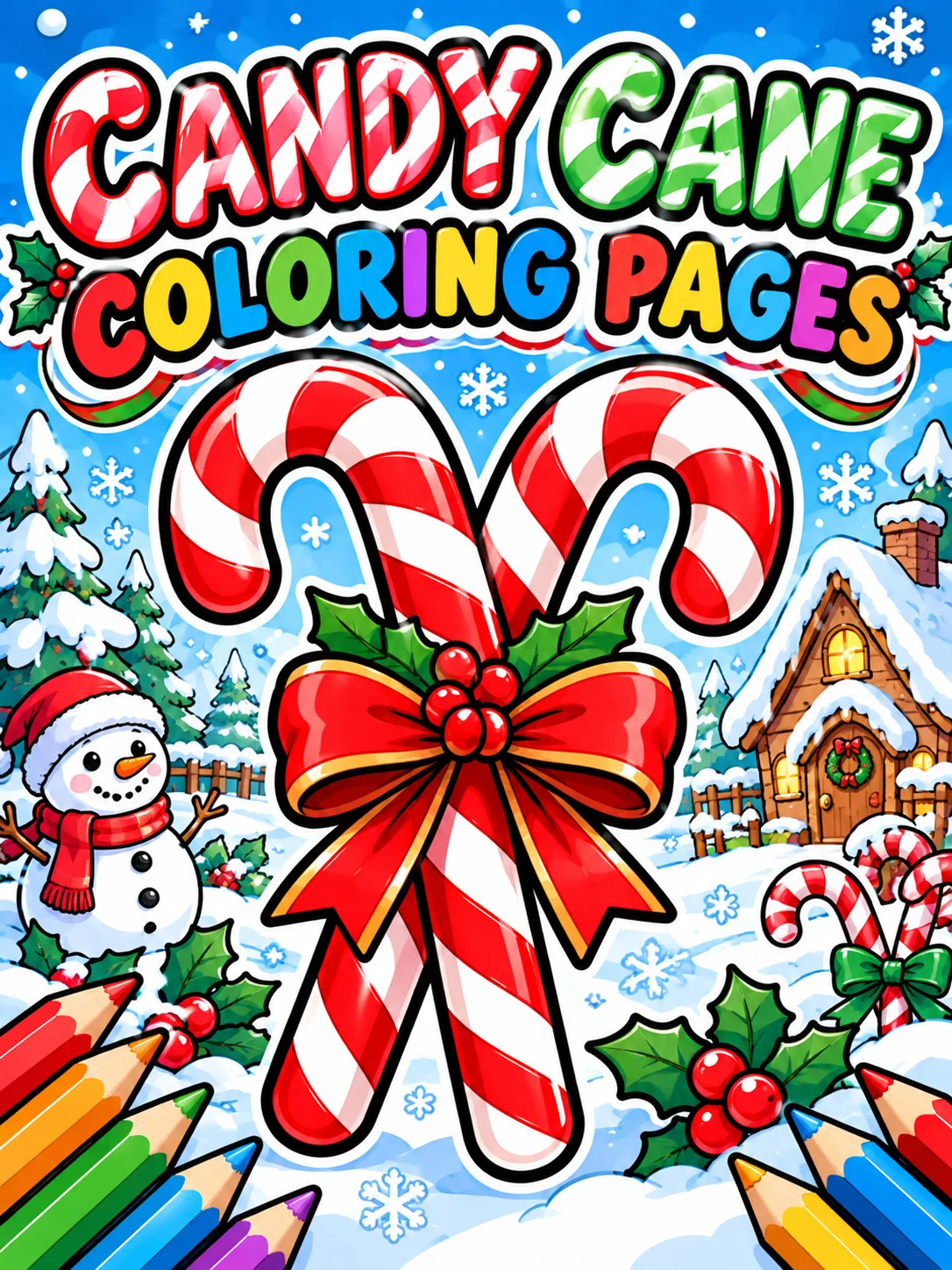
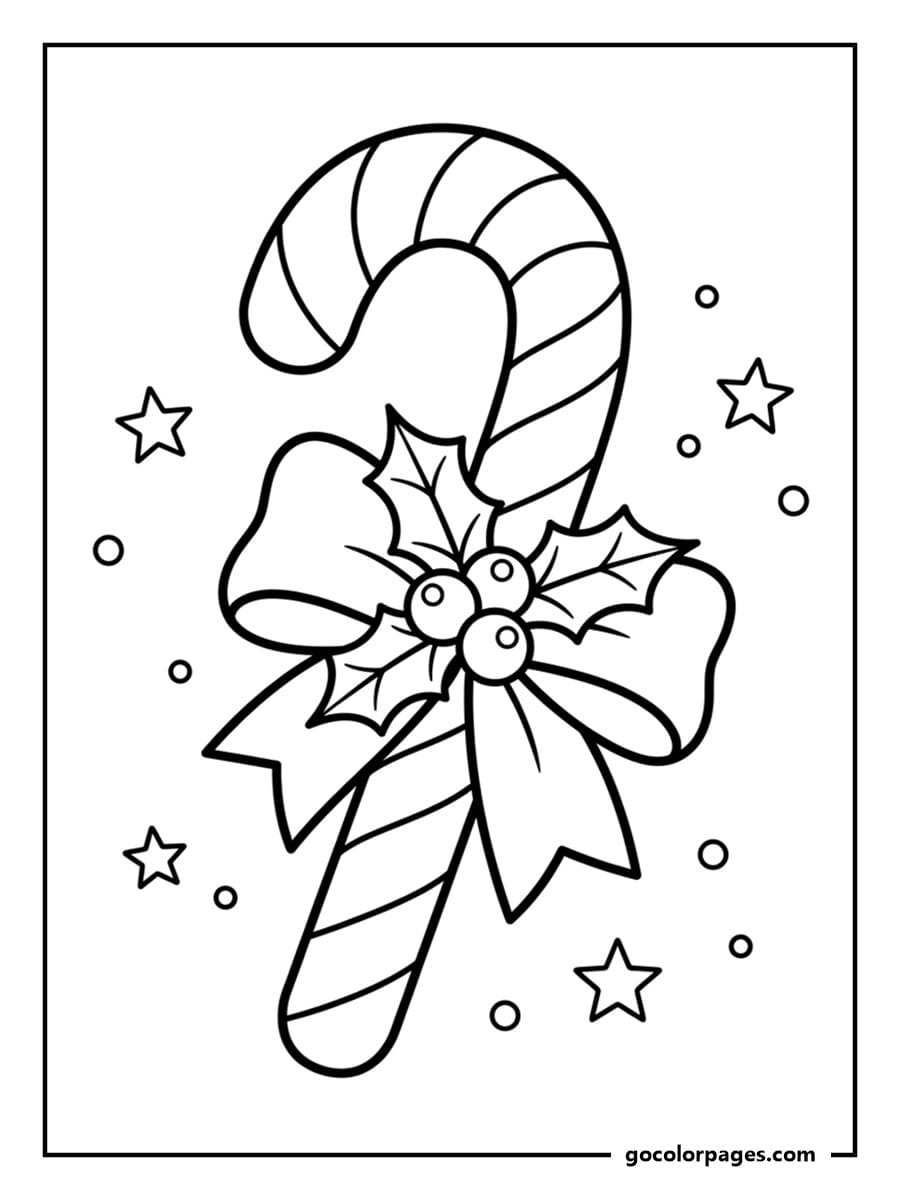
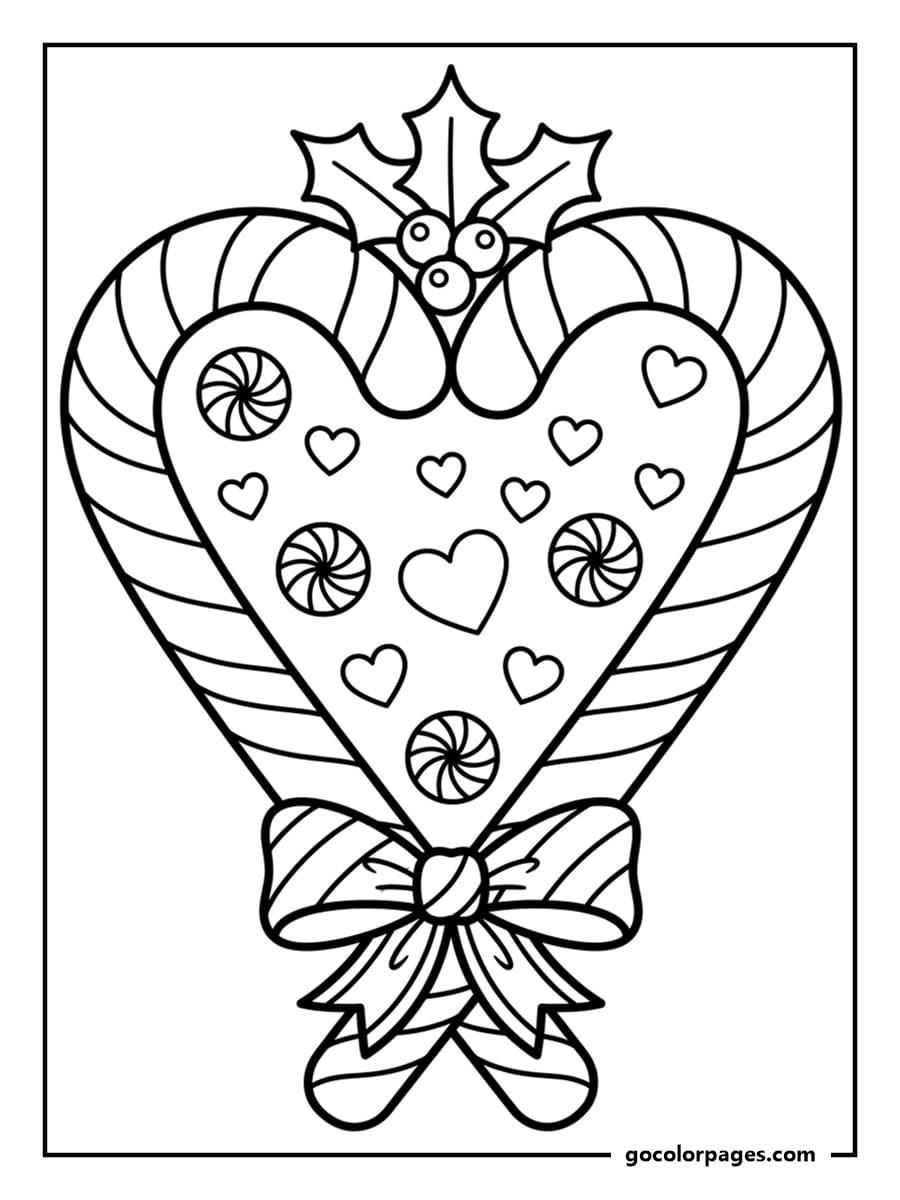
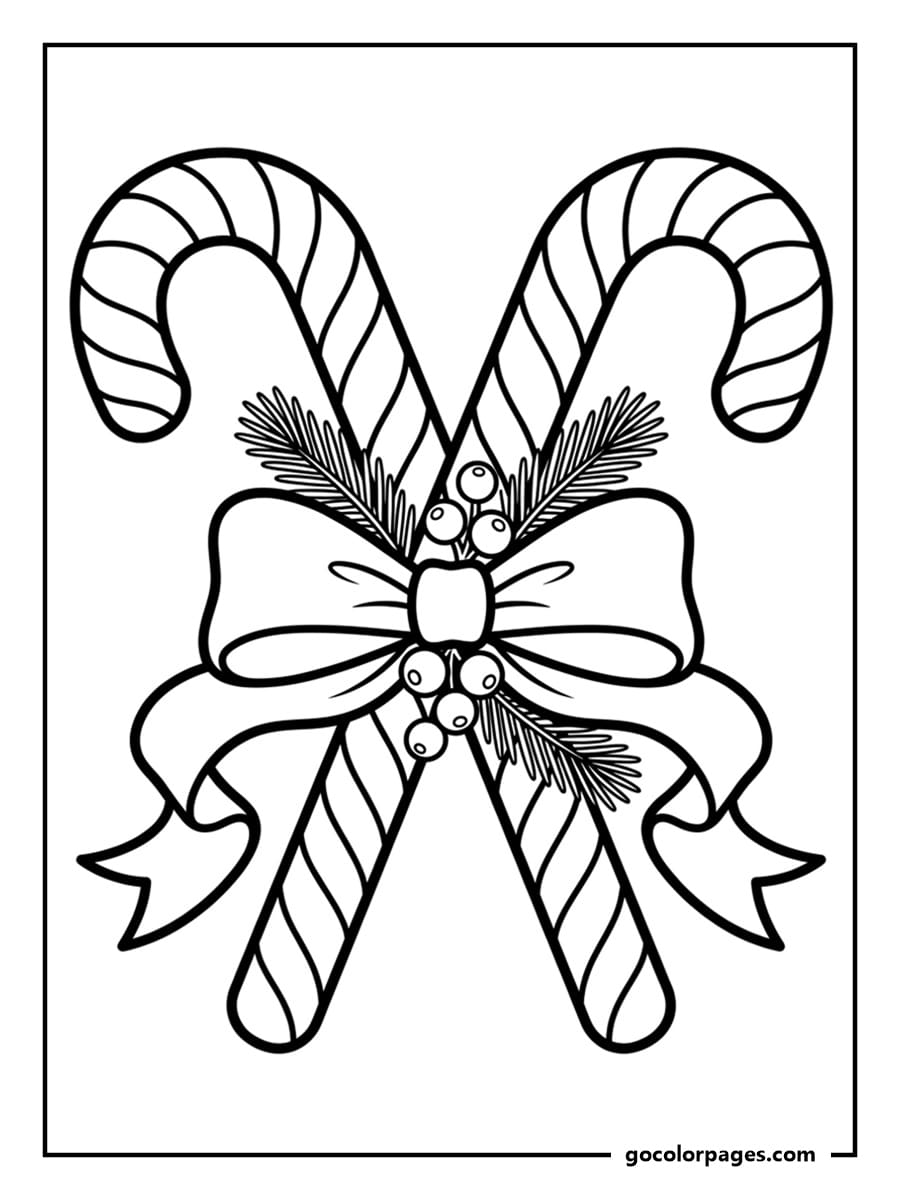
- Crossed Double Candy Canes Tied With Velvet Bows and Holly Berries: Twin hooked canes overlapping at the center behind a billowing satin ribbon, prickly English holly leaves, and clustered wintergreen berries.
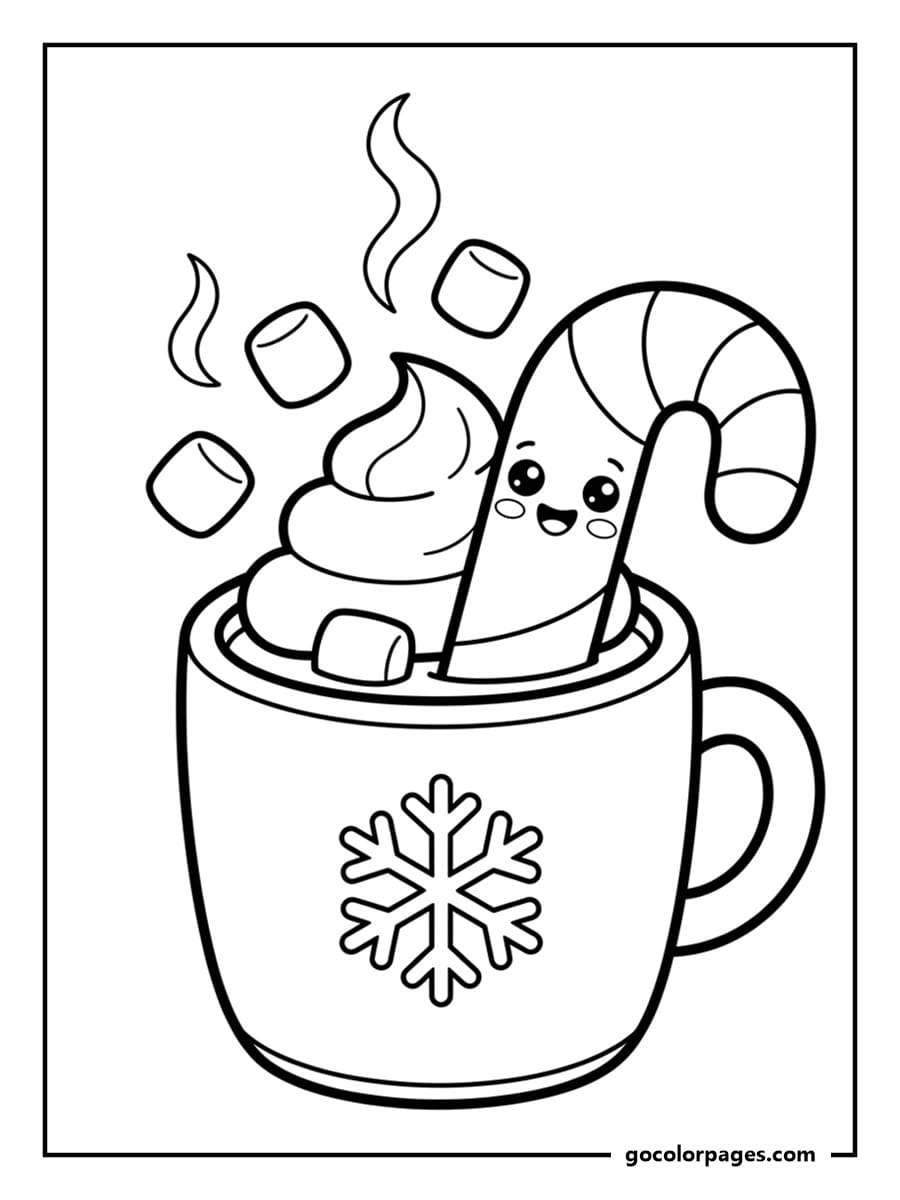
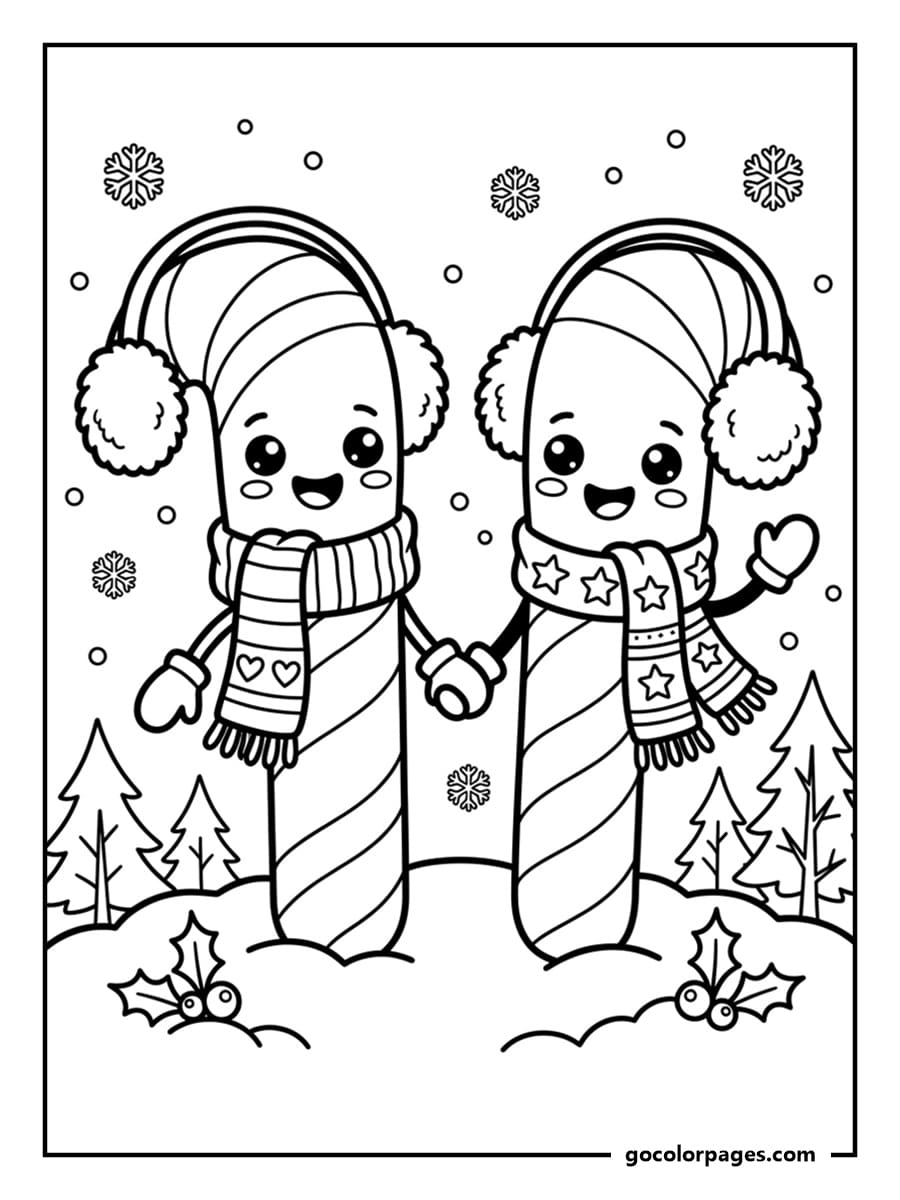
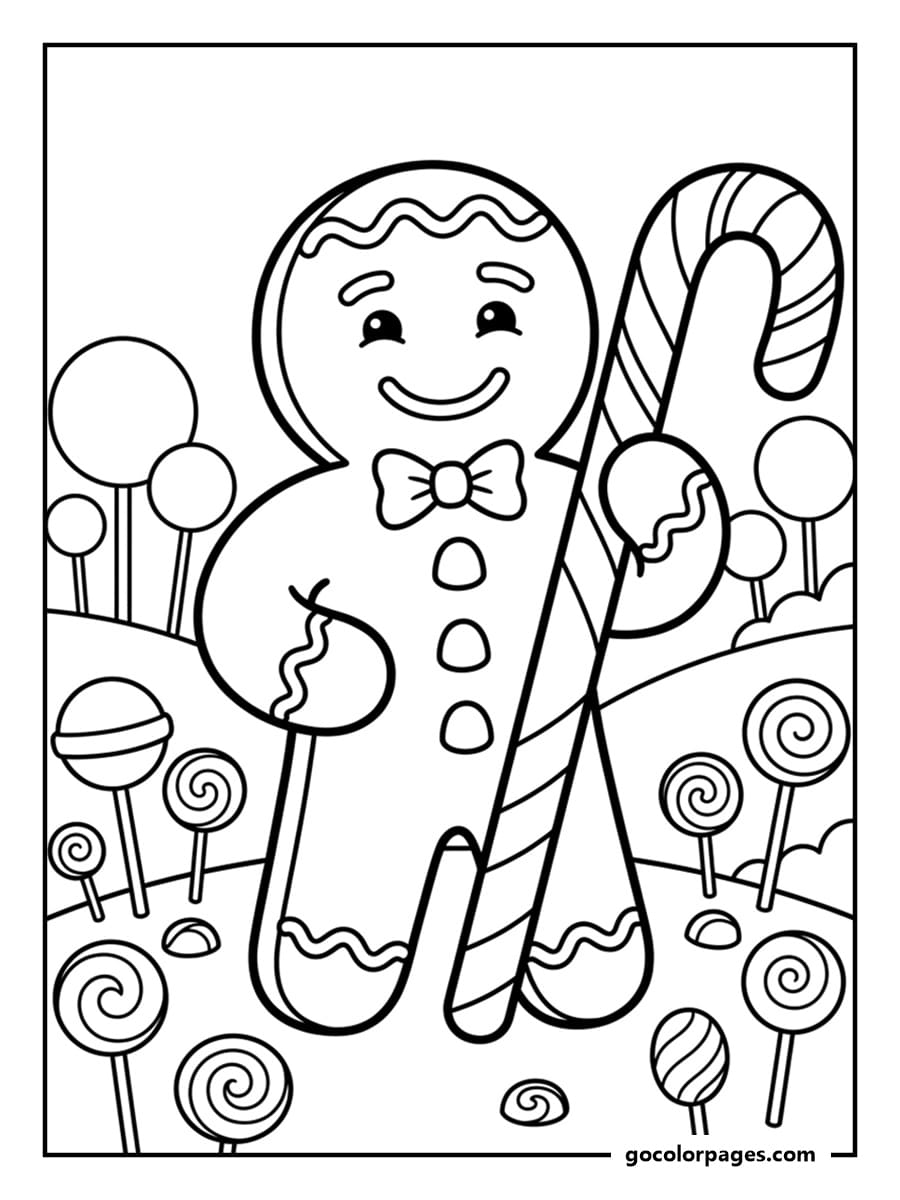
- Cute Kawaii Candy Canes Wearing Santa Hats and Earmuffs: Smiling peppermint sticks with rosy cheeks, knitted winter scarves, and marshmallow boots waving beside cheerful gingerbread friends.
- Candy Cane Hearts, Wreaths, and Hot Cocoa Marshmallow Mugs: Two hooked canes joined tip-to-tip into a festive heart frame or stirred into a steaming mug of whipped-cream hot chocolate.
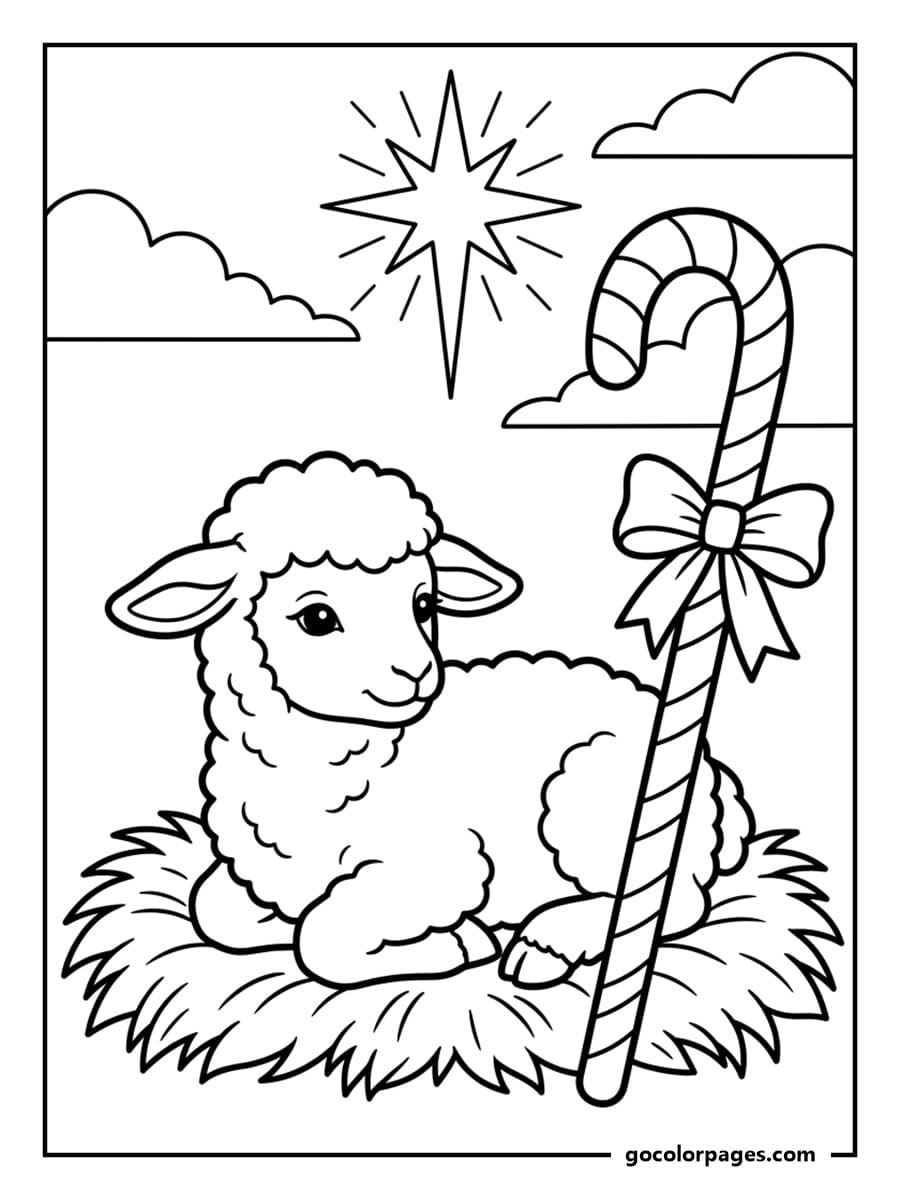
- Legend of the Candy Cane and Shepherd's Crook Sunday School Sheets: Hooked canes paired with upright "J" lettering, grazing nativity lambs, and Bethlehem stars for December children's ministry lessons.
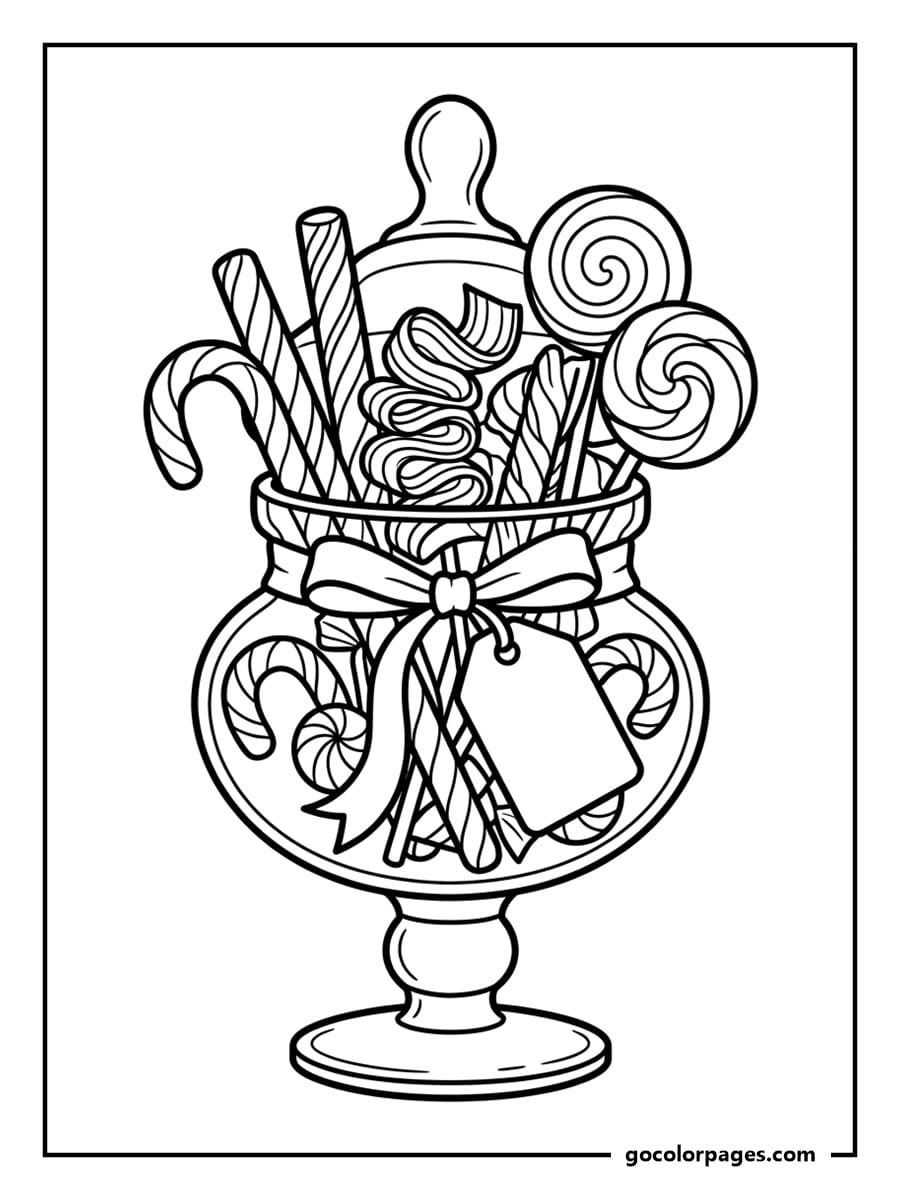
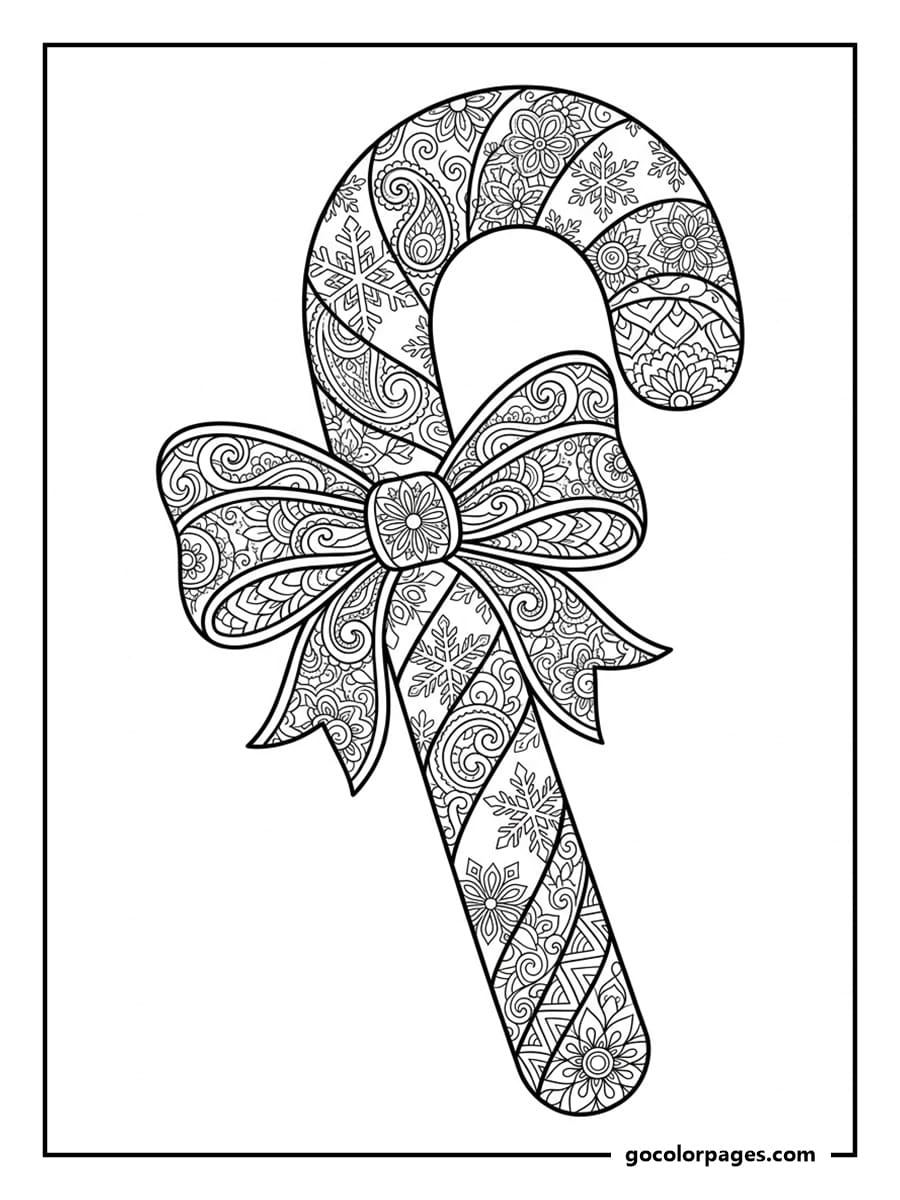
- Intricate Zentangle, Mandala, and Victorian Filigree Canes for Adults: Fine-line sugar sticks packed with paisley swirls, geometric snowflakes, and botanical pine sprays tailoredfor intricate adult coloring pages enthusiasts.
"For over two centuries after 1670, holiday candy canes were pure white adding diagonal red stripes turned a simple sugar stick into the ultimate tabletop test of pattern rhythm."
How to Color Peppermint Stripes Without Losing Rhythm or Smearing Pink
Watch a table of kids or adults sit down with candy cane coloring sheets, and you will see the exact same hiccup happen right at the top bend. Because the diagonal lines wedge closer together along the inner curve of the hook, your eye easily skips a space leaving two white bands or two red bands colliding at the turn.
Even when the pattern stays on track, red-and-white stripes are unforgiving if your pigment bleeds or smudges. Dragging a wet marker across a black outline turns crisp white sugar into blotchy pink, and reaching for a regular lead pencil to shade the white segments makes peppermint look like concrete. Follow these four studio habits before you fill your first band.
- Run the Light Red Dot Check Before Filling a Single Stripe: Before uncapping a marker, tap a tiny crimson pencil dot inside every other stripe starting from the bottom tip all the way around the hook so your hand never loses the alternating rhythm.
- Park Your Red Marker Half a Millimeter Inside the Black Line: When coloring with juicy alcohol markers, stop your red brush tip half a millimeter short of the printed black divider so capillary ink spread never creeps across into the neighboring white sugar band.
- Banish Gray Pencils and Rim White Stripes With Glacial Ice Blue: Never shade white peppermint stripes with graphite or neutral gray; leave the center eighty percent of every white band pure untouched paper and whisper a two-millimeter rim of icy sky blue (
B000) or cool mint (G000) along the outer curves. - Upgrade ABA Double-Ring Templates With Emerald Pinstripes: Many printable canes alternate wide bands with narrow twin spacer rings fill the wide band in cherry red, keep both flanking spacer rings bare white, and thread crisp emerald green down the thin middle pinstripe.
Three Shading Tricks for Glossy Pulled Sugar Velvet Bows and Holly Leaves
Coloring every stripe flat from left to right leaves a candy cane looking like a flat painted road barricade. Real confectioners aerate and pull hot melted sugar over giant hooks until microscopic air pockets give the white core a satin sheen, then seal the twisted stick under a glassy shellac glaze.
You also have to solve a tricky color collision at the center of the page. Almost every holiday template ties a red bow around a red-and-white cane, and using the same marker on both makes the ribbon vanish into the stripes behind it.
Carving an Unbroken Ribbon Highlight Down the Curved Sugar Cylinder
If you have ever practiced how to draw rounded cylinders and curved tubes, you know that light reflects along the entire length of a glossy pipe rather than stopping at each painted stripe. Filling every red segment solid from border to border kills that glassy reflection.
Before you touch ink or wax to the sheet, take a light pencil and draw two parallel guideline tracks three millimeters apart running continuously up the left-center of the straight shaft and curving smoothly around the top J-hook. Leave that continuous three-millimeter channel bare white paper across both the white and red stripes or shade the red bridges inside that channel with soft rose pink and a white gel pen while darkening the far outer left and right edges of every red band with deep crimson (R59) or dark cherry pencil so the whole cane rounds into a 3D glass cylinder.
Separating a Crushed Velvet Red Bow From Red Peppermint Stripes
Nothing flattens a holiday sheet faster than the Red-on-Red Camouflage Trap. When someone colors the candy cane stripes and the center ribbon bow with the exact same cherry-red crayon, the bow melts right into the peppermint stick.
Push your ribbon one step deeper and cooler on the color wheel to mimic plush crushed velvet. Shade the pinched fabric folds radiating out from the center knot in deep burgundy, dark maroon, or blackberry plum, blend medium raspberry across the mid-tones, and leave a soft, wide band of pale blush rose across the puffed belly of each loop saving a pinpoint white Posca or Gelly Roll dot for the top-left curve of the glossy holly berries.
Casting a Crisp Contact Shadow Where Twin Candy Canes Cross
Double crossed candy cane templates are a December favorite, yet they look like a flat paper "X" unless one stick clearly rests on top of the other. Your eye needs a sharp drop in light right at the intersection to read depth.
Once both canes are colored, pick which stick sits in front. Tuck a crisp, three-millimeter crescent shadow of cool indigo-violet across the white stripes and deep maroon across the red stripes on the back candy cane directly beneath the top and bottom edges of the front cane so the overlapping stick pops three-dimensionally off the page.
Five Confectionery Candy Cane Color Palettes Beyond Standard Red and White
By the third week of December, coloring another plain red-and-white stick can start to feel like assembly-line work. Step inside an old-fashioned apothecary sweet shop or browse historic confectioners like Hammond's Candies and Spangler, and you'll find glass jars packed with dozens of multi-colored flavor twists.
Swapping in one of these five authentic candy-shop palettes wakes up a stack of printables while giving you an excuse to reach for the greens, purples, and warm golds sitting untouched in your pencil tin.
- Classic King Peppermint Scarlet, Glacial White, and Holly Green: Bright scarlet red (
R29), pure white paper rimmed in glacial ice blue (B000), and deep hunter green English holly leaves. - Victorian Spearmint and Wintergreen Emerald, Key Lime, and Vanilla Cream: Alternate rich forest emerald and bright key-lime pinstripes against warm vanilla-cream sugar bands for an heirloom apothecary jar look.
- Old-Fashioned Rainbow Ribbon Candy Cherry, Tangerine, Lemon, and Grape: Channel crinkled Christmas ribbon candy by cycling cherry red, tangerine orange, canary yellow, kelly green, and royal purple separated by crisp white sugar dividers.
- Sugarplum Fairy and Gingerbread House Blush Pink, Lilac, and Mint: Pair cotton-candy rose, soft lavender, and pastel seafoam mint for kawaii character sheets and frosted marshmallow cocoa mugs.
- Spicy Cinnamon Fireball and Hot Cocoa Barn Red, Copper, and Clove Brown: Blend fiery barn red, warm copper-ochre, and toasted marshmallow cream beside steaming dark-chocolate mugs.
"A red bow never gets lost against a red-and-white candy cane when you push the ribbon into deep crushed-velvet burgundy and keep the peppermint stripes bright scarlet."
Four Holiday Classroom and Kitchen Table Crafts Using Candy Cane Templates
Because single candy cane outlines have bold, continuous outer borders and zero fragile protruding fingers, they are the easiest shape in the entire holiday folder for young kids to cut out cleanly with safety scissors. Instead of letting finished sheets pile up on the counter, a bottle of school glue or two snips of the scissors turns them into multi-sensory December decor.
When we test our printable coloring pages for kids with preschool teachers, kindergarten math specialists, and Sunday school leaders, these four tabletop builds consistently steal the show.
- Peppermint-Scented Shaving Cream Puffy Paint for Preschoolers: Whisk equal parts white foam shaving cream and liquid white school glue in two bowls, stir washable red tempera paint and two drops of real baking peppermint extract into the second bowl, and let toddlers dab raised, marshmallow-thick alternating stripes onto bold cane outlines that dry puffy and smell like a candy shop.
- Kissing Candy-Cane Heart Photo Frames and Tree Ornaments: Cut out two finished hooked candy canes, flip one horizontally so the top hooks kiss and the bottom tips meet in a V-point, glue the joints into a sturdy heart frame, and tape a child's photo or a festive winter penguin from our animals coloring pages inside the center window.
- Early-Math AB and AABB Pattern Strips for Kindergarten Centers: Print blank, unstriped candy cane templates, call out an
AB(red-green-red-green) orAAB(red-red-white) sequence, and let students build the repeating code along the curve using dot markers, pom-poms, or colored tissue squares. - Slit-Hook Real Candy Cane Holder Gift Tags: Print four candy cane templates per page using your printer's "4 Pages Per Sheet" layout on heavy cardstock, cut out the miniature colored canes, slice two parallel one-inch horizontal slits through the paper shaft, and slide a real wrapped peppermint stick through the slots for classroom party favors.
Frequently Asked Questions About Candy Cane Coloring Pages
How do you color a candy cane so the white stripes look 3D instead of flat or dirty?
Never shade white peppermint stripes with a regular gray lead pencil, which makes spun sugar look like muddy snow. Leave the center eighty percent of each white band pure untouched paper, shade only the outer left and right rims with whisper-soft icy sky blue or cool mint, and run an unbroken three-millimeter white highlight strip straight up the entire cane.
Why are candy canes shaped like a J or a shepherd's crook on Christmas coloring pages?
According to 1670 German holiday folklore from Cologne Cathedral, a choirmaster asked a candy maker to bend straight white sugar sticks into curved shepherds' crooks to keep children quiet during the Christmas nativity service. In Sunday school lessons, the cane is also turned upright to form the letter "J" for Jesus.
How do I stop red marker from bleeding into the white stripes on a candy cane coloring sheet?
First, tap a light red pencil dot inside every other stripe before uncapping your marker so you never lose the alternating pattern around the curved hook. Second, stop your red marker nib half a millimeter inside the printed black divider line so wet ink does not wick across the paper fibers into the clean white stripe.
What other colors can you use on candy cane coloring pages besides red and white?
Real confectionery jars offer plenty of festive palettes beyond standard red and white. Try emerald and key lime with vanilla cream for Victorian spearmint, blush pink with lavender and seafoam mint for pastel sugarplum, or alternating cherry, orange, lemon, green, and purple stripes inspired by old-fashioned Christmas ribbon candy.
Print One Candy Cane Sheet and Test the Continuous Cylinder Highlight Tonight
You don't need a gourmet candy thermometer or a forty-marker set to turn a flat peppermint outline into glossy spun glass. Pull out one free printable PDF right now and run these two quick tabletop tests in under ten minutes.
- Run the Red-Dot and Continuous Cylinder Highlight Test (4 minutes): Print any single or crossed candy cane sheet, dot every other stripe lightly with a red pencil so your pattern stays locked around the hook, pencil a three-millimeter vertical highlight channel down the shaft, and shade the outer rims in deep crimson and icy blue.
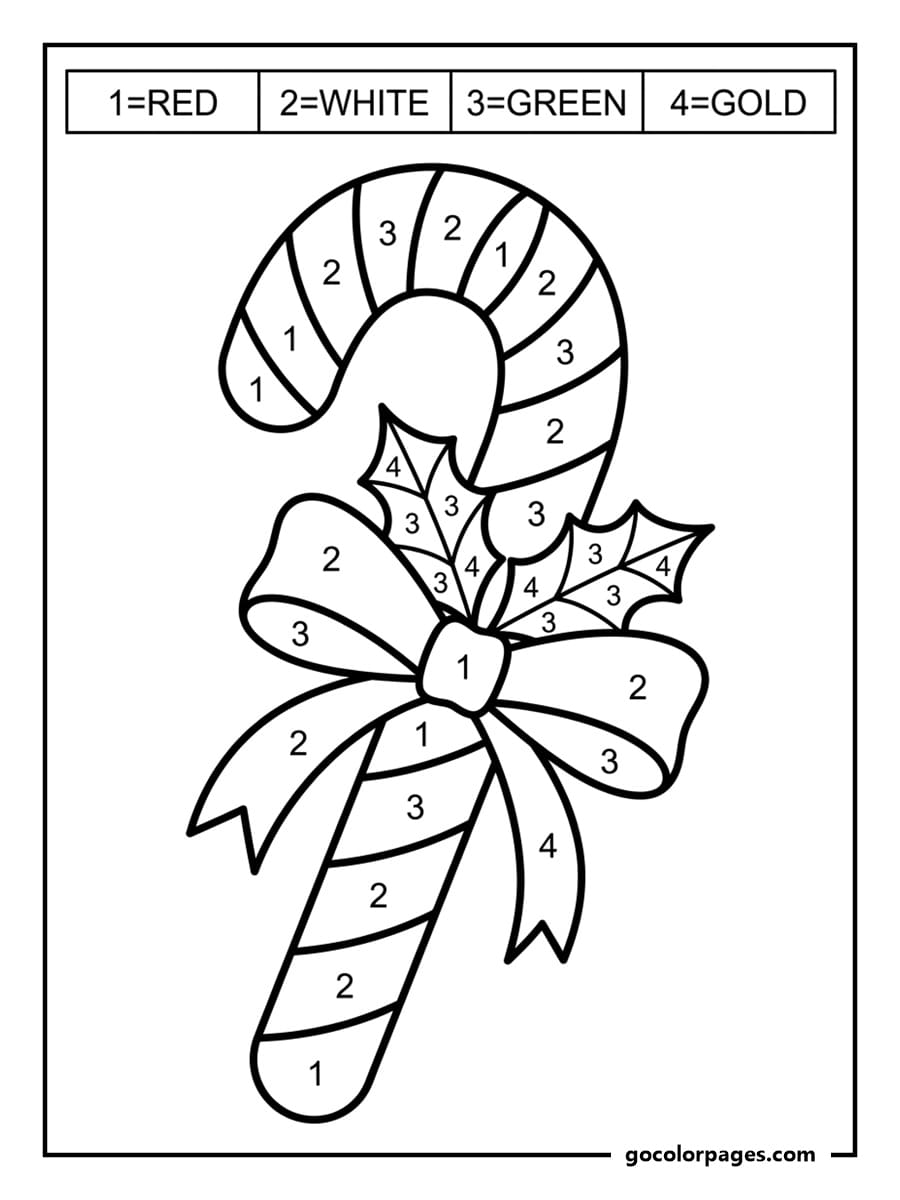
- Shade One Crushed-Velvet Burgundy Bow Against Scarlet Stripes (4 minutes): Pick a candy cane tied with a ribbon bow, color the cane stripes bright scarlet red, and shade the bow's knot creases in deep maroon and plum with soft rose-pink loops so the ribbon leaps forward.
When you set out candy cane coloring pages in December, does your table stick to classic red-and-white peppermint canes tied with holly bows, experiment with rainbow and pastel sugarplum stripes, or go straight for cute kawaii candy canes floating in hot cocoa mugs?