
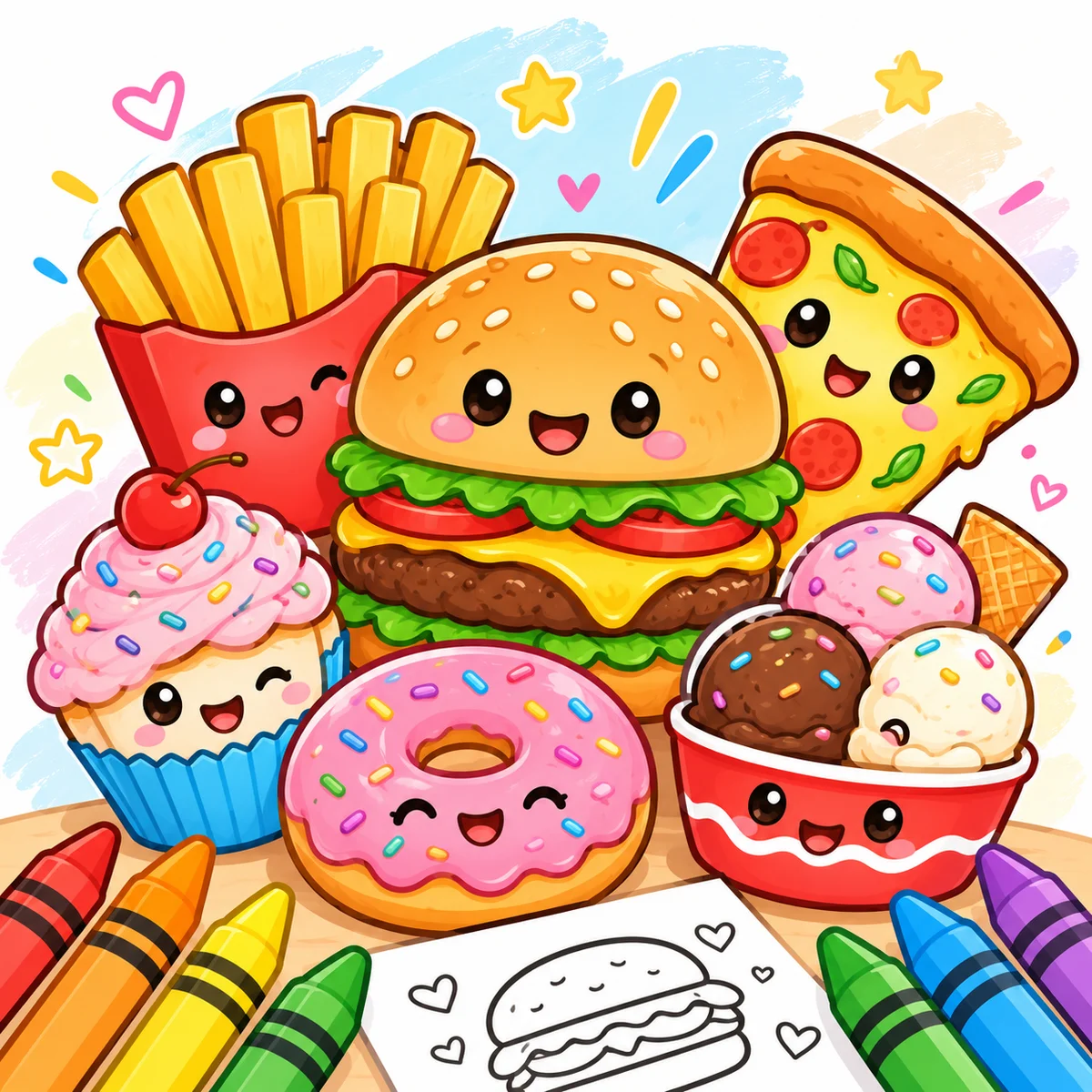
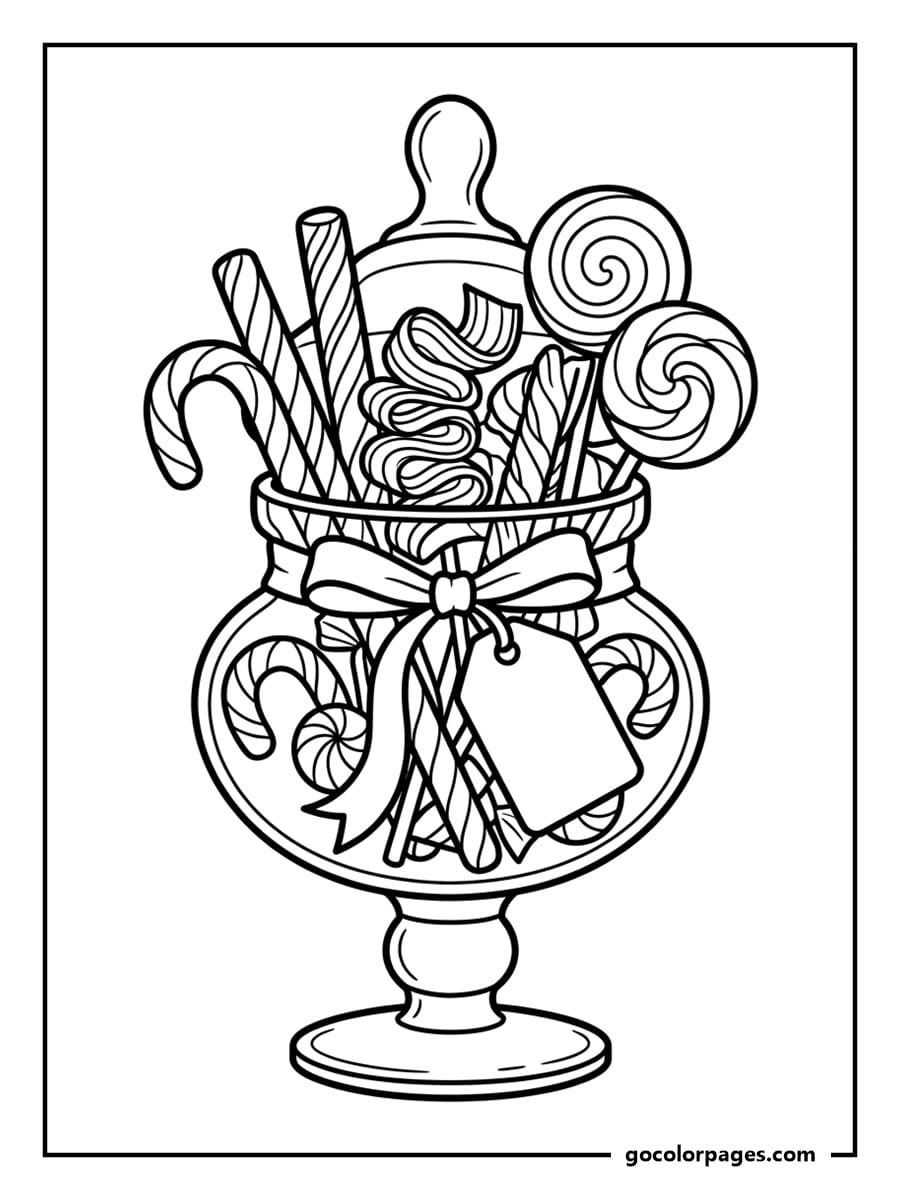
Nobody craves a slice of pizza shaded with a gray crayon. Our eyes evolved over thousands of years to spot spoiled meals in a split second, which means a single muddy streak on foods coloring pages turns a warm croissant or a ripe strawberry into cold plastic. Most people grab one neon-yellow marker for French fries and a solid red stick for apples, wondering why the finished plate looks lifeless. Once you trade flat fills for toasted golden-brown edges and leave crisp white reflection ribbons across glossy icing, paper snacks look ready to eat right off the table.
Six Craveable Menu Categories From Kawaii Boba to Farm Stand Produce
Handing a child or a tired adult two hundred random food clip-art sheets guarantees decision fatigue before a single cap comes off a marker. In our studio testing, people color three times longer when you lay out sheets like a restaurant menu pairing a quick starter, a savory main dish, and a frosted dessert.
When we organize our master library of printable coloring pages for classrooms and kitchen tables, we group culinary sheets into six distinct flavor families. Picking your menu category first tells you immediately whether to reach for pastel brush markers, warm bakery earth tones, or crisp botanical pencils.
- Kawaii Sweet Treats and Bubble Tea: Smiling boba milk tea cups with tapioca pearls, stacked macaron towers, and soft-serve cones drawn with wide 2-point contours built for effortless alcohol marker washes.
- Artisan Bakery Pastries and Layered Cakes: Flaky croissants, braided challah loaves, Belgian waffles, and tiered birthday cakes with piped rosettes that reward warm oven-browning gradients.
- Sizzling Diner and Fast-Food Classics: Melty pepperoni pizza slices, sesame-bun cheeseburgers, crinkle-cut fries, and taco trucks packed with overlapping lettuce, tomato, and cheese layers.
- Farm-Stand Fruits and Garden Vegetables: Halved watermelons, ruby strawberries, heirloom tomatoes, and leafy broccoli florets tailored for preschool nutrition units and translucent pencil glazing.
- Cozy Global Comfort Bowls and Street Food: Steaming tonkotsu ramen bowls with halved soft-boiled eggs, nigiri sushi platters, dim sum bamboo steamers, and sizzling fajita skillets.
- Intricate Harvest Spreads and Vintage Kitchens: Detailed charcuterie boards, afternoon tea tables, and mason-jar pantry shelves engineered for slow, multi-evening colored-pencil shading.
"Setting out food sheets like a three-course menu one fresh fruit starter, one sizzling main dish, and one frosted dessert sparks instant storytelling before the first cap comes off a marker."
The Golden Crust Formula and Why Gray Shadows Ruin Appetite Appeal
Watch ten beginners color a Belgian waffle, a pretzel, or a hamburger bun, and nine of them will scrub a single medium-brown crayon from edge to edge. Within thirty seconds, the pastry looks like a piece of cardboard.
In 1912, French chemist Louis-Camille Maillard mapped the exact chemical reaction that browns baking dough once oven heat passes 285 degrees Fahrenheit. Real baked goods never turn a single uniform brown; heat radiates unevenly across the surface, leaving the moist center crumb pale cream while turning rising domes golden yellow and scorching only the outer ridges a deep, caramelized sienna.
Even worse than flat brown is the instinct to shade food with black or lead gray. American painter Wayne Thiebaud became famous for diner pastry canvases that make viewers' mouths water because he banned dead gray shadows, outlining meringue pies and cake slices with vibrating warm orange and cool turquoise halos instead.
- The Three-Stage Maillard Crust for Bread, Waffles, and Pizza Dough: Leave the center crumb pale buttermilk cream, sweep golden yellow ochre across the rising dome, and kiss only the outer blisters and pinched corners with toasted burnt sienna.
- Juicy Crimson and Plum Shadows for Red Fruits and Marinara: Shade the underside of strawberries, cherries, heirloom tomatoes, and pizza sauce drips with deep alizarin crimson or blackberry plum rather than gray so produce looks ripe instead of bruised.
- The Thiebaud Vibrating Halo for Cake Frosting and Ceramic Plates: Trace a hairline rim of contrasting warm tangerine or electric turquoise right along the shadow edge of white whipped cream and diner plates to make pale frosting pop off the sheet.
How to Color Glossy Glazes Melted Cheese and Translucent Drinks
Dry, chalky wax works fine for a crusty sourdough loaf, but it kills the illusion of a glazed strawberry donut, a gooey pizza slice, or an iced boba tea. Your brain judges whether food is wet, hot, or ice-cold entirely by how light bounces off the surface.
You don't need airbrushes or digital filters to fake moisture and temperature on paper. Mastering three quick highlight and shadow placement tricks will make any printable snack look freshly served.
Leaving Parallel White Reflection Windows on Icing Berries and Boba
The fastest way to make donut icing, candied apples, or tapioca pearls look like dull modelling clay is coloring them solid from line to line. Wet sugar glazes act like curved mirrors that reflect the ceiling light above your table.
Before you touch a pink or chocolate marker to a frosted donut or cherry, lightly pencil a curved, two-millimeter "windowpane" ribbon along the upper-left contour and a tiny dot on the opposite rim, leaving both spots bare white paper. If you already colored the zone solid with Ohuhu markers or Prismacolor pencils, draw that crisp S-curve reflection right on top using a 0.8-millimeter white Posca paint pen or a Sakura Gelly Roll 10 pen.
Layering Opaque Melted Cheese Over Crispy Pepperoni and Burger Patties
If you have practiced how to draw overlapping three-dimensional forms, you know that one object only looks draped over another when it casts a tight shadow underneath. Flat yellow cheese on a pizza or cheeseburger looks like a stiff paper sticky note until you give the melted edge thickness and weight.
Fill the center of a mozzarella pull or melted cheddar corner with warm cadmium yellow, then blend rich orange-ochre along the drooping outer curves. Finish by tucking a razor-thin, two-millimeter line of dark terracotta or burnt umber directly underneath every cheese drip where it hangs over the burger patty or pepperoni slice.
Faking Ice Cubes Glass Mason Jars and Fizzy Lemonade With Pale Undertones
Coloring a glass of lemonade, a milkshake dome, or an iced matcha latte solid from left to right instantly buries the ice cubes and straw inside a flat wall of pigment. Clear glass and ice are seventy percent reflection and thirty percent tinted refraction.
Leave the center seventy percent of every floating ice cube completely bare white paper, and trace only the inner L-shaped bevel edges with icy mint green, pale sky blue, or soft lemon yellow. Add five or six tiny uncolored white circles rising in a curved stream from the bottom of the glass toward the straw to give sodas and fruit punches instant carbonation.
Surface Textures That Separate Fluffy Frosting From Crispy Fried Crunch
Most people use the exact same diagonal back-and-forth stroke for whipped cupcake frosting, crispy fried chicken, and smooth tomato soup. When every dish on the table shares the same pencil texture, your eye loses all sense of mouthfeel.
Rotating your wrist and changing how your pen tip hits the paper lets you build distinct culinary textures before you even switch colors. Whether you are relaxing with bold cute and easy coloring pages or layering fine pencils across intricate adult coloring pages, match your mark-making to the way the dish was cooked.
- Whipped Buttercream and Soft-Serve Swirls: Follow the curved contour of each piping ridge with smooth, continuous C-strokes, tucking a cool rose-pink or warm caramel shadow strictly into the deep crease between stacked swirls.
- Crumbly Muffin Tops Fried Chicken and Sugar-Dusted Donuts: Ditch long strokes for stippling tap the tip of a golden-brown pencil and an amber marker in dozens of tiny clustered dots along the shadow edge to mimic coarse sugar crystals and crispy batter.
- Dimpled Citrus Rinds and Seeded Strawberry Skins: Shade the overall roundness of an orange or berry first, then tuck a tiny dark crimson crescent under each seed pit and dot pinprick white highlights right beside them so the skin looks plump.
- Steaming Ramen Broth and Sizzling Skillet Heat: Leave two soft, zig-zagging S-curves of bare white paper or lift a path through background shading with a kneaded eraser drifting upward from soup bowls and coffee mugs so the dish looks piping hot.
"Your pencil tip is your seasoning smooth C-curves whip air into cupcake frosting, while clustered stipple dots fry a golden crunch onto chicken and hash browns."
Turning Colored Food Sheets Into Pretend Menus and Nutrition Games
Unlike standard coloring sheets that get taped to a bedroom door and forgotten, food printouts naturally anchor kitchen play and hands-on nutrition lessons. Pediatric occupational therapists and preschool teachers routinely use food templates to help picky eaters explore unfamiliar fruits and vegetables in a zero-pressure setting before those foods ever appear on a dinner plate.
When we test our printable coloring pages for kids in early-childhood classrooms and family kitchens, these three off-the-page builds consistently turn ten minutes of coloring into an hour of active play.
- Laminated Diner Menus and Play-Kitchen Order Pads: Slip four finished burger, pizza, drink, and cupcake sheets into clear 5-mil laminating pouches or binder protectors, let kids write one-to-five-dollar prices beside each item with a dry-erase marker, and have them add up family dinner checks at the table.
- USDA MyPlate Phytonutrient Rainbow Collages: Have elementary students color ten different farm-stand fruits, vegetables, and grains pairing naturally with barnyard farm units from our animals coloring pages then cut and glue them onto a divided paper plate by color family to see how red lycopene tomatoes and orange beta-carotene carrots fuel the body.
- Velcro Felt-Board Taco and Pizza Builders for Toddlers: Glue colored taco shells, pizza crusts, mushroom slices, and bell pepper rings onto heavyweight cardstock backed with self-adhesive Velcro dots so three-year-olds can assemble and serve custom meals without kitchen mess.
Frequently Asked Questions About Foods Coloring Pages
How do I color bread, waffles, and pizza crusts so they look freshly baked instead of flat brown?
Skip the single dark-brown crayon and use the three-stage Maillard baking gradient instead. Leave the center of the loaf or waffle pale buttermilk cream, blend warm yellow ochre across the rounded dome, and shade only the outer rim and raised blisters with toasted burnt sienna.
Why do my colored fruits and desserts look dull or spoiled when I add shadows?
Shading food with a black or neutral gray pencil mixes with yellows and reds to create murky greenish-brown tones that the human brain instinctively reads as mold or ash. Always shade food with a deeper, warmer neighbor on the color wheel such as deep crimson under a strawberry, warm plum under a blueberry tart, or golden amber under a pancake stack.
How do you make donut glaze, berries, and boba pearls look shiny and wet on paper?
Glossy food surfaces need a high-contrast specular highlight right next to a rich mid-tone. Either leave a narrow, curved white windowpane ribbon uncolored along the upper-left curve of the icing before you start coloring, or draw a bright opaque highlight over your dry marker fill using a white Posca paint pen or Sakura Gelly Roll.
What are the best food coloring pages for teaching preschoolers about healthy eating?
Start with single farm-stand fruits and garden vegetables drawn with bold 3-point outlines and five to eight large zones such as a halved watermelon, a bunch of bananas, or a smiling broccoli floret. Once toddlers finish coloring, let them cut out each food and sort them into a five-color rainbow plate before tasting a real bite at snack time.
Pull Out One Pastry or Pizza Sheet and Try This Ten Minute Bake Tonight
You don't need a professional culinary illustration kit to make your next food printout look warm enough to eat off the desk. Grab one food sheet right now and test these two quick studio upgrades in under ten minutes.
- Run the Three-Color Maillard Crust Test (4 minutes): Pick any croissant, waffle, burger bun, or pizza slice sheet, leave the plain brown crayon in the box, and blend pale cream, golden yellow ochre, and a touch of burnt sienna from the center outward to watch the dough bake on paper.
- Carve a White Glaze Window on One Berry or Donut (3 minutes): Outline a narrow S-curved ribbon on the upper-left curve of a strawberry, cherry, or frosted donut and keep that strip completely bare white while coloring around it for instant wet shine.
When you print out a fresh stack of food sheets for yourself or your kids, which menu category always gets colored first at your table kawaii boba and bakery desserts, sizzling pizza and burger classics, steaming ramen bowls, or fresh farm-stand fruits?