
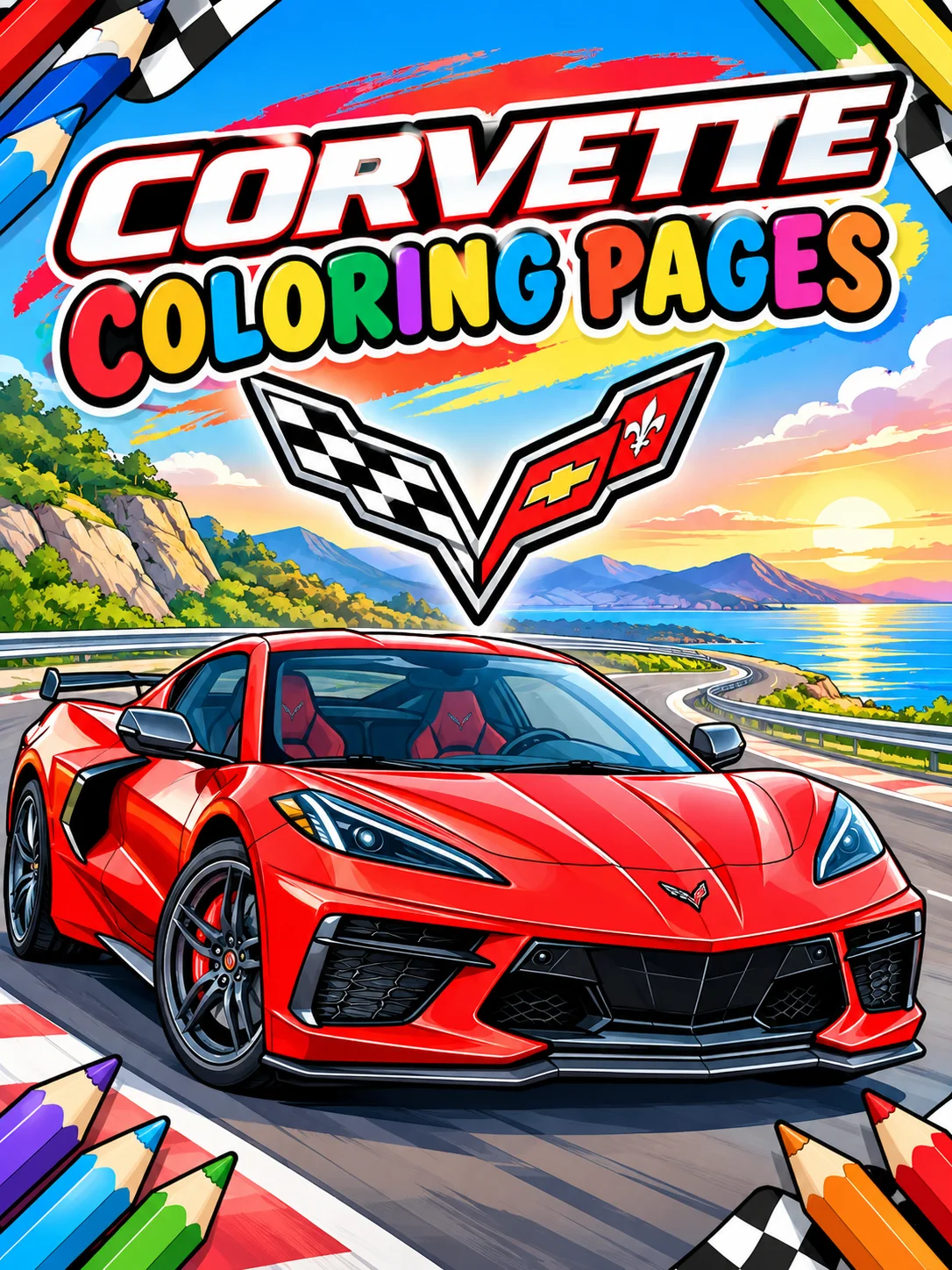
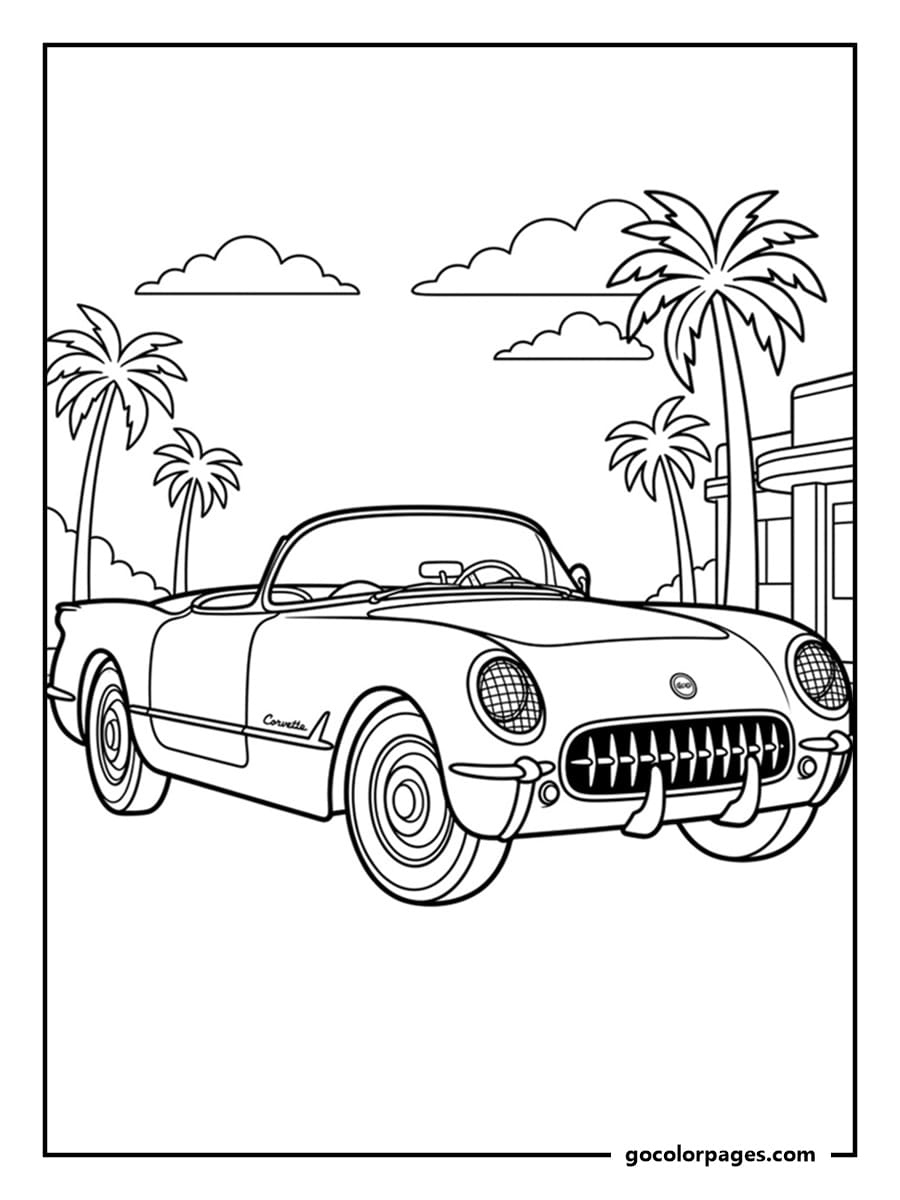
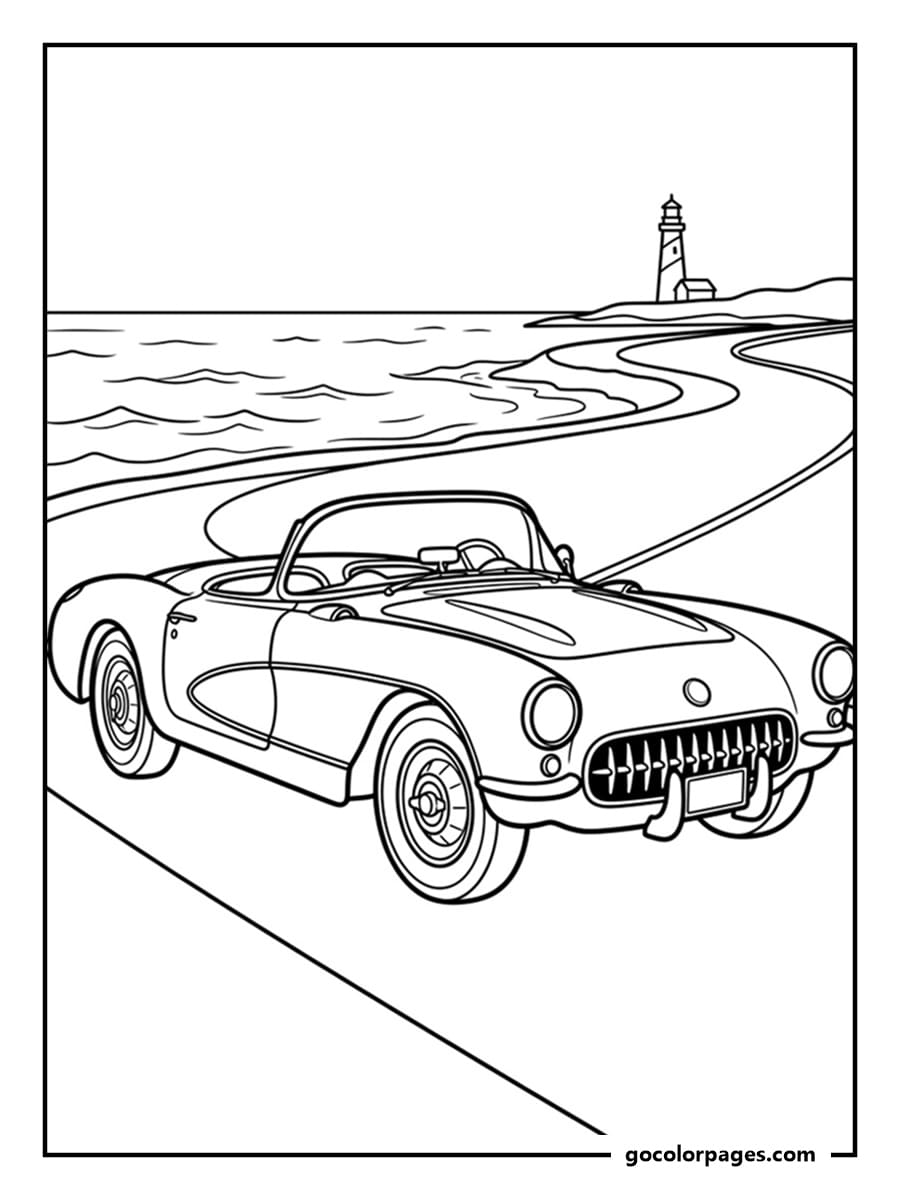
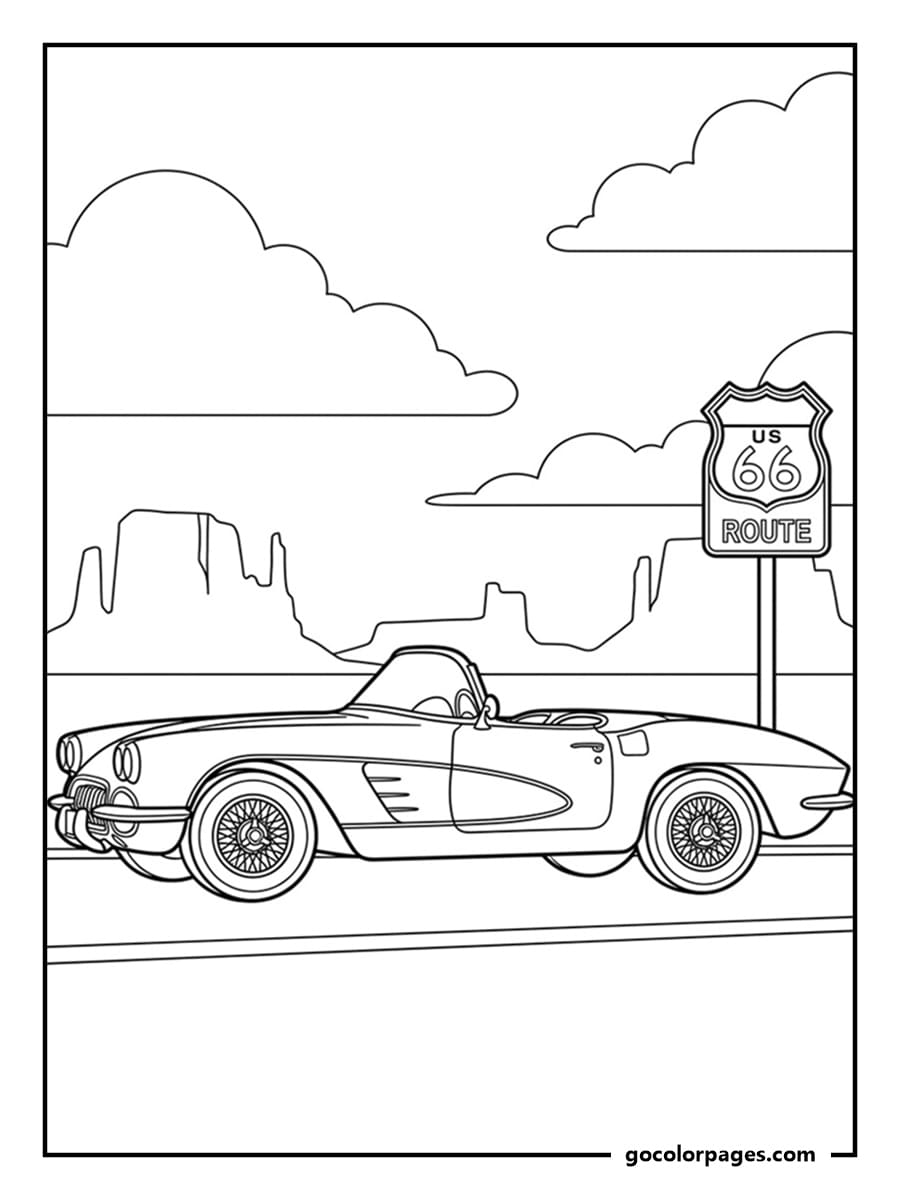
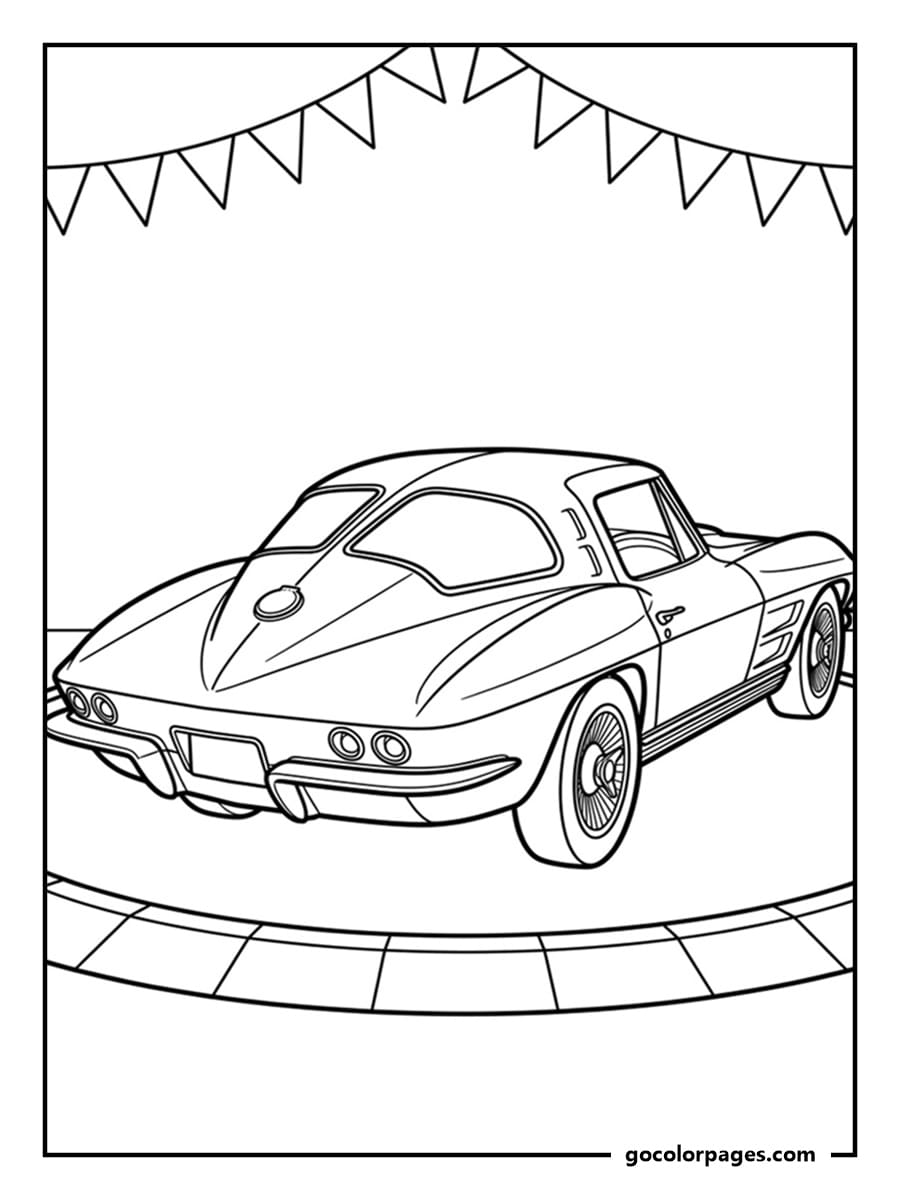
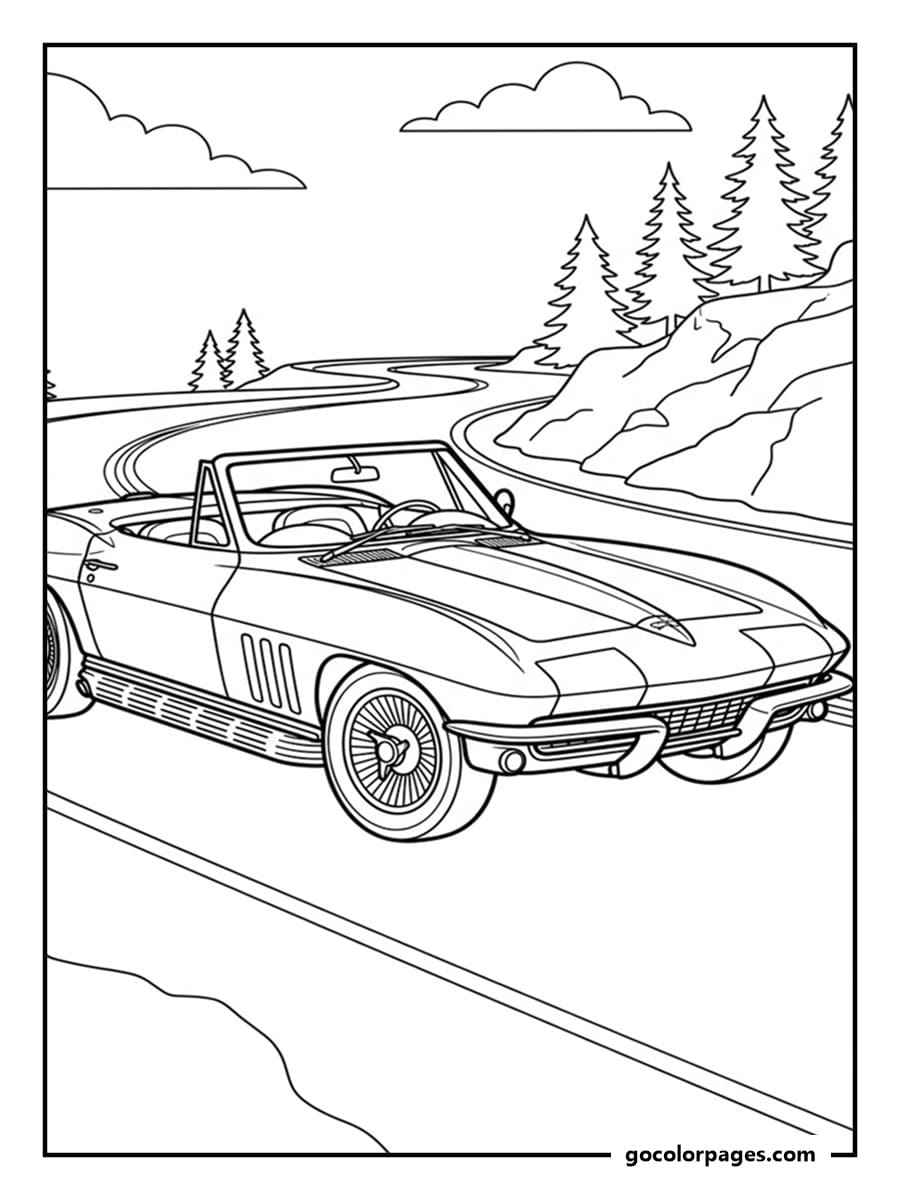
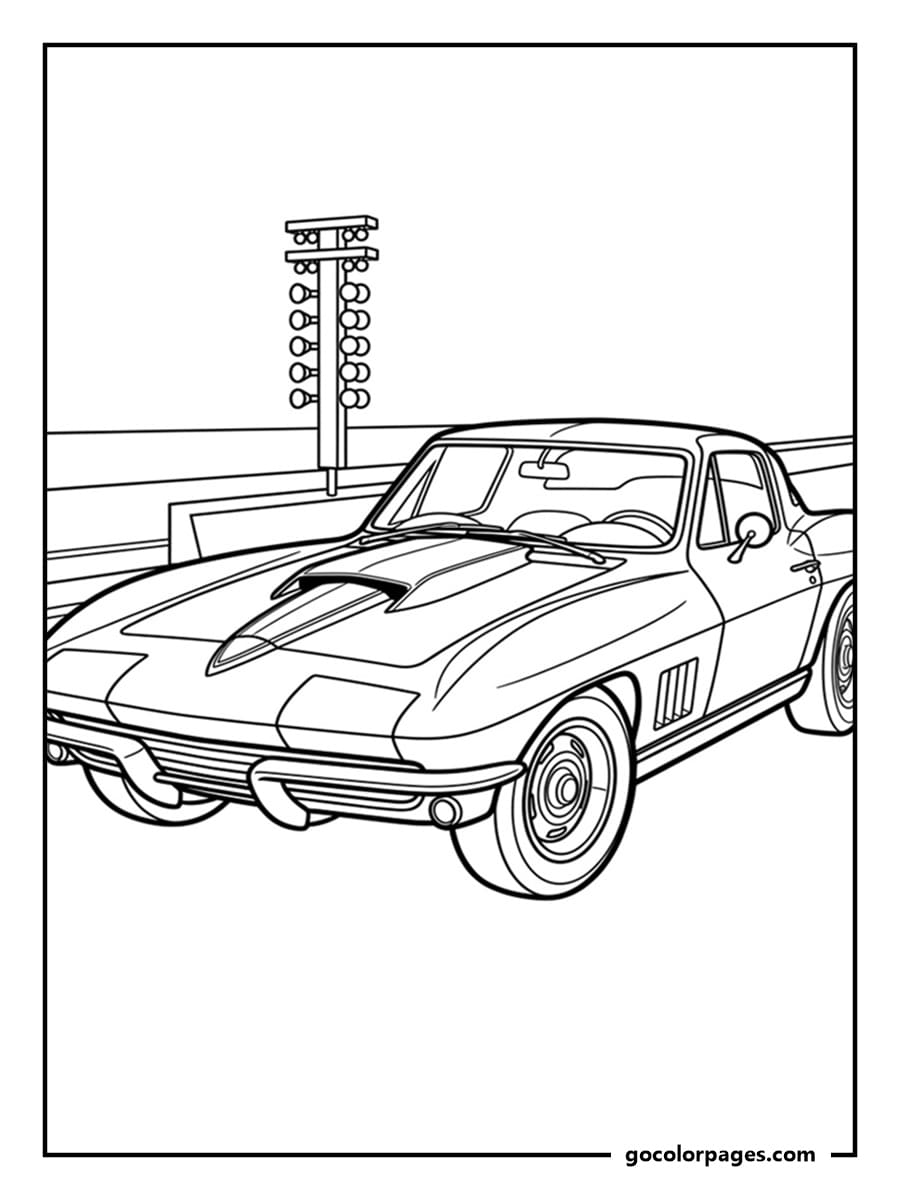
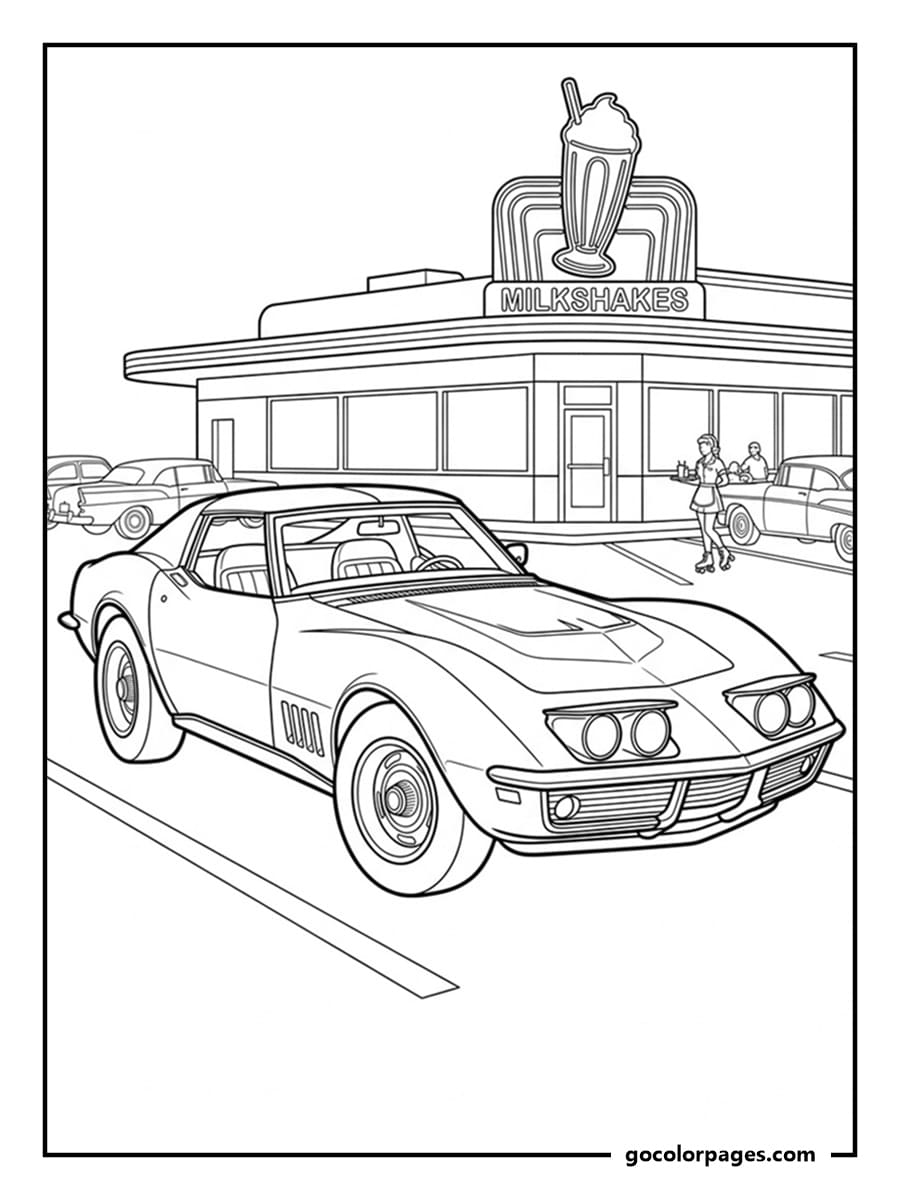
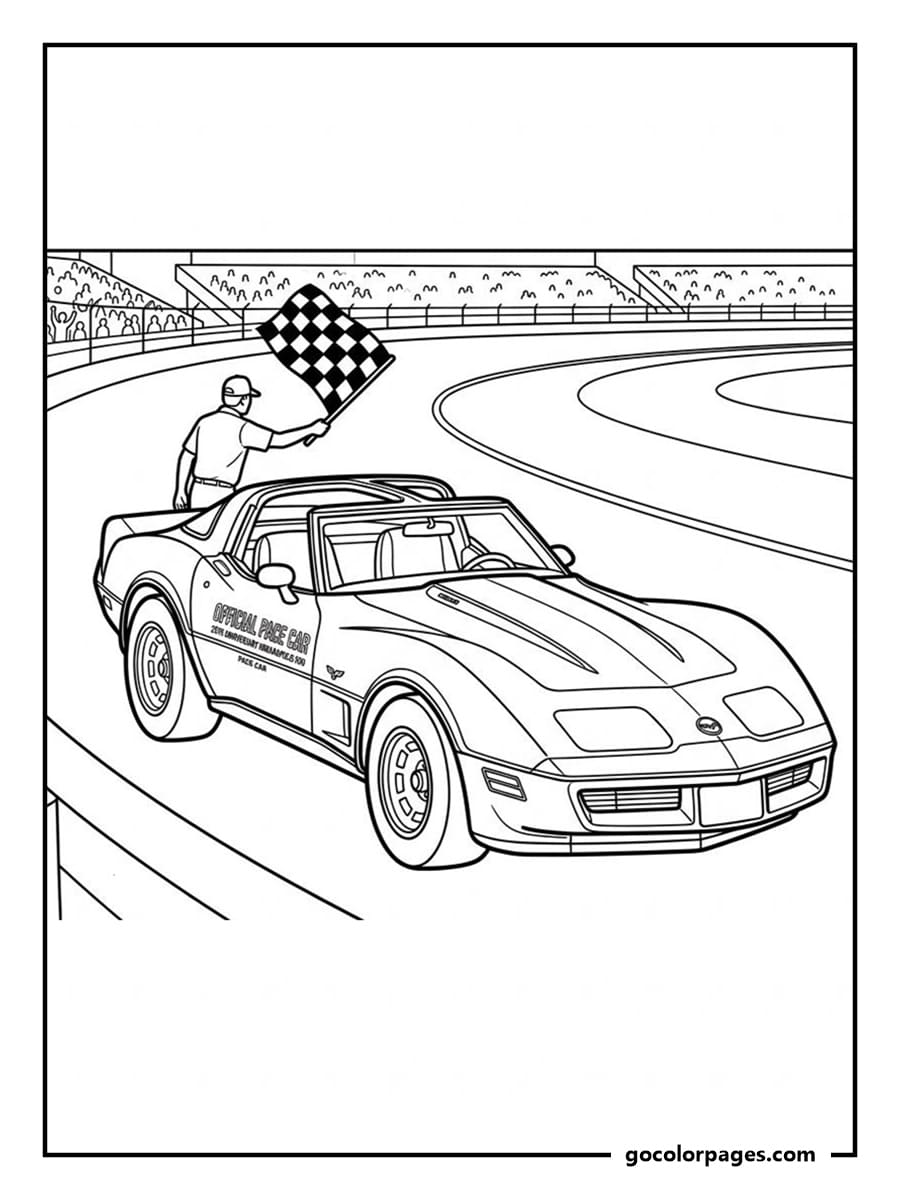
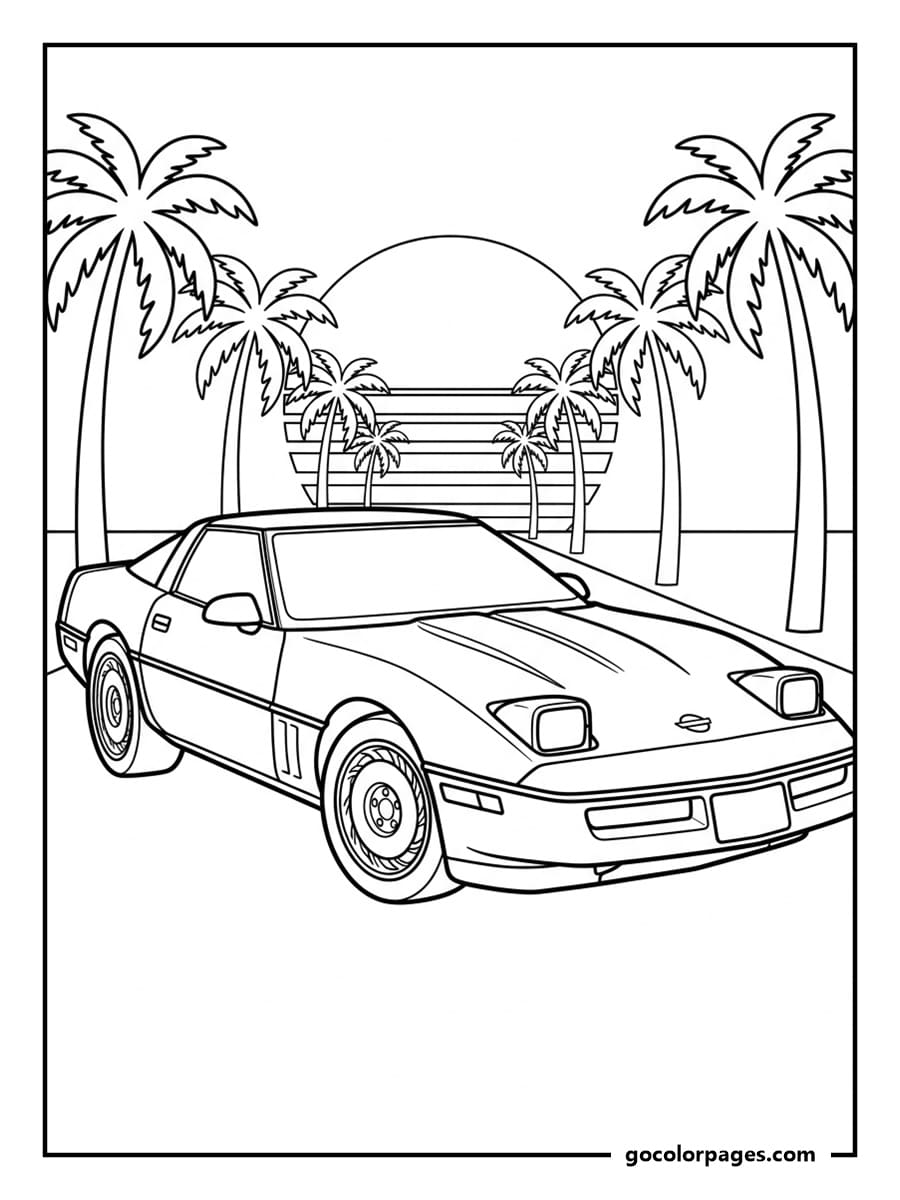
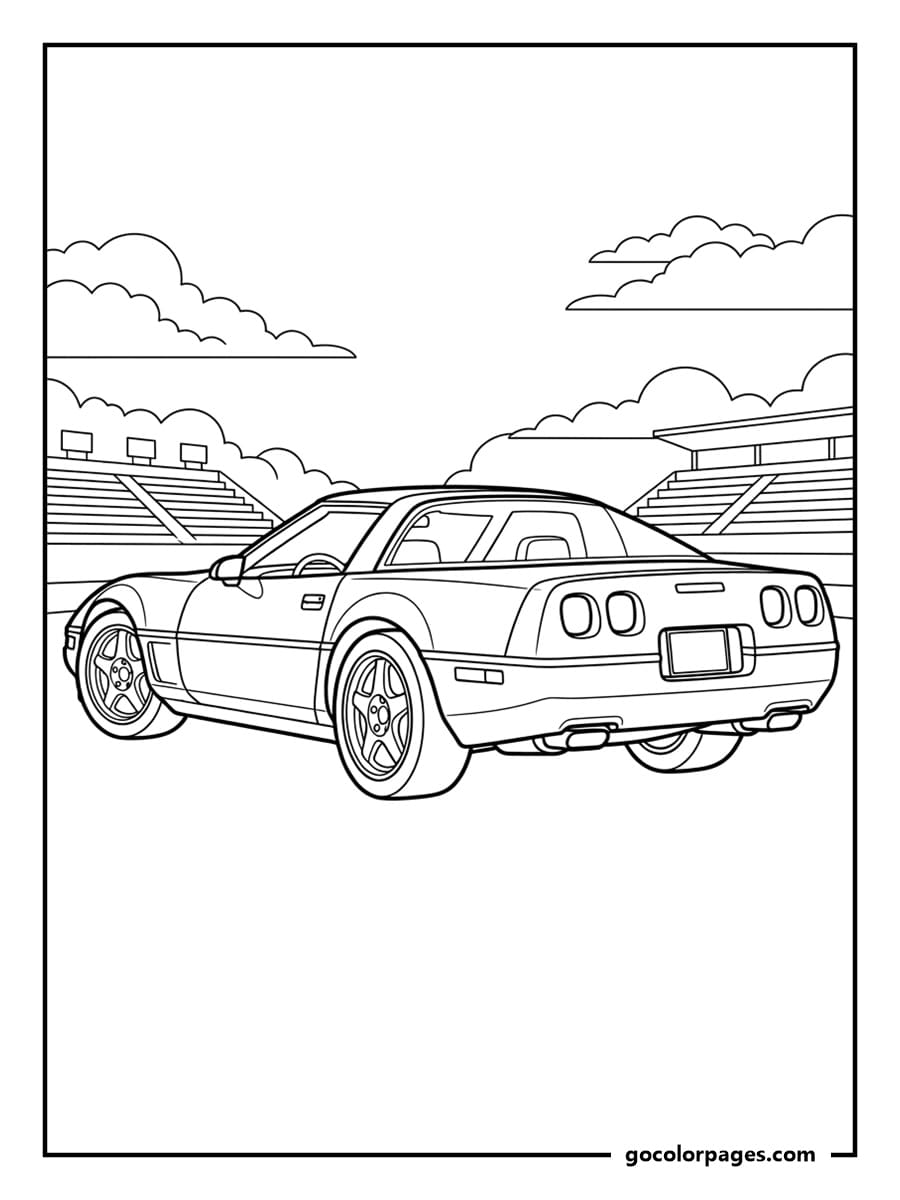
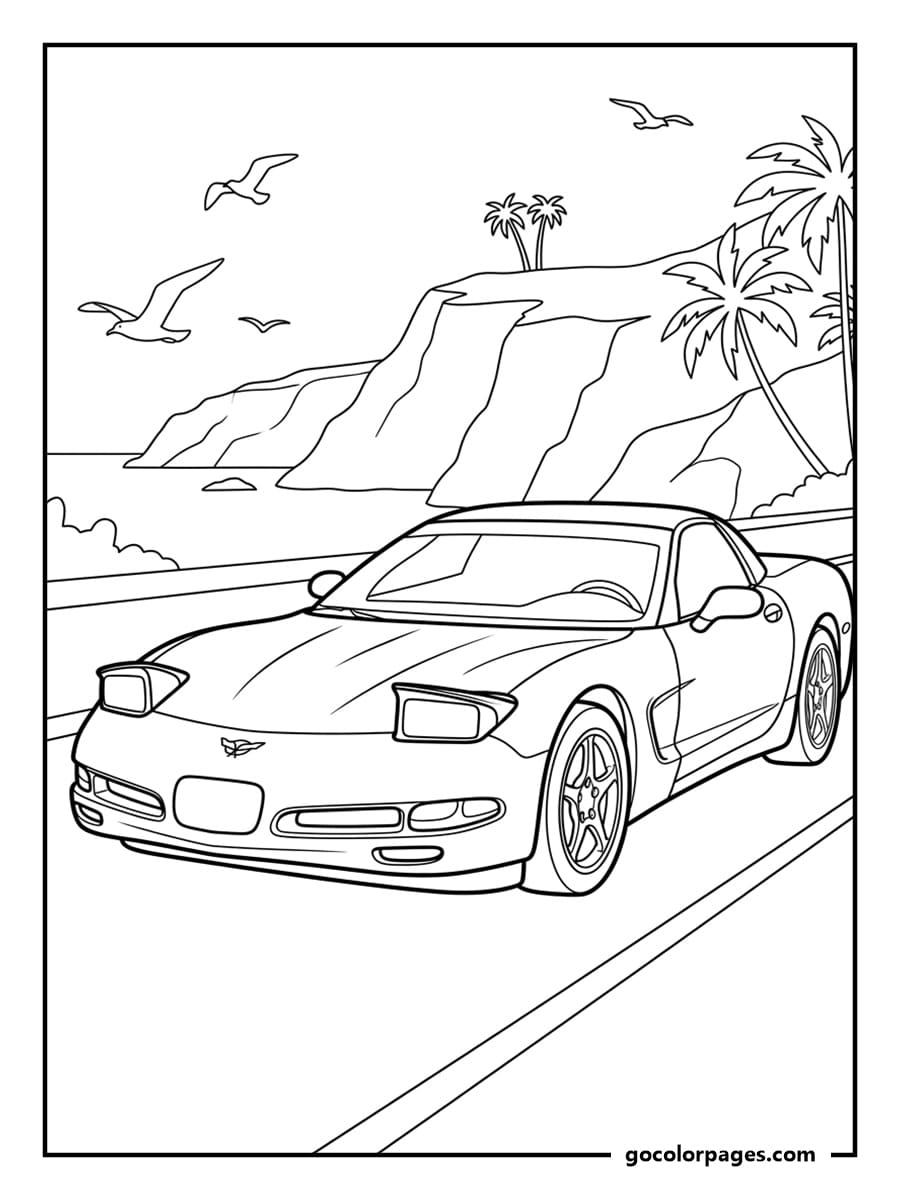
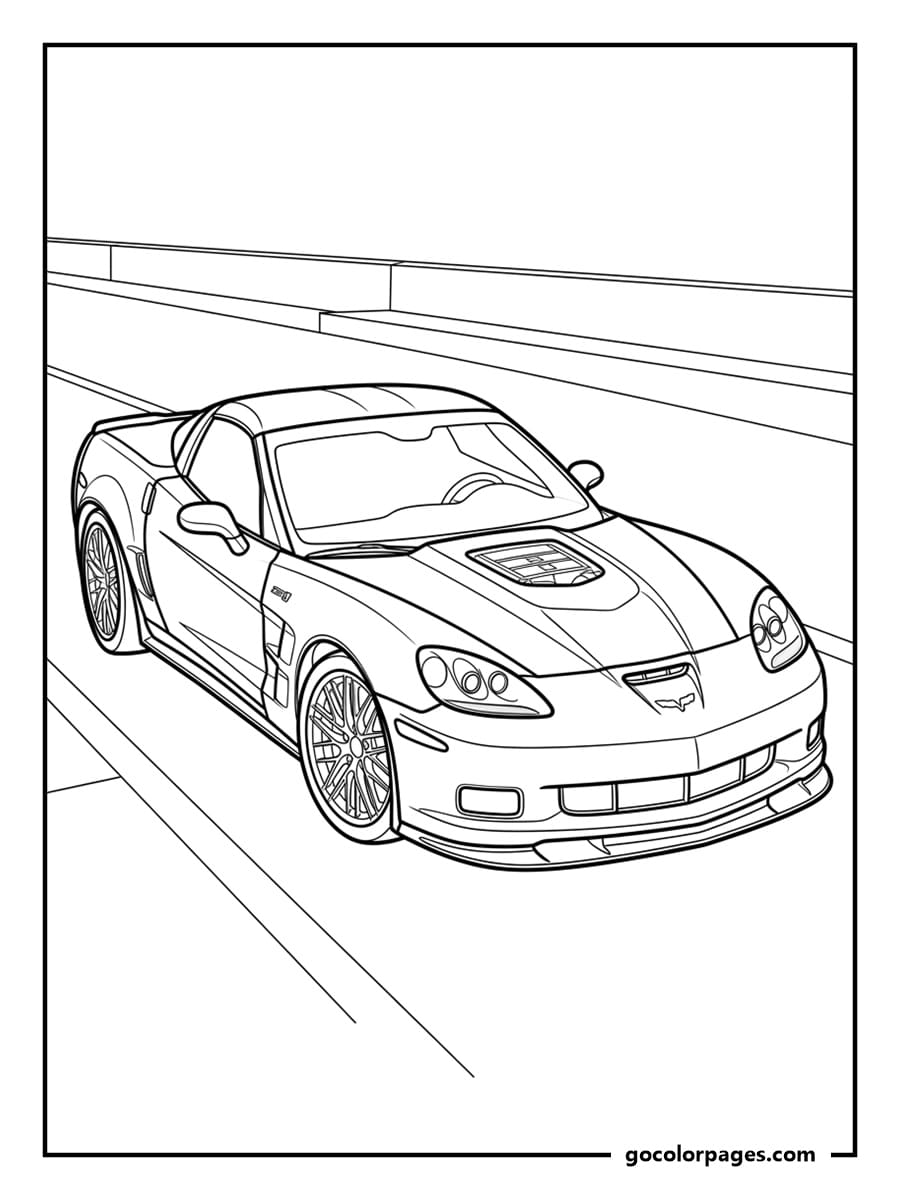
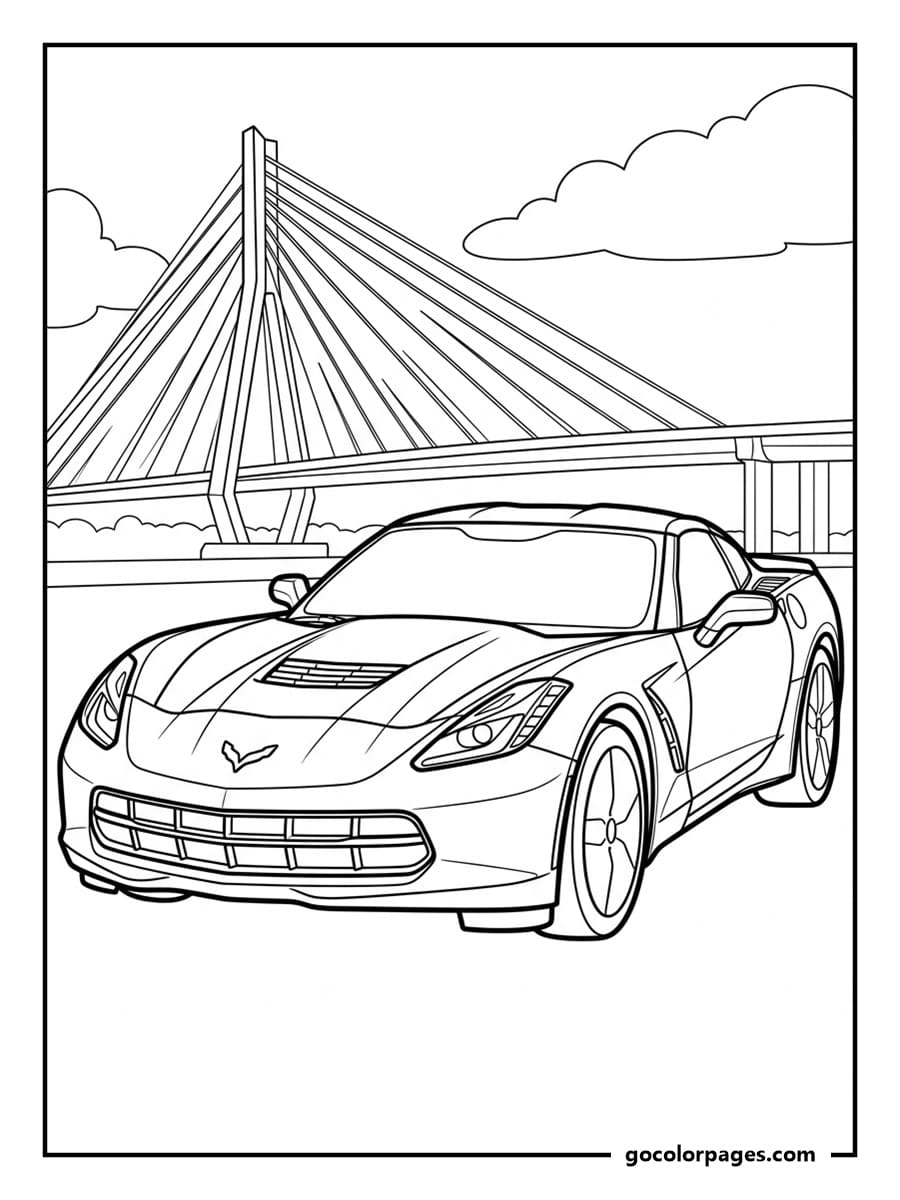
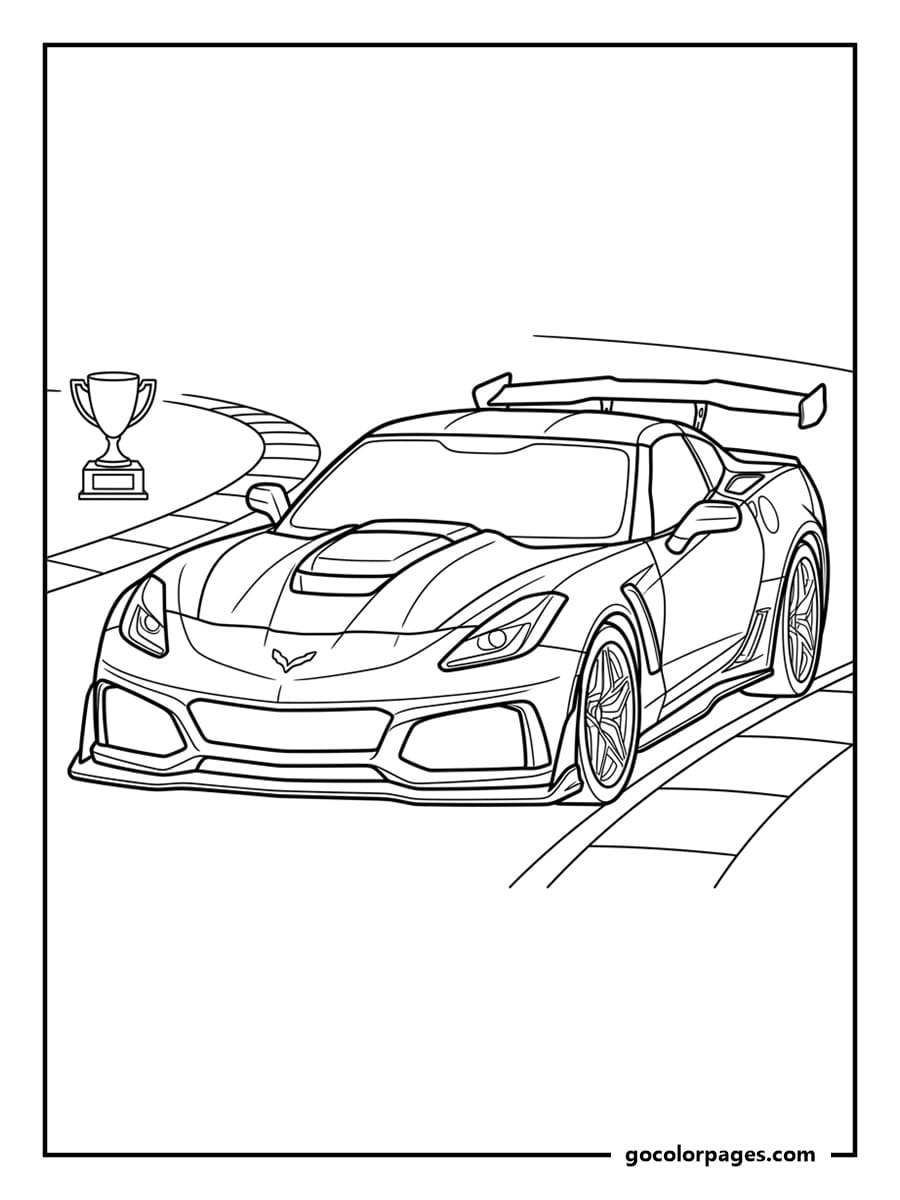
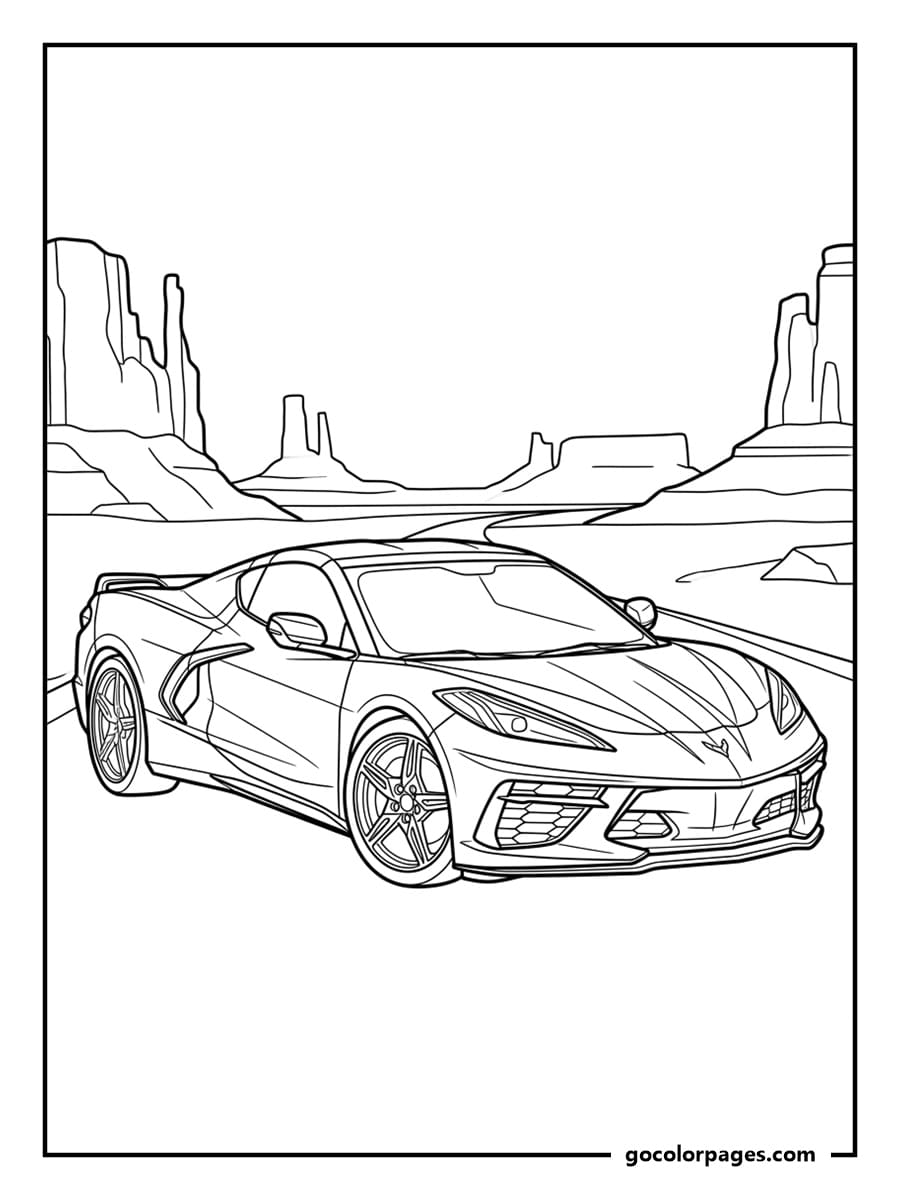
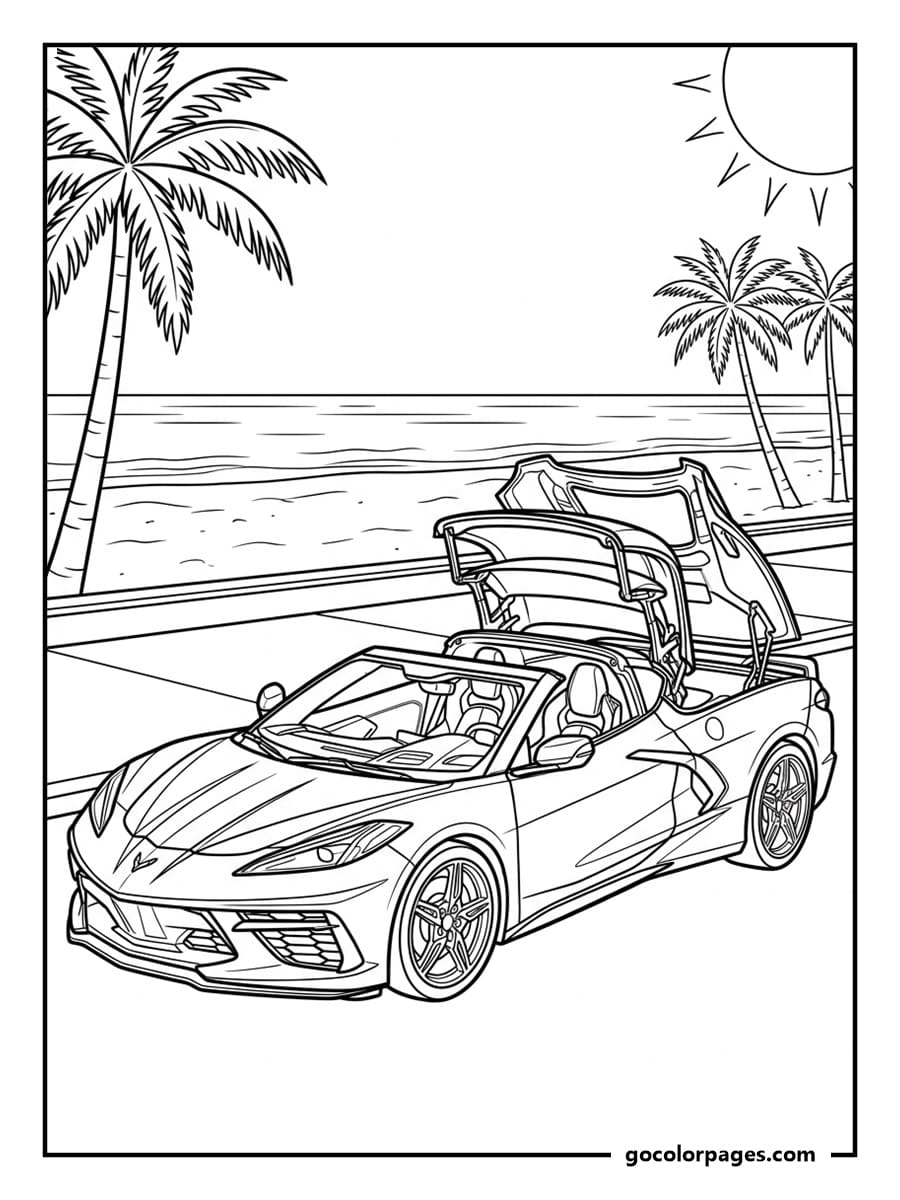
Since the first hand-laid fiberglass roadster rolled onto the turntable at the 1953 GM Motorama inside New York's Waldorf Astoria, the Chevrolet Corvette has remained the longest continuously produced passenger sports car on earth. That unbroken eight-generation lineage makes it the crown jewel of our vehicles coloring pages garage and one of the most downloaded car themes across our master vault of printable coloring pages.
When we organize our Corvette sheets for young gearheads, classroom transportation units, and weekend car-show collectors, we sort every file across five distinct body eras. Knowing which generation sits on your clipboard tells you in three seconds whether to reach for soft pastel crayons, bright chrome pencils, or sharp chisel-tip alcohol markers.
- 1953–1962 C1 Solid-Axle Roadsters and Two-Tone Side Coves: Tooth-grille convertibles featuring the iconic 1956–1961 concave side cove, wide whitewall tires, and quad-headlight fenders open, curved silhouettes that pair naturally with our cute and easy coloring pages for ages four to eight.
- 1963–1967 C2 Sting Ray Coupes and 1963 Split-Window Icons: Styling chief Bill Mitchell and designer Larry Shinoda's Mako-shark-inspired fastbacks, showcasing the famous one-year-only 1963 divided rear window, hidden revolving headlights, and side-mount exhaust pipes.
- 1968–1982 C3 Coke-Bottle Stingrays and C4–C5 Pop-Up Eras: Swooping front fender peaks, removable T-top roof panels, 427 big-block hood bulges, and sleek 1980s and 1990s aerodynamic wedge coupes with flip-up headlamps.
- Front-Engine C6 and C7 Stingray Z06 and ZR1 Track Beasts: Exposed fixed projector headlights, sculpted hood heat extractors, quad center-exit exhaust trumpets, and high-downforce ZTK rear wings.
- Mid-Engine C8 Stingray Z06 E-Ray and C8.R Le Mans Racers: Cab-forward supercars with transparent rear V8 engine hatches, aggressive side boomerang air blades, and Pratt Miller GT3.R endurance liveries tailored for intricate adult coloring pages.
"Every Corvette generation bends light differently C1 through C3 Sting Rays roll across rounded fiberglass swells, while the mid-engine C8 slices the air with razor-sharp origami creases."
Official Bowling Green Corvette Paint Palettes From Torch Red to Rapid Blue
Walk down the assembly line at General Motors' Bowling Green plant in Kentucky, and you quickly realize that exterior paint codes are sacred in Corvette lore. Yet at home, almost everyone grabs a single flat primary crayon and scrubs it from front bumper to rear spoiler until the bodywork looks like a plastic bath toy.
Matching your markers or colored pencils to four legendary factory paint formulas and protecting the historic two-tone trim zones on vintage models gives your printout instant showroom credibility.
- Torch Red and Red Mist Metallic Tintcoat: Red has led Corvette production since the 1950s; lay down a fiery tangerine-orange base (
YR16orR24) along the sun-facing fender crests before blending classic Torch Red (R27) across the doors, or glaze deep plum-burgundy (R59) into the lower rocker creases to mimic modern metallic Red Mist. - Rapid Blue Versus Classic Nassau and Elkhart Lake Blue: For the C8 generation's head-turning non-metallic Rapid Blue, flood the angular door panels with vivid sky-cyan (
B04orB05) and tuck cobalt blue (B16) strictly inside the recessed vent valleys; for 1960s Nassau Blue or Le Mans Blue, layer royal ultramarine (B28) over a cool silver pencil base. - Accelerate Yellow and Corvette Racing Jake Livery: On C8.R and Z06 GT3.R motorsport sheets, pair high-voltage lemon-chartreuse (
Y06) bodywork with matte gunmetal-gray (C7) rocker panels and the famous Jake Skull mascot where crossed racing flags form the eyes of a skull down the hood stripe. - 1957 Polo White Side Coves and 1967 Big-Block Stinger Hoods: Never color a 1956–1961 C1 Roadster one uniform shade from nose to tail; keep the recessed side cove behind the front wheel crisp Polo White or pale silver framed by an uncolored chrome spear, and paint a contrasting black, white, or red Stinger Stripe over the raised hood scoop and nose peak of a 1967 427 C2 coupe.
How to Shade C8 Mid Engine Glass Hatches Carbon Fiber Splitters and Crossed Flags
Legendary Corvette chief engineer Zora Arkus-Duntov spent thirty years building experimental prototypes to move the Corvette's V8 engine behind the driver's seats. When the eighth-generation C8 finally fulfilled his mid-engine dream, it introduced three visual zones that never existed on classic front-engine Stingrays.
If you treat a C8 Z06 or ZR1 sheet like a standard family sedan, the side intakes, rear decklid, and nose emblem lose all their mechanical drama. Switching your mark-making across these three supercar details keeps every line sharp.
Cross-Hatching Woven Carbon Fiber on C8 Boomerang Intakes and Z07 Wings
The fastest way to ruin a C8 Stingray or Z06 coloring sheet is reaching for a pitch-black marker to fill the door-mounted "boomerang" air scoop, front dive planes, and Z07 high wing. Solid black ink swallows the internal intake vanes and makes the side scoop look like a hole torn in the door.
Borrowing micro-texture habits from how to draw woven materials, base every carbon-fiber splitter, side rocker, and boomerang blade in medium cool gray (C5). Once dry, take a fine-tip dark slate pen (C8) and a white gel pen to rule a tight one-millimeter diagonal cross-hatch grid across the gray trim so it reads like genuine woven carbon fiber.
Shading the C8 Rear Glass Engine Hatch to Show Off the Red LT2 V8 Intake
On a mid-engine C8 coupe, the angled rear fastback window isn't an empty luggage area it is a transparent display case showcasing the 6.2-liter LT2 or flat-plane-crank LT6 V8 engine. Coloring that rear glass solid blue or dark gray hides the most exciting feature on the car.
Always color the engine compartment first before touching the glass hatch. Fill the center V8 intake manifold plenum in bright Edge Red (R29), shade the surrounding aluminum strut X-brace and valve covers in cool silver (C3), and darken the recessed bay shadows in charcoal (C7). Finish by sweeping three thin diagonal streaks of pale ice-blue (B00) right across the top of the engine so it looks sealed beneath clear tempered glass.
Detailing the Crossed Flags Nose Badge and 1963 Split Window Spine
Every Corvette nose and steering hub carries the historic Crossed Flags emblem a black-and-white checkered racing flag crossed with a red flag bearing the Chevrolet bowtie and a French fleur-de-lis. Even on wide full-car views, taking twenty seconds to dot alternating white and charcoal checks on the left flag against bright crimson on the right flag anchors the front hood.
When you flip to a 1963 C2 Sting Ray Coupe rear-three-quarter sheet, watch out for the famous divided rear window. Protect the narrow vertical fiberglass backbone bar splitting the twin rear glass panes in your exact exterior body color (Riverside Red, Daytona Blue, or Sebring Silver) so the one-year-only split window never disappears into the window tint.
"Color the C8's Edge Red V8 manifold before touching the rear glass three pale aqua streaks over a bright red engine bay sell the mid-engine supercar illusion in ten seconds."
Three Garage Builds From Pop Up Headlight Flippers to Showroom Turntables
Real Corvettes have always been famous for mechanical transformation from hidden revolving headlights that flip open at dusk to lift-off roof panels and spinning auto-show turntables. Leaving a finished stack of supercars flat on the desk misses half the fun for kids who want to test how the bodywork operates.
When we road-test our printable coloring pages for kids with elementary car clubs and rainy-day garage tables, three cardstock builds consistently turn flat coloring sheets into working showroom models.
- Working C2–C5 Pop-Up Headlight Hinged Flippers: Because every Corvette built from 1963 through 2004 featured hidden headlights, have an adult help slice three sides of the closed rectangular headlamp covers on a C3 or C4 hood, tape a small backing square of cardstock underneath drawn with glowing yellow quad bulbs, and fold the top paper hinge up and down to flip the headlights open for night racing.
- Removable C3 T-Top and C8 Coupe Targa Roof Panels: Score and cut out the removable roof panel between the windshield header and rear roll bar on a 1970s C3 Stingray or modern C8 coupe printout, stick two tiny dots of removable poster putty to the underside corners, and let kids convert their car from a closed hardtop to an open-air roadster.
- Spinning National Corvette Museum Skydome Showroom Turntable: Inspired by the famous yellow-cone Skydome at the National Corvette Museum in Bowling Green, Kentucky, cut out three colored eras (such as a 1957 C1, a 1963 C2 Split-Window, and a 2026 C8 Z06), fold a half-inch bottom tab on each to glue them upright in a triangle on an inverted dark-gray paper plate, and pin that plate to a bottom base plate with a center brass brad so the entire showroom display spins 360 degrees.
Frequently Asked Questions About Corvette Coloring Pages
What are the most popular factory colors for Corvette coloring pages?
The most iconic Bowling Green factory colors are Torch Red, Rapid Blue, Accelerate Yellow, Arctic White, and Sebring Silver. For classic 1956 to 1961 C1 roadsters, pair Roman Red or Inca Silver bodywork with a contrasting Polo White side cove, and add a bold black or white Stinger hood stripe on 1967 C2 Sting Rays.
How do you color the carbon fiber vents and spoilers on a C8 Corvette?
Avoid filling C8 boomerang side intakes, front splitters, and Z07 rear wings with solid black ink, which hides the aerodynamic edges. Base the trim in medium cool gray, then use a dark slate fine-liner and a white gel pen to draw a tight one-millimeter diagonal cross-hatch grid that mimics woven carbon fiber.
What makes the 1963 Corvette Sting Ray coloring sheet different from other years?
Designed by Bill Mitchell and Larry Shinoda, the 1963 C2 Corvette Sting Ray Coupe is the only production year built with a divided two-piece rear window, until the modern C8 ZR1 revived the motif. When coloring a 1963 coupe from behind, color the narrow center backbone spine in the car's exterior body paint rather than glass blue.
How do you color the engine visible through the back window of a C8 Corvette?
On mid-engine C8 Stingray and Z06 coupes, color the engine compartment first before shading the glass. Paint the center V8 intake manifold cover in bright Edge Red framed by silver aluminum braces and dark charcoal hoses, then sweep three light diagonal strokes of pale ice-blue across the top to represent the glass hatch.
Print One Corvette Sheet and Test the Carbon Weave and Two Tone Cove Tonight
You don't need a pass to the Bowling Green assembly line or a fifty-piece marker case to make your next Corvette printout look like it just rolled off a showroom turntable. Pull out one free printable PDF sheet right now and try these two quick studio upgrades in under ten minutes.
- Cross-Hatch One C8 Side Intake Boomerang in Cool Gray (3 minutes): Pick any mid-engine C8 Stingray or Z06 sheet, color the door-mounted boomerang air scoop in medium gray instead of pitch black, and rule a tiny diagonal pencil grid across it to watch the carbon-fiber texture pop.
- Frame a 1957 C1 Side Cove or 1967 C2 Stinger Hood in Contrasting White (4 minutes): Grab a classic C1 or C2 printout, leave the recessed side cove or raised center hood scoop crisp white while shading the surrounding fenders in Torch Red or Nassau Blue, and see how fast the vintage fiberglass curves leap off the page.
When you spread out a fresh stack of corvette coloring pages at your table, which generation gets claimed first the 1950s chrome-grille C1 Roadster, the 1963 C2 Split-Window Sting Ray, or the mid-engine C8 Z06 supercar?