

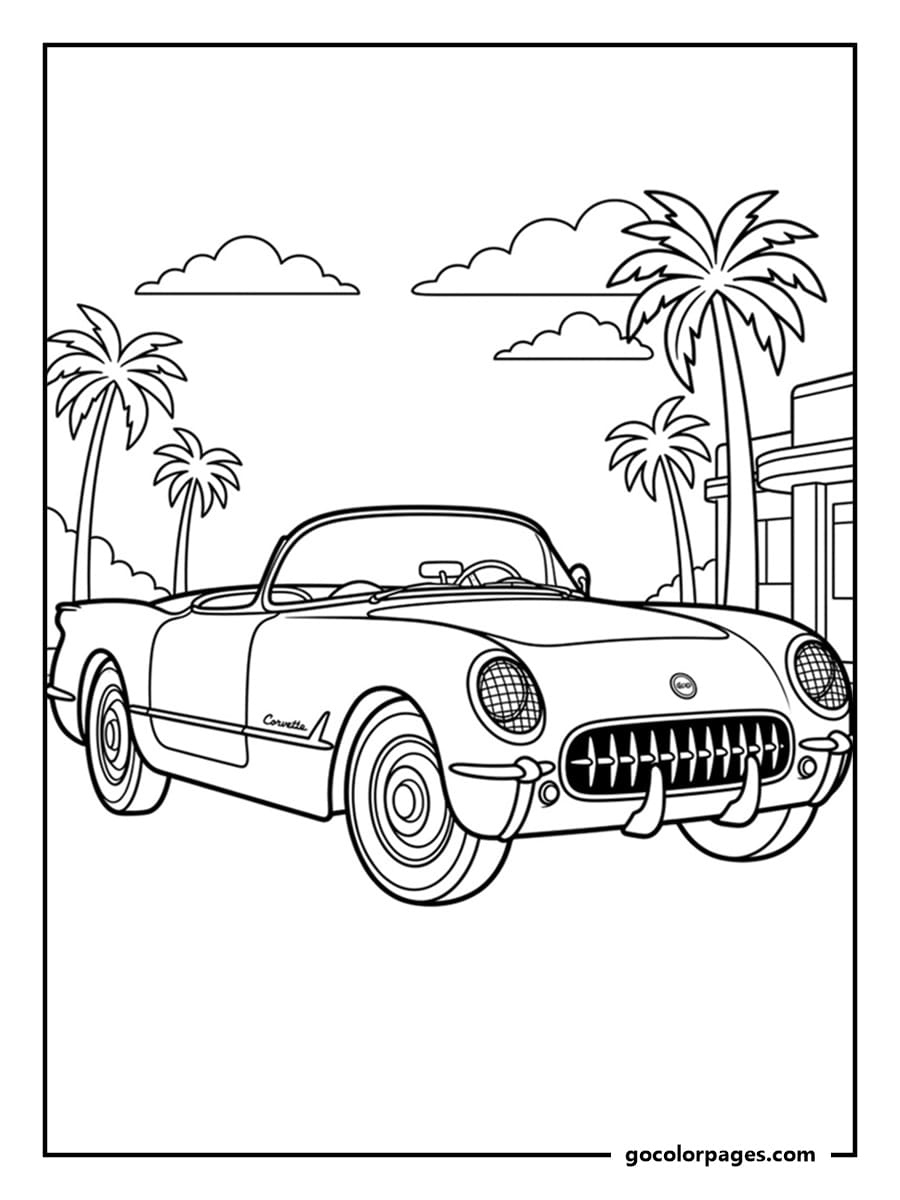
Put the solid black marker down. Watch almost anyone tackle a fresh stack of vehicles coloring pages, and they immediately scrub pure black ink across the tires and solid blue wax across the windshield. Ten seconds later, the knobby tire treads, alloy hubcaps, and steering wheel vanish into two black holes beneath a blue brick wall. Borrowing three quick surface tricks from Detroit concept-car sketchers diagonal window slashes, horizon-split chrome, and charcoal tire sidewalls makes every fire engine, excavator, and fighter jet gleam on paper.
Six High Octane Fleet Categories From Earth Movers to Supersonic Jets
Dumping three hundred unsorted cars, tugboats, and tractors into one desktop folder guarantees kids and adults will spend twenty minutes scrolling and five minutes coloring. Every machine is engineered around a specific job and terrain, which means a muddy monster truck demands completely different hand strokes than a silver passenger jet.
When we curate our master library of printable coloring pages for families, teachers, and gearheads, we divide transportation sheets into six distinct mechanical fleets. Choosing your fleet before opening the crayon box tells you immediately whether to reach for high-visibility neon markers, weathered earth tones, or metallic colored pencils.
- Emergency and First-Responder Fleets: Hook-and-ladder fire engines, paramedic ambulances, highway patrol interceptors, and Coast Guard rescue helicopters built around high-visibility warning stripes and roof light bars.
- Heavy Construction and Earth-Moving Rigs: Hydraulic excavators, articulated dump trucks, tracked bulldozers, and mobile tower cranes packed with exposed pistons, rivets, and toothed steel buckets.
- Track, Street, and Off-Road Speed Machines: Formula-style open-wheel racers, vintage 1960s muscle cars, mud-flinging monster trucks on 66-inch tires, and motocross dirt bikes frozen mid-jump.
- Aviation, Supersonic Jets, and Space Rockets: Twin-propeller biplanes, wide-body commercial airliners, delta-wing fighter jets, and multistage lunar boosters with detachable command capsules.
- Railroad Locomotives and Maritime Vessels: Cowcatcher steam locomotives, aerodynamic bullet trains, harbor tugboats, stacked cargo ships, and deep-sea research submarines.
- Farm Tractors and Neighborhood Utility Trucks: Row-crop tractors, combine harvesters, front-loading recycling trucks, neighborhood mail vans, and classic yellow school buses.
"A living creature gets its mood from fur and eyes, but a machine gets its personality from how sunlight hits steel, glass, and rubber."
Detroit Concept Studio Tricks for Shiny Chrome Clear Glass and Metallic Paint
Why do most home-colored sports cars and fire trucks look like flat plastic toys instead of polished steel? When people see a chrome bumper or a glass windshield, they instinctively reach for a single silver-gray or sky-blue stick and fill the shape from edge to edge.
Back in the 1930s, legendary General Motors design chief Harley Earl along with modern industrial-design mentor Scott Robertson, author of How to Render proved that human eyes never read metal or glass by a flat pigment. We recognize shiny surfaces strictly by how sharply they reflect the sky above and the asphalt below. You can replicate that showroom shine with basic school crayons or colored pencils using three sixty-second habits.
- Carve a 45-Degree Bare-Paper Slash Across Every Windshield: Before touching a car window, helicopter canopy, or submarine porthole with color, lightly rule two parallel diagonal pencil lines at a 45-degree angle across the glass and leave that four-millimeter ribbon completely bare white while tinting the outer corners pale aqua or cool slate.
- Split Chrome Bumpers and Exhaust Pipes at the Horizon Line: Polished chrome behaves like a curved mirror wrapping the outdoors; draw a faint horizontal line straight through the middle of every bumper, grille bar, and exhaust stack, coloring the top half icy sky blue with a sliver of white paper and the bottom half dark earth brown and charcoal to reflect the road.
- Protect a Two-Millimeter White Beltline Ribbon on Glossy Bodywork: Whether you are shading a cherry-red race car or a cobalt-blue semi cab, leave a narrow, uncolored horizontal stripe running along the upper door shoulder where the curved sheet metal turns upward toward the sun.
How to Shade Heavy Rubber Tires Glowing Headlights and Worksite Grit
Even when a vehicle's paint job gleams, the sheet will still feel weightless if the tires look like flat black coins and the emergency lights sit dark. Machines are built to burn fuel, haul tonnage, and chew up dirt.
Spending two minutes on the rubber, light housings, and ground contact transforms a static side-profile drawing into a loud, moving rig.
Banishing Solid Black Tires With Charcoal Sidewalls and Rim Buffers
The fastest way to ruin a monster truck, farm tractor, or motorcycle sheet is coloring the tires solid black. Pure black marker ink or heavy wax buries the printed tread lugs, sidewall lettering, and inner wheel arch into one unreadable dark blob.
Put the black pen back in the box and shade tire rubber with warm asphalt charcoal, dark slate gray, or deep Prussian blue. Leave the outer biting edges of raised off-road tread blocks slightly paler gray so every rubber tooth stands out, and guard a crisp two-millimeter ring of bare white paper right around the outer lip of the metal rim.
Lighting Up Emergency Sirens Headlights and Jet Afterburners
Coloring a fire truck's roof beacon solid red or a car headlight solid yellow makes the lens look painted shut rather than switched on. Real light sources always burn brightest and whitest at their dead center.
Keep the inner core of every siren dome, headlight bulb, and jet afterburner nozzle 100% bare white paper. Ring that white center with neon lemon yellow or electric cyan, then blend outward into vermilion red, cobalt blue, or fiery tangerine around the outer casing. On construction diggers and rescue rigs, pair those glowing beacons with real industrial ANSI high-visibility safety lime or Caterpillar highway yellow against dark slate-gray hydraulic arms.
Grounding Ten Ton Trucks With Flattened Contact Patches and Mud Stippling
Anyone who has practiced how to draw rolling machines knows that an unshaded tire looks like a balloon floating half an inch above the desk. Real rubber compresses under thousands of pounds of steel.
Anchor every landed vehicle by sweeping a wide, flat cast shadow of dark charcoal or cool violet-gray directly underneath the chassis from front bumper to rear axle. Flatten the bottom four millimeters of each tire where the tread meets that dark shadow patch, and flick a cluster of tiny raw-umber and ochre pencil dots just behind the rear mudflaps to kick up gravel and worksite mud.
"Never color a tire pure black from edge to edge dark charcoal rubber with a bare-white rim ring keeps every tread lug and hubcap razor-sharp."
Four Hands On Roadway Builds and Travel Games That Put Paper Fleets in Motion
Kids rarely want a finished race car, bulldozer, or supersonic jet taped motionless to a refrigerator door. Unlike quiet botanical wreaths, vehicles are engineered to roll, fly, and haul cargo across a room.
When we test our printable coloring pages for kids in preschool block corners and family minivans, four simple off-the-page builds consistently turn fifteen minutes of coloring into hours of kinetic play.
- The Painter's-Tape Living Room Highway and Block Garage: Cut out finished dump trucks, ambulances, and patrol cars, tape each paper rig upright along the side of a wooden unit block or fold a one-inch cardstock base tab underneath the wheels and lay down blue low-tack painter's tape across the rug to map intersections, bridges, and farm rescue lanes for your animals coloring pages barnyard cutouts.
- Slotted Sky and Ocean Craft-Stick Sliders: Slice a six-inch horizontal slit across a painted sky or ocean background sheet, glue a colored biplane, space rocket, or harbor tugboat from our cute and easy coloring pages onto a wooden craft stick poked through the slot, and slide the vessel across the scene.
- Glovebox Road-Trip and Airport Spotter Bingo: Set your printer dialog to "4 Pages Per Sheet" to print pocket-sized A6 cards of cement mixers, fuel tankers, car carriers, and airport baggage tugs; clip the stack to a car-seat tray so kids can color each vehicle only after spotting the real rig out the window.
- Vintage Showroom Chrome Warmups for Adults: Use detailed 1950s convertibles, steam locomotives, and cafe-racer motorcycles from our intricate adult coloring pages to practice horizon-split chrome reflections and three-shade metallic fades with alcohol markers.
Frequently Asked Questions About Vehicles Coloring Pages
How do you color black car and truck tires without hiding the wheel lines?
Never fill tires with a solid black marker or heavy black crayon, which erases the printed tread lugs and hubcap details. Shade the rubber with dark charcoal gray or deep indigo blue, keep the top ridges of raised treads lighter gray, and leave a two-millimeter bare white ring around the outer edge of the metal rim.
How can I make car windshields and airplane canopies look like clear glass?
Rule two parallel diagonal pencil lines at a 45-degree angle across the window and leave that four-millimeter slash completely bare white paper. Lightly tint the remaining glass on either side with pale sky blue, aqua, or cool silver-gray so the cabin looks transparent and reflective.
How do you color shiny chrome bumpers and exhaust pipes without metallic pens?
Use the Detroit concept-studio horizon trick by drawing a horizontal line right through the center of the bumper or pipe. Color the upper half icy sky blue with a thin sliver of bare white to reflect the sky, and shade the bottom half dark earth brown and charcoal gray to mirror the asphalt below.
Which vehicle coloring pages work best for toddlers versus older elementary kids?
Start toddlers ages two to four with chunky, side-profile dump trucks, school buses, and tugboats built from 6 to 10 wide shapes and oversized wheels. Give kids ages six to eleven three-quarter-angle fire engines, hydraulic excavators, and fighter jets featuring 25 to 50 mechanical zones like extension ladders, hydraulic pistons, and cockpit dials.
Print One Vehicle Sheet and Try the 45 Degree Windshield Slash Tonight
You don't need airbrushes or specialty metallic ink to make your next car, digger, or jet printout look like it belongs in a Detroit design studio. Pull out one vehicle sheet right now and test these two quick surface upgrades in under ten minutes.
- Carve a 45-Degree Glass Slash Across One Windshield (3 minutes): Pick any car, fire engine, or airplane sheet, rule a four-millimeter diagonal white stripe across the windshield before shading the outer glass pale sky blue, and watch the cabin turn transparent.
- Shade Four Tires With Charcoal and a Two-Millimeter Rim Ring (5 minutes): Leave the black crayon in the box, shade your vehicle's tires in dark slate gray with a flattened shadow patch at the bottom, and keep a crisp white circle around each hubcap.
When you spread out a fresh stack of vehicle sheets at your table, which fleet gets claimed first heavy yellow construction diggers, roaring monster trucks and race cars, or sirens-blazing emergency rigs?