
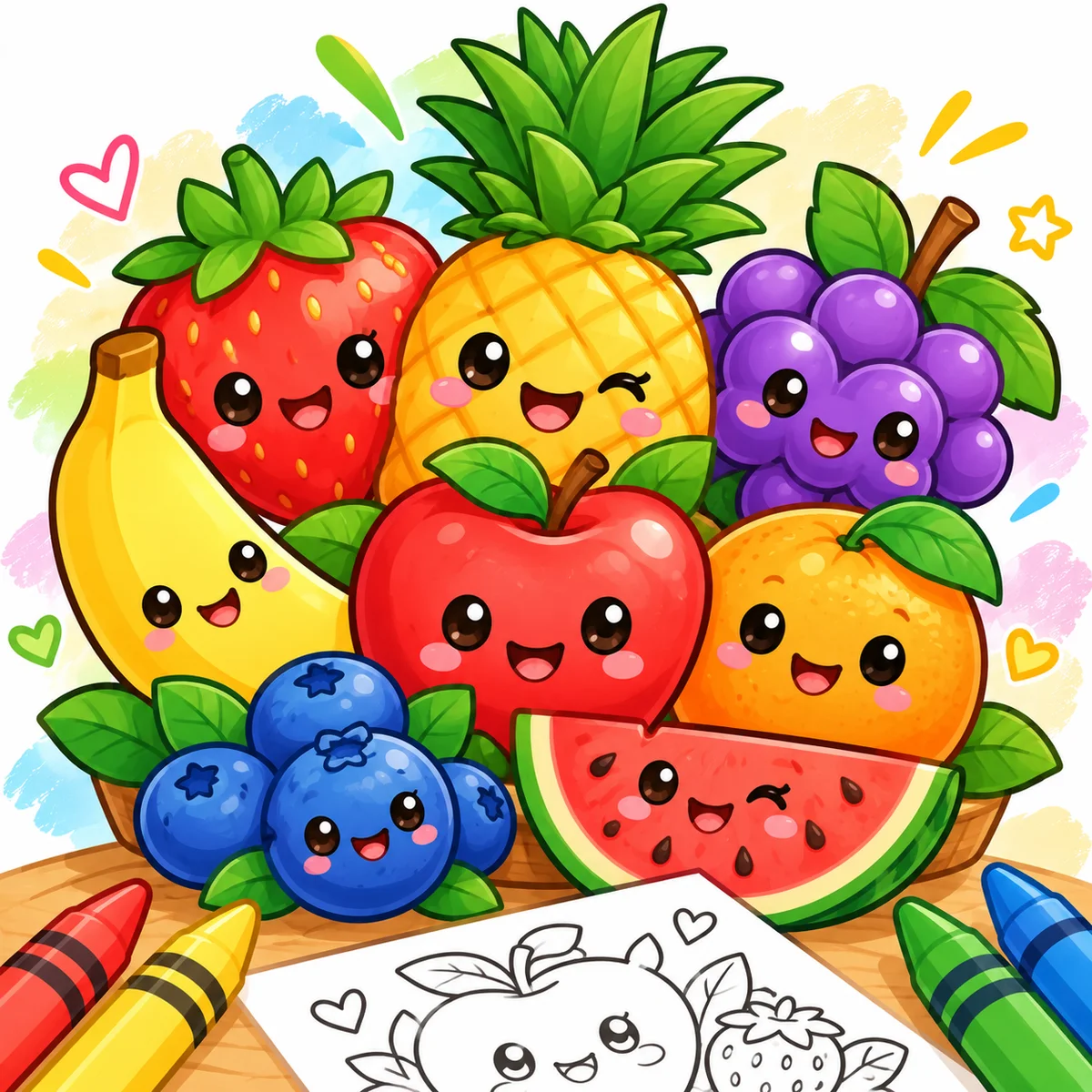
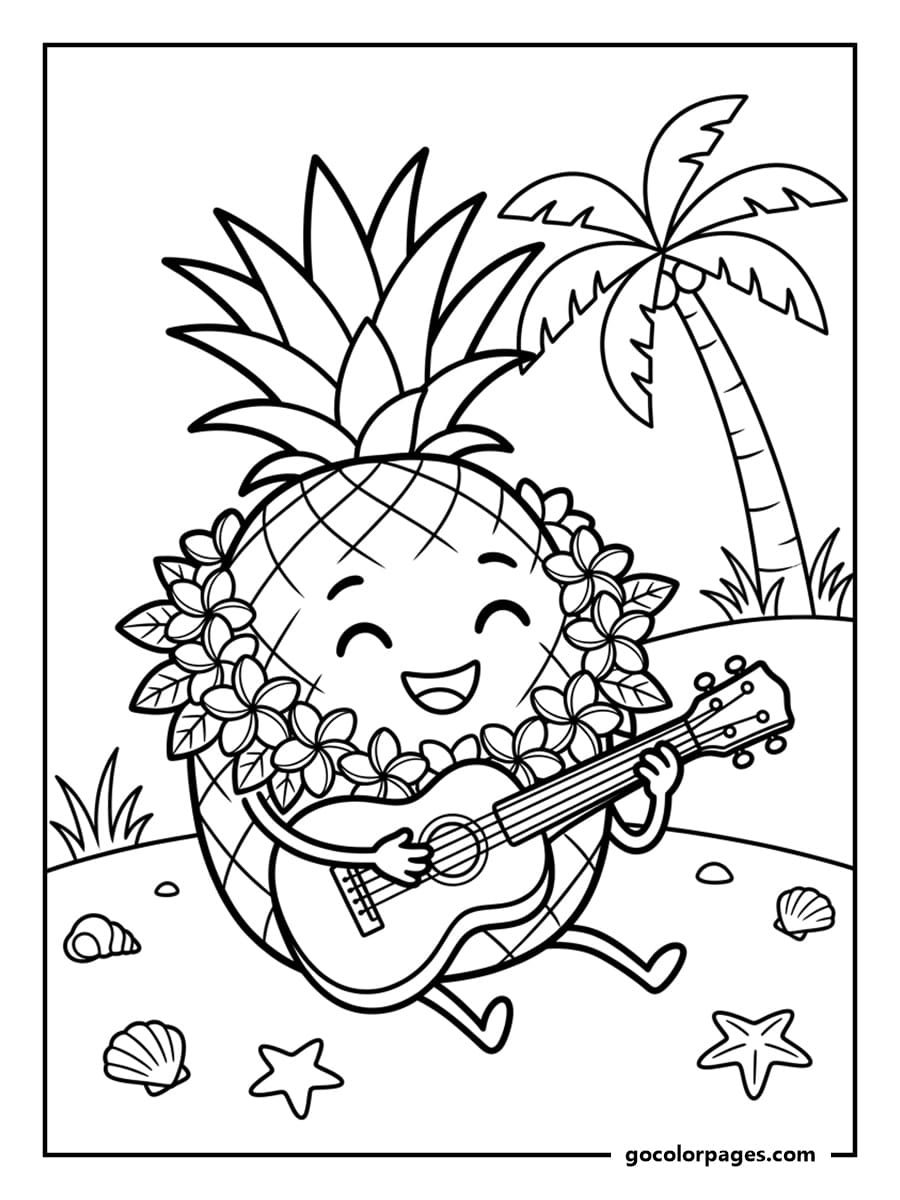
Never shade a red apple with black. The moment you drag a gray crayon or a dark green pencil across the shadow side of fruits coloring pages, ripe strawberries, bananas, and peaches turn look-away bruised. Real orchard produce glows from the inside because sunlight bounces through translucent sugar, water, and skin pigments before reaching your eye. Swap muddy dark neutrals for warm-to-cool ripeness gradients and a crisp white highlight curve, and a simple black-and-white fruit outline looks ready to slice on a cutting board.
Five Botanical Fruit Families That Unlock Every Color in Your Box
Handing someone an unsorted stack of two hundred food outlines is the fastest way to stall a coloring session. Unlike woodland wildlife sheets that lean heavily on browns and grays, a well-chosen fruit page is nature's built-in color wheel forcing you to reach for magentas, chartreuses, cadmium yellows, and deep indigos in a single sitting.
When we curate our master library of printable coloring pages for teachers, parents, and marker enthusiasts, we group fruit templates by their physical anatomy rather than alphabetical order. Choosing between a smooth whole apple, a radial orange wheel, or a spiky pineapple immediately tells your hand what kind of stroke to use.
- Orchard Pomes and Stone Fruits: Honeycrisp apples, Bartlett pears, fuzzy Georgia peaches, sweet cherries, and damson plums built with wide, uninterrupted curves that give toddlers and beginner pencil artists plenty of room to practice smooth gradients.
- Sunlit Citrus Wheels and Segmented Wedges: Sliced navel oranges, Meyer lemons, ruby grapefruits, and key limes whose radial triangle geometry teaches elementary kids and adults how to glaze translucent, glowing wedges.
- Seeded Berries and Vine Clusters: Garden strawberries, Concord grape bunches, raspberries, and wild blueberries where clustered mini-spheres and dimpled seed pockets reward slow, rhythmic wrist control.
- Tropical Exotics and Armored Rinds: Diamond-scaled pineapples, neon pitaya dragon fruit, halved papayas, starfruit, and mangoes that pair bold geometric armor with electric magenta, lime, and marigold blends.
- Kawaii Fruit Snacks and Harvest Baskets: Smiling boba-tea strawberries, roller-skating bananas, and overflowing autumn cornucopias bridging cute and easy coloring pages for fifteen-minute alcohol marker unwinds and detailed Thanksgiving centerpieces.
"A bowl of fruit is nature's built-in color wheel you can test yellow-to-violet complements on a pear and a plum without ever opening a theory textbook."
Why Red Apples and Yellow Bananas Turn Bruised and How Ripeness Ladders Fix Them
Watch a classroom of second-graders or an adult testing a new pencil tin try to make a yellow banana or a red strawberry look three-dimensional. Nine times out of ten, they grab a black or dark gray crayon to darken the bottom edge, and within five seconds the fruit looks like it sat at the bottom of a backpack for a week.
French post-impressionist Paul Cézanne and botanical watercolor master Pierre-Joseph Redouté solved this exact problem centuries ago. As fruit ripens on a branch, chlorophyll breaks down into carotenes and anthocyanins, meaning shadows on living produce never turn neutral gray they shift one step cooler or deeper along the ripeness wheel.
You don't need a hundred-dollar set of artist pencils to capture that glow. Whether you are using a classic twenty-four-pack of Crayola crayons or layering Prismacolor Premier pencils, these four ripeness ladders keep every fruit sheet vibrant and clean.
- The Crisp Orchard Red Ladder for Apples, Strawberries, and Cherries: Lay down a bright canary yellow or tangerine base near the sunlit top, sweep scarlet red across the mid-belly, and deepen the bottom shadow curve with dark cranberry or magenta-plum instead of black.
- The Sun-Ripened Yellow Formula for Bananas, Lemons, and Pears: Keep yellow skins from turning greenish-gray by shading the turned edges with warm golden ochre and honey amber, saving a tiny touch of burnt sienna strictly for the stem and blossom tip.
- The Tropical Sunset Blend for Mangoes, Peaches, and Papayas: Glaze pale lemon across the upper dome, melt vermilion orange through the wide equator, and tuck a dusty rose-violet blush right into the deep stem crease.
- The Crisp Green Shift for Granny Smith Apples, Limes, and Avocados: Start with electric chartreuse on the sunlit crown, blend leaf green through the body, and shade the underside with cool Prussian blue or deep teal so green skin looks tart rather than swampy.
Three Surface Secrets for Glossy Skins, Fuzzy Peaches, and Wet Citrus Slices
An apple, a peach, and a halved orange all start out as almostentical circles on black-and-white paper. What convinces your eye that one is wax-polished, the second is soft as velvet, and the third is dripping with citrus juice is how you handle the white paper highlights.
Before you fill a fruit edge-to-edge with solid pigment, decide how light bounces off its outer skin or inner flesh. Spending thirty seconds mapping your white highlights first saves you from trying to scratch wax off the page later.
Carving Curved Window Highlights and Dusty Wax Bloom on Smooth Skins
If you have ever practiced how to draw round spheres from life, you know that a flat, straight highlight stripe makes a cherry or an apple look like a tin soup can. Smooth orchard skins act like curved convex mirrors that bend the reflection of your room's window around the fruit's belly.
Before touching red or purple to a cherry, apple, or plum, outline a three-millimeter curved crescent or a tiny four-pane curved window shape along the upper-left curve and leave it bare white paper. On dark blueberries, Concord grapes, and purple plums, lightly dust a whisper of pale sky-blue or white pencil across the transition edge to recreate nature's powdery glaucous wax bloom.
Scumbling Soft Velvet Blush on Fuzzy Peaches, Apricots, and Kiwis
Polishing a Georgia peach or a kiwi with hard, shiny pencil strokes strips away its signature fuzz and makes it look like a glass Christmas ornament. Fuzzy rinds scatter light in thousands of tiny directions instead of reflecting a crisp white window.
Drop your hand pressure in half and move your pencil tip or crayon edge in tiny, overlapping figure-eight loops a classic studio technique called scumbling. Letting microscopic specks of bare white paper breathe through layers of apricot, coral pink, and golden yellow gives peaches and rough, hairy kiwi skins a velvety surface you can almost feel with your thumb.
Protecting the Two Millimeter Pith Ring and Glazing Radial Citrus Wedges
Sliced fruit templates like orange wheels, lemon wedges, halved kiwis, and watermelon triangles fall flat when artists color the bright juicy pulp right up against the dark outer peel. Without a bright buffer zone, red watermelon ink bleeds straight into the green rind and turns the border brown.
Always guard the two-millimeter albedo pith ring that spongy cream-white band separating the outer peel from the inner fruit by leaving it bare white or tinting it with the palest ivory-chartreuse. Inside each triangular citrus segment, pull tapered strokes radiating outward from the center core, leaving three or four tiny uncolored white teardrop specks inside the wedge so the pulp looks bursting with wet juice vesicles.
How to Color Strawberries, Watermelons, and Dragon Fruit Without Smearing the Seeds
Nothing derails a relaxing coloring session faster than spending fifteen minutes on a slice of watermelon or a dragon fruit, only to watch black seed marks smear into dirty gray streaks across the bright flesh. That smudge happens almost every time someone colors the tiny black seeds first and then drags a wet alcohol marker or wax crayon over top of them.
Watermelon seeds, kiwi pips, and strawberry achenes sit inside wet or dimpled pockets of flesh. Reversing your layering order keeps your bright pinks, reds, and whites spotless from start to finish.
- Follow the Flesh-First, Seeds-Last Rule: Sweep your full pink, scarlet, or yellow flesh gradient right across the entire fruit slice first, let alcohol marker ink dry for twenty seconds, and dot in your crisp black or espresso-brown seeds at the very end.
- Add the One-Millimeter Dimple Halo on Strawberries: Real strawberry seeds aren't flat black spots painted on smooth plastic they are golden-tan achenes pressed into tiny dimples; touch a one-millimeter C-curve of pale yellow or white gel pen just above each seed and a tiny ruby shadow beneath it so the berry skin ripples in 3D.
- Shade White Dragon Fruit Pulp With Ice Blue Along the Rim: When coloring halved pitaya or intricate adult coloring pages featuring tropical bowls, leave 85% of the seeded white pulp untouched paper and shade only the outer three-millimeter edge where the neon magenta skin meets the flesh using cool ice-blue or pale lilac.
"Color the juicy fruit flesh first and drop the dark seeds in last otherwise every swipe of your red marker drags black ink trails across the bowl."
Turning Finished Fruit Printouts Into Kitchen Nutrition Games and Sensory Crafts
Because toddlers and elementary kids encounter apples, bananas, and berries on their breakfast plates every morning, fruit printables bridge the gap between art time and real-world kitchen habits better than almost any other theme. A pair of safety scissors and a few pantry staples can turn a ten-minute coloring sheet into a multi-sensory game that outlasts the afternoon.
When we test printable coloring pages for kids with preschool educators and pediatric dietitians, these three off-the-page kitchen and classroom builds consistently get kids excited about real produce.
- Eat-the-Rainbow Phytonutrient Fridge Charts: Cut out colored fruit silhouettes and tape them into five color rows on the lower refrigerator door Red lycopene berries, Orange beta-carotene mangoes, Yellow vitamin-C pineapples, Green kiwi, and Blue/Purple anthocyanin grapes so picky eaters can move a star magnet onto every real fruit they taste that week.
- Scratch-and-Sniff Spice and Citrus Zest Collages: After toddlers color an autumn apple, pear, or lemon sheet, brush a thin dot of clear liquid school glue onto the fruit stem or peel and let them sprinkle a pinch of real ground cinnamon, ginger, or dried orange peel over the glue for a scented kitchen display.
- Folded 3D Slice Garlands and Farmer's Market Coin Stands: Print circular orange, lime, kiwi, and watermelon slices, color both halves, and fold them down the middle over baker's twine to hang a summer party garland, or laminate whole fruit cutouts with 10¢, 25¢, and 50¢ dry-erase price tags for first-grade coin-counting play.
Frequently Asked Questions About Fruits Coloring Pages
How do I shade red apples and yellow bananas without making them look bruised or dirty?
Skip black, gray, and raw green crayons when shading fruit, because dark neutrals mix with red and yellow pigments to create muddy, rotten-looking bruises. Instead, move one step along the ripeness color wheel shade red apples and strawberries with deep cranberry or plum-violet over a yellow base, and shade yellow bananas with warm golden ochre and honey amber.
What is the trick to making sliced oranges, lemons, and watermelons look juicy and wet?
Two details create instant wetness on sliced fruit: preserving the two-millimeter pale cream pith ring between the outer peel and the inner flesh, and leaving tiny uncolored white teardrop specks inside the colored pulp to mimic glistening juice pockets. If you color over the white specks by accident, tap a couple of fresh highlights back in with a white gel pen or paint marker.
How do you keep black watermelon and strawberry seeds from smearing into the bright fruit color?
Always color and blend the bright red, pink, or yellow fruit flesh first, ignoring the printed seed outlines underneath. Once your base color is completely dry, use a fine-tip black pen, dark brown pencil, or golden-tan marker to dot the seeds cleanly on top without dragging dark pigment into the surrounding fruit.
Which fruit coloring pages work best for teaching toddlers colors and healthy eating?
Start with single, whole orchard fruits like a chunky apple, a curved banana, a Bartlett pear, or a giant strawberry drawn with bold three-point outlines and four to eight enclosed zones. Pairing a real apple or banana on a snack plate right next to the matching coloring sheet helps two-to-four-year-olds connect crayon names to real whole foods.
Pick One Fruit Sheet and Try the Curved Window Highlight Trick Tonight
You don't need a thirty-six-color botanical watercolor tin or a formal still-life studio to make your next fruit printout look crisp, glossy, and ripe enough to eat. Pull out one fruit sheet right now and run these two quick color tests in under ten minutes.
- Run the Two-Apple Ripeness Shadow Test (4 minutes): Print any apple, cherry, or strawberry sheet, shade one fruit's bottom curve with a regular gray or black pencil, and shade the second fruit's curve by layering canary yellow, scarlet, and deep magenta-plum to see how fast the bruised look disappears.
- Carve a Three-Millimeter Curved Window Highlight (3 minutes): Before you color your next grape cluster, plum, or citrus wedge, lightly outline a tiny curved crescent near the upper-left rim and leave that slice bare white paper for an instant glass-like shine.
When you sit down with a stack of fruit printables, do you prefer blending smooth, glossy whole orchard fruits like apples and cherries, or diving into vibrant cross-section slices like watermelon wedges, kiwis, and citrus wheels?