
A pineapple isn't actually a single fruit. Botanists classify Ananas comosus as a coalesced syncarp up to two hundred individual berry flowers that fuse together around a central fibrous core, locking into eight diagonal spirals running one way and thirteen running the other. By the 1700s, those armored tropical crowns were so prized in American port cities from Charleston to Newport that sea captains speared a fresh pineapple on their front gatepost to announce their safe return from the Caribbean and invite neighbors in for food and drink.
When we organize our master collection of printable coloring pages alongside our fruits coloring pages and foods coloring pages hubs, we group our free printable PDFs by grid density and character style. Matching the diamond scale size to the artist sitting at your table keeps preschoolers from getting frustrated and gives adult marker fans plenty of geometric room to blend.
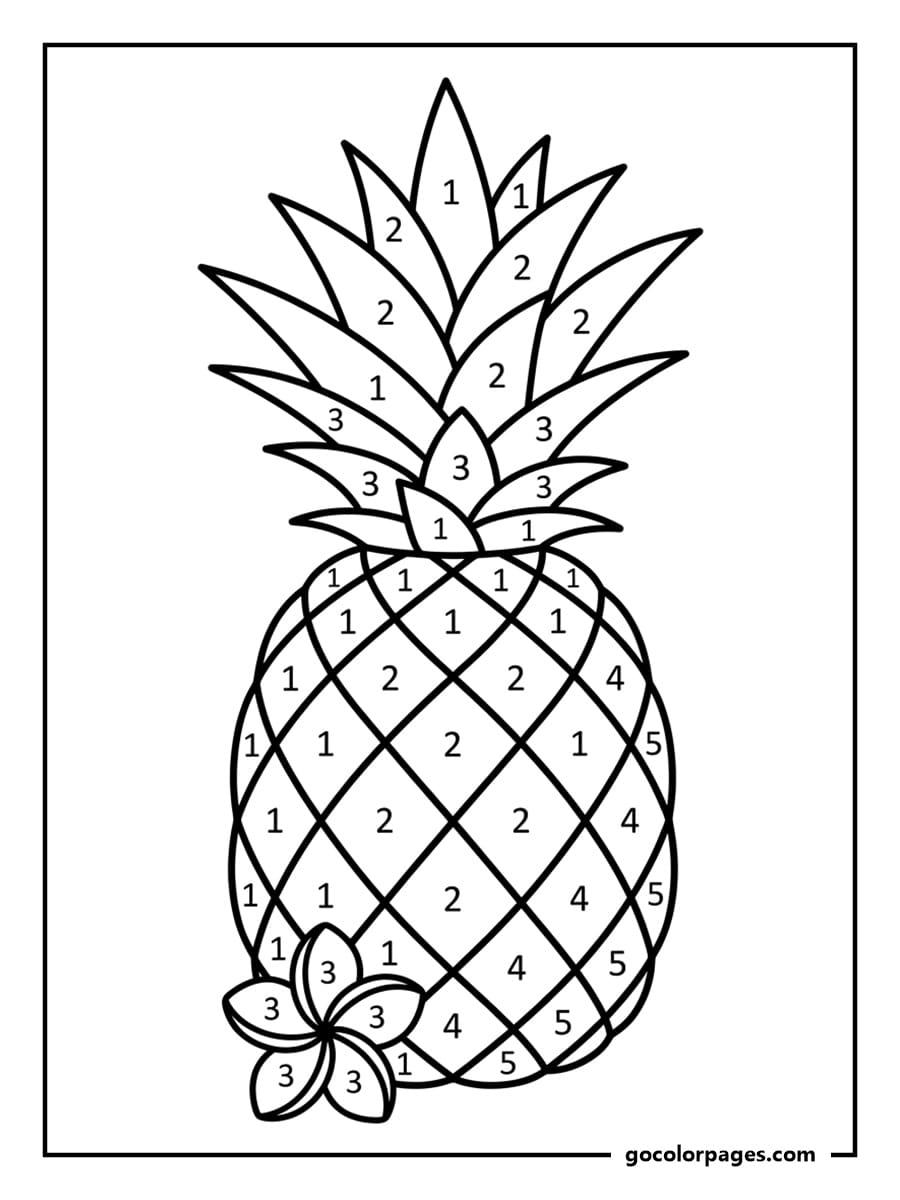
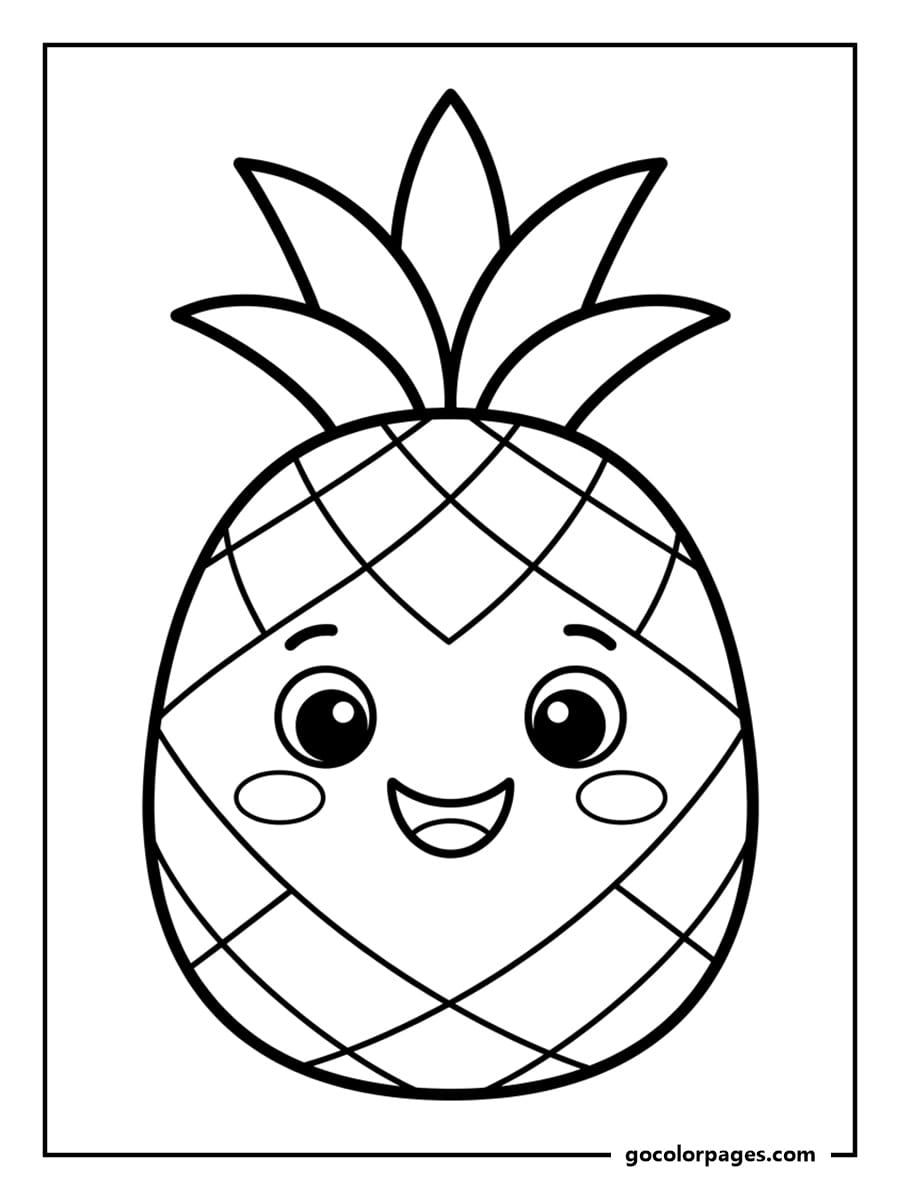
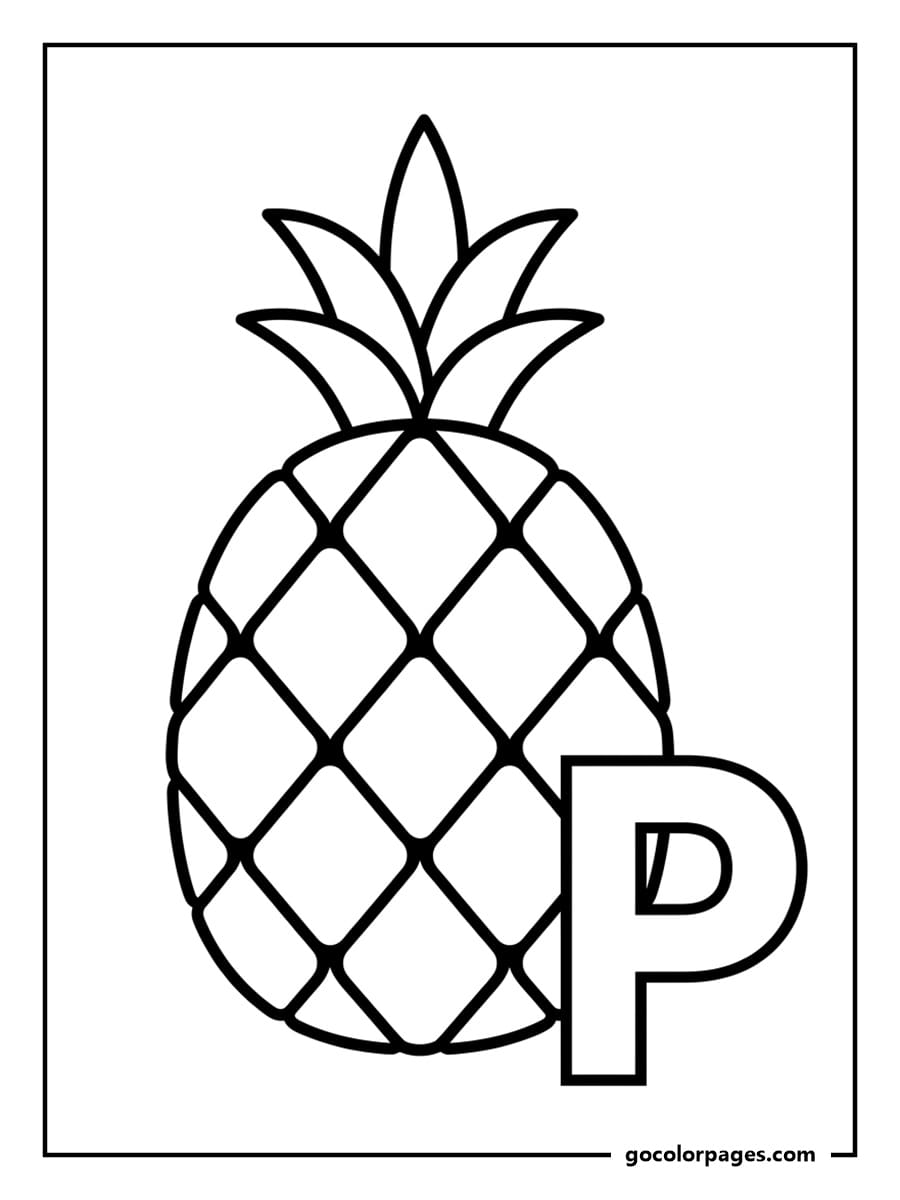
- Chunky Preschool Pineapples for Letter P and Toddler Counting: Drawn with thick three-point contours and just eight to twelve oversized diamond scales so two-to-four-year-olds and fans of our cute and easy coloring pages can fill each section without crossing the lines.
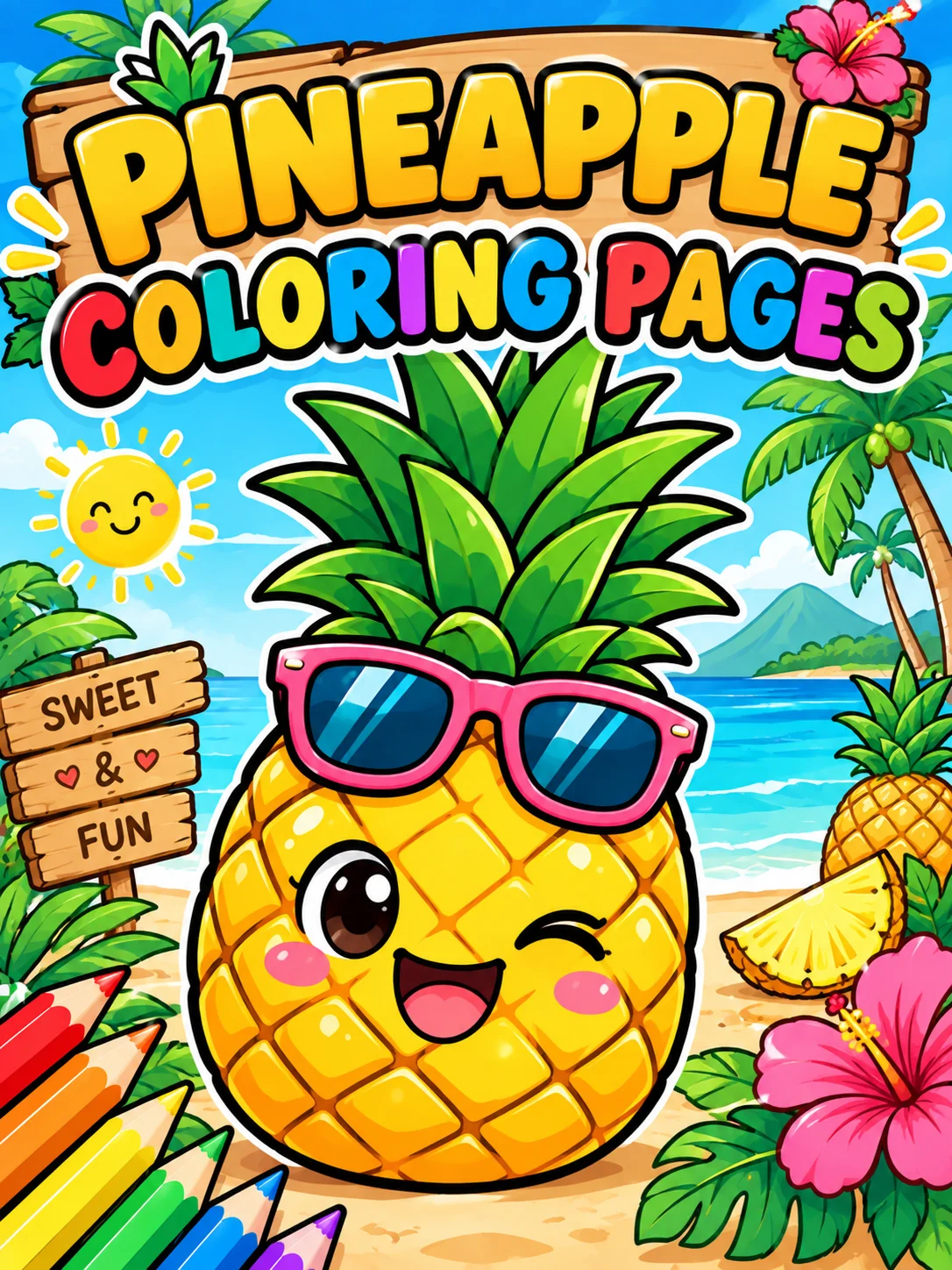
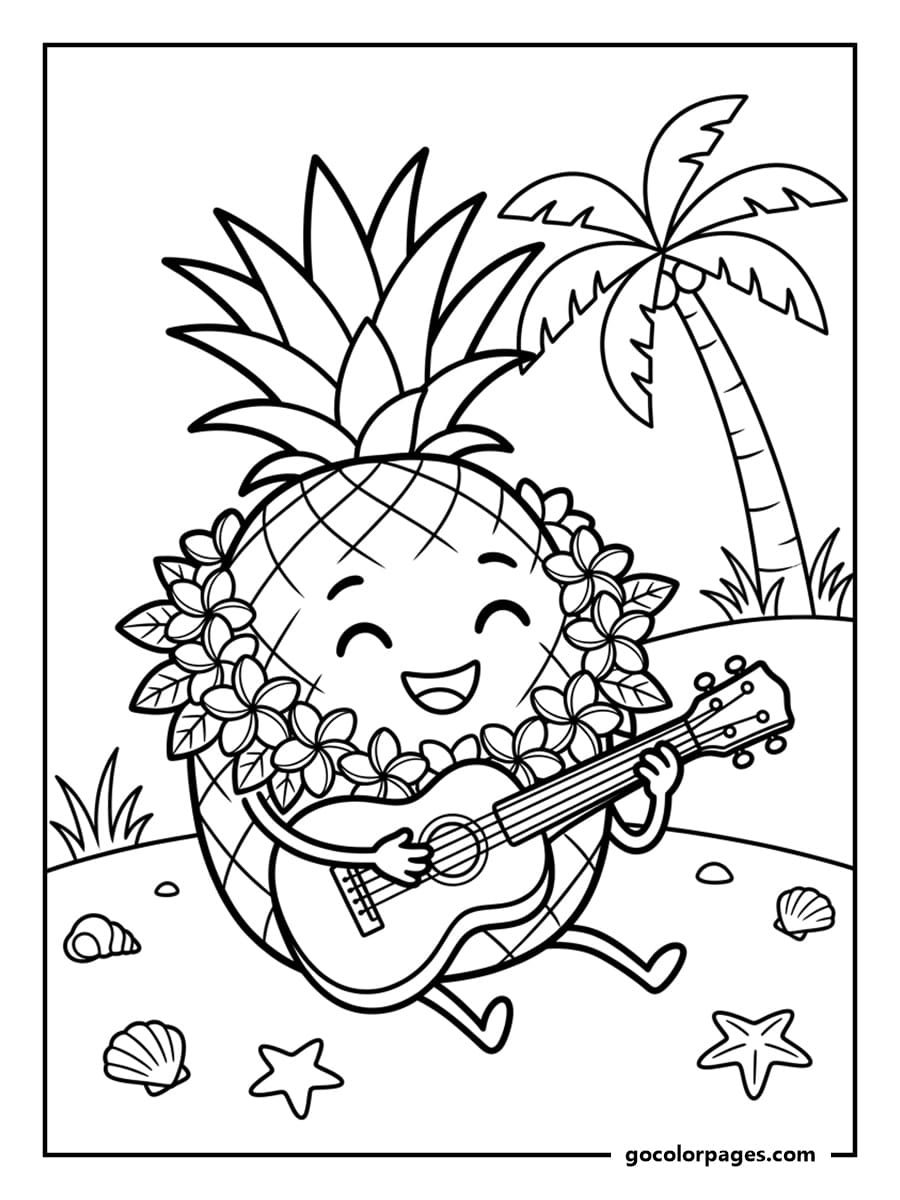
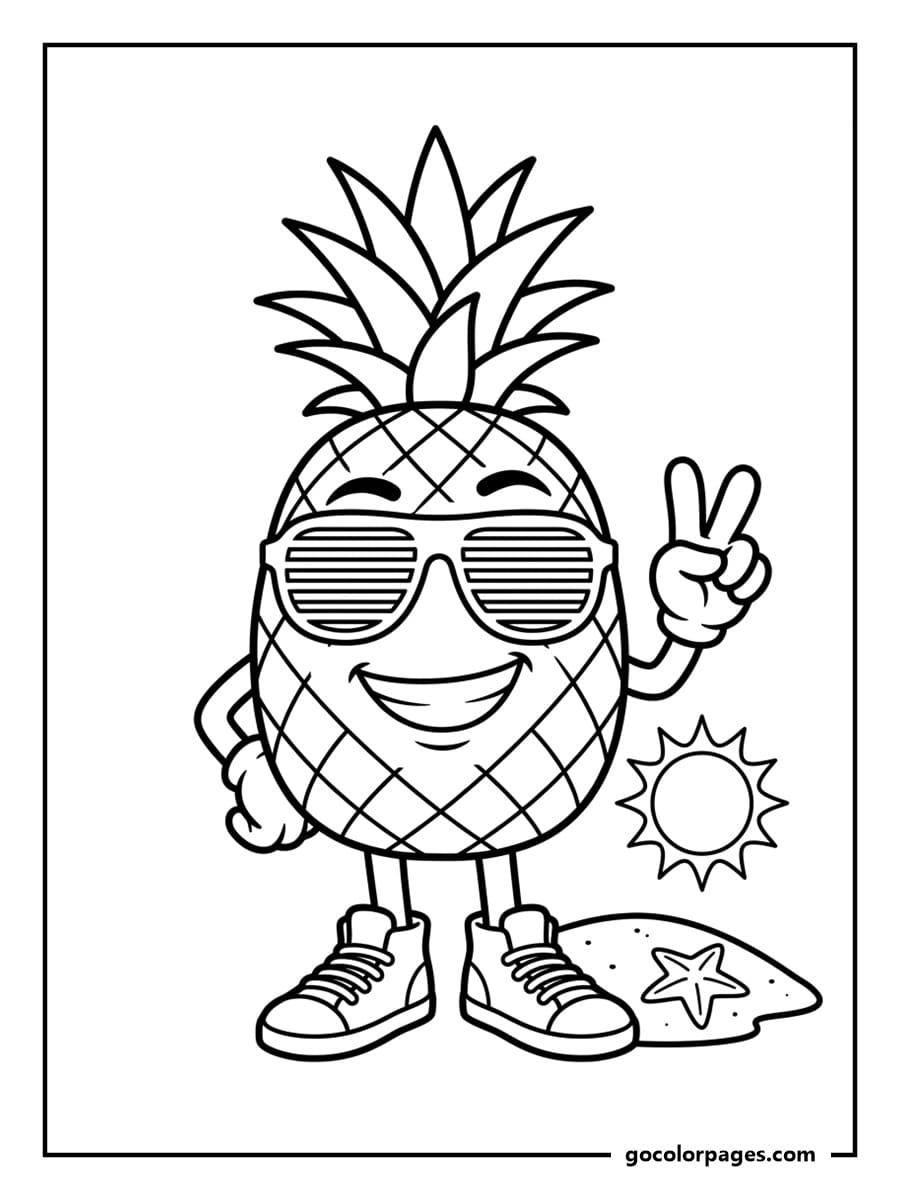
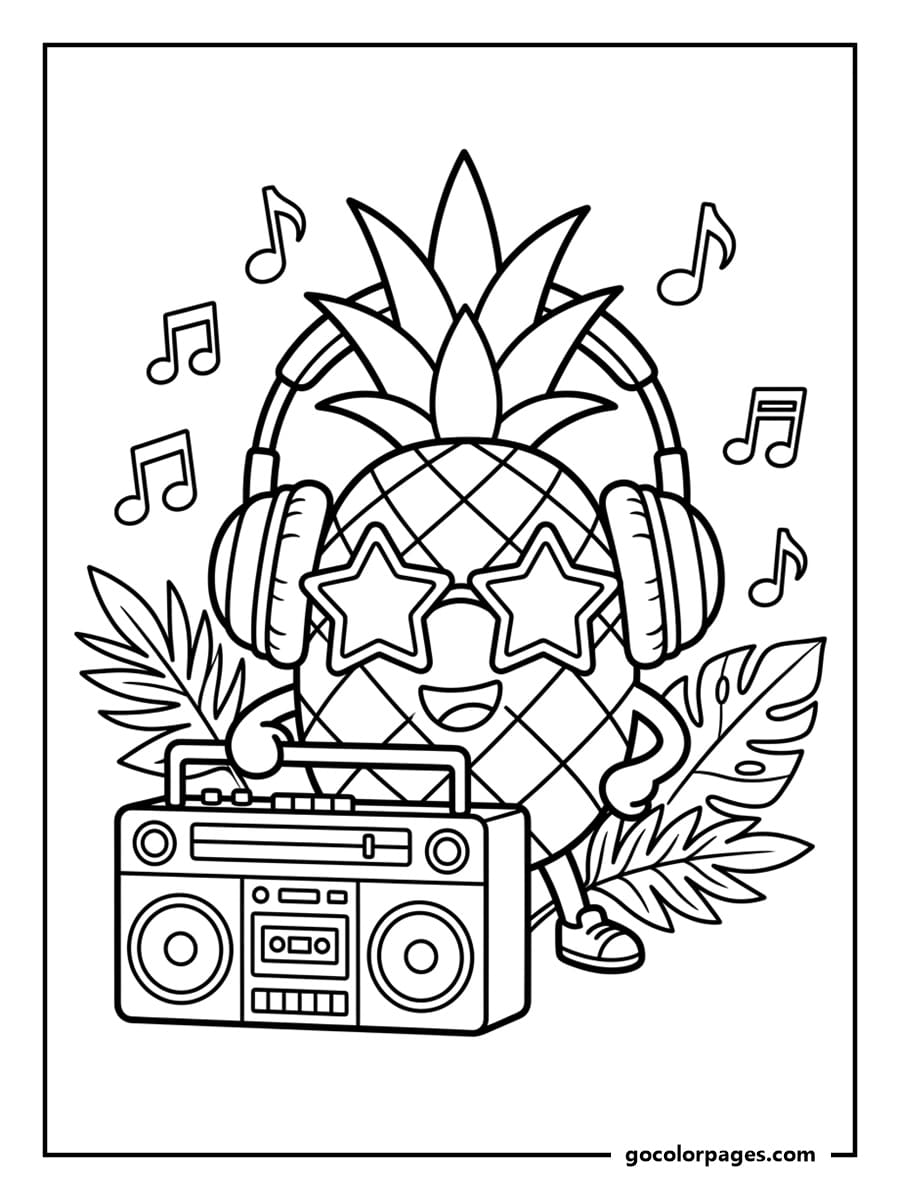
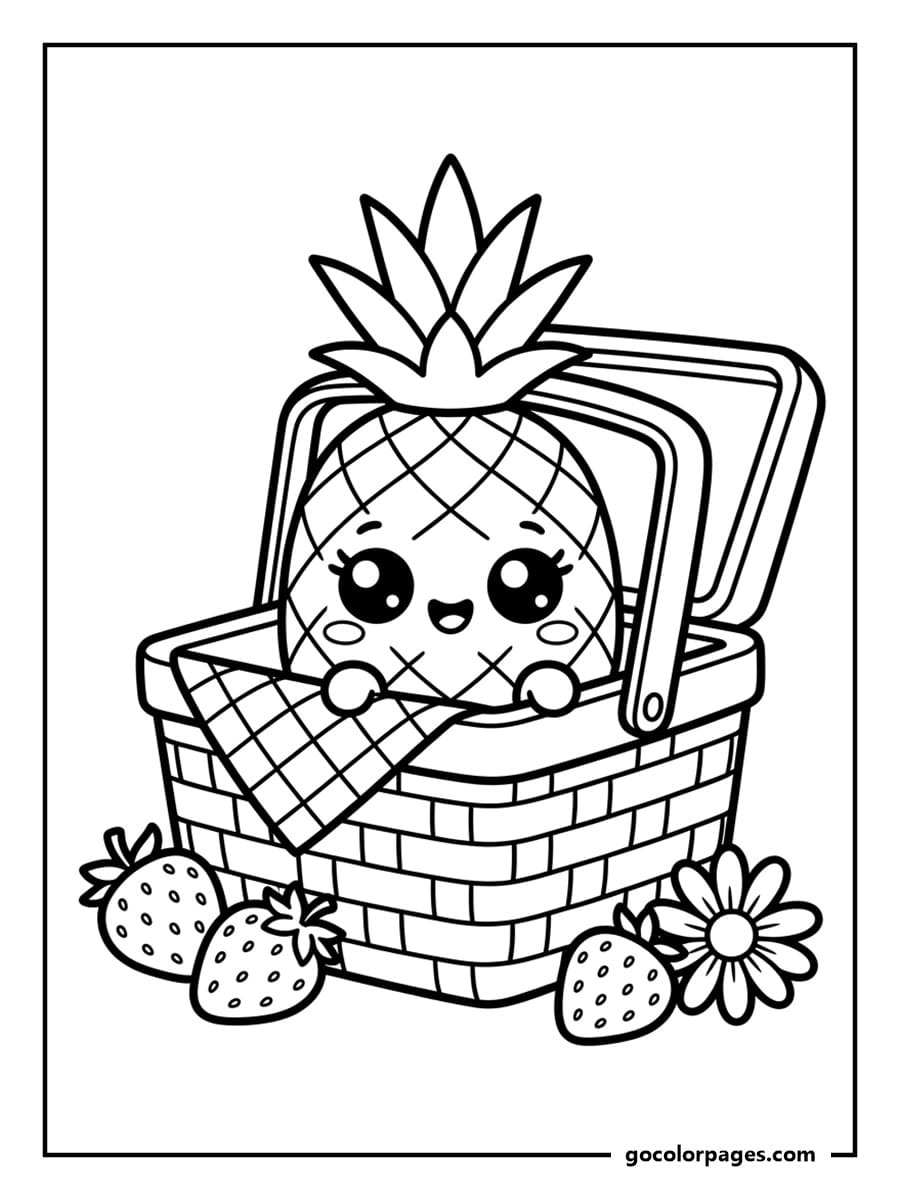
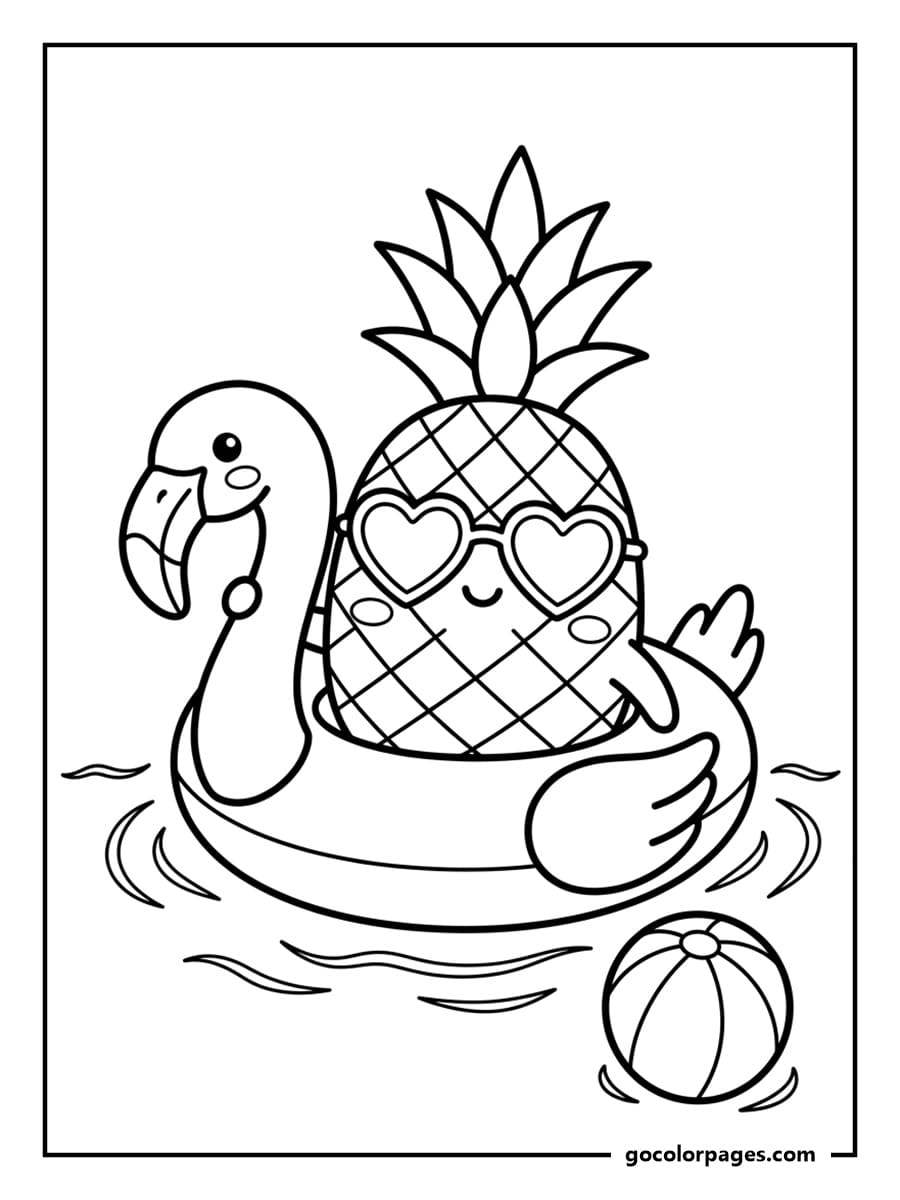
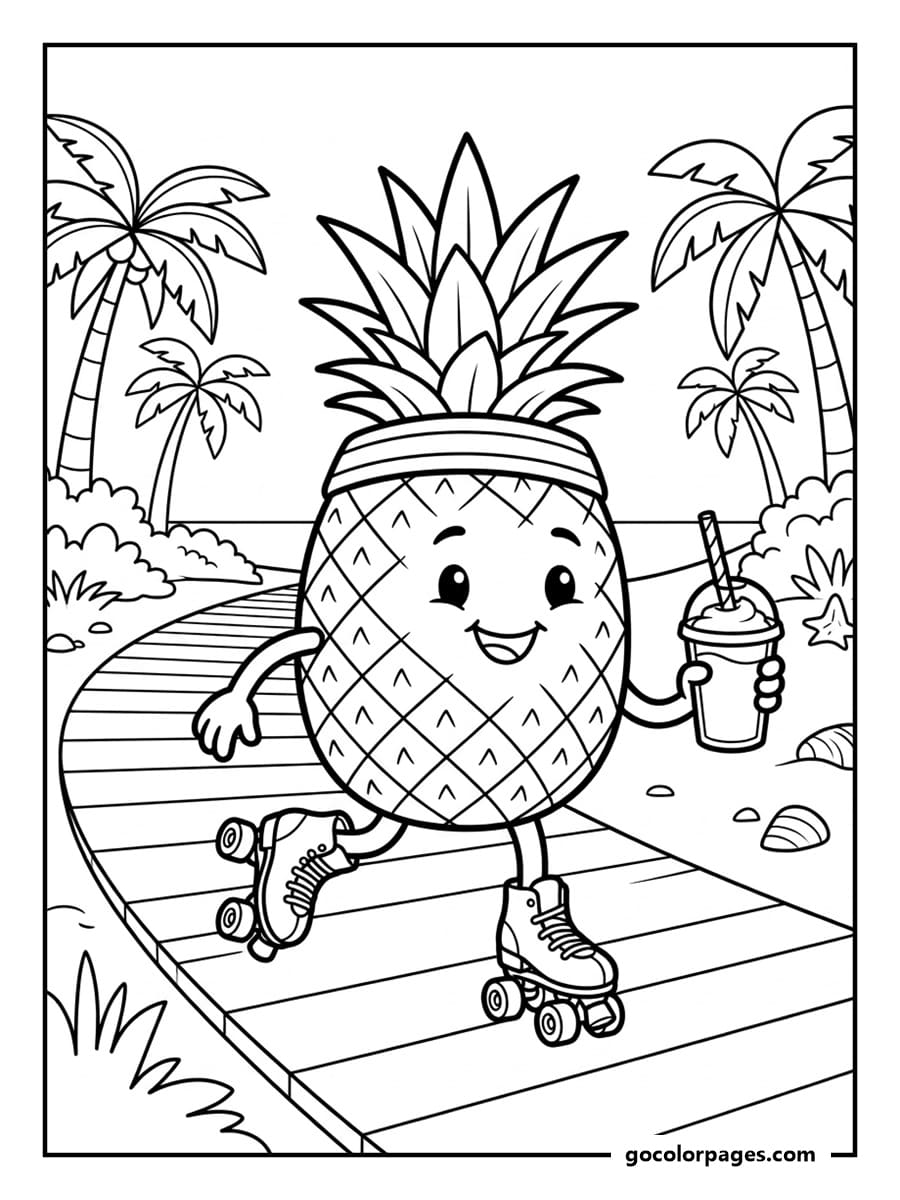
- Cool Kawaii Pineapples in Sunglasses, Headphones, and Roller Skates: Smiling cartoon characters flashing peace signs, strumming aloha ukuleles, lounging inside flamingo pool rings, or rocking retro shutter shades and over-ear headphones.
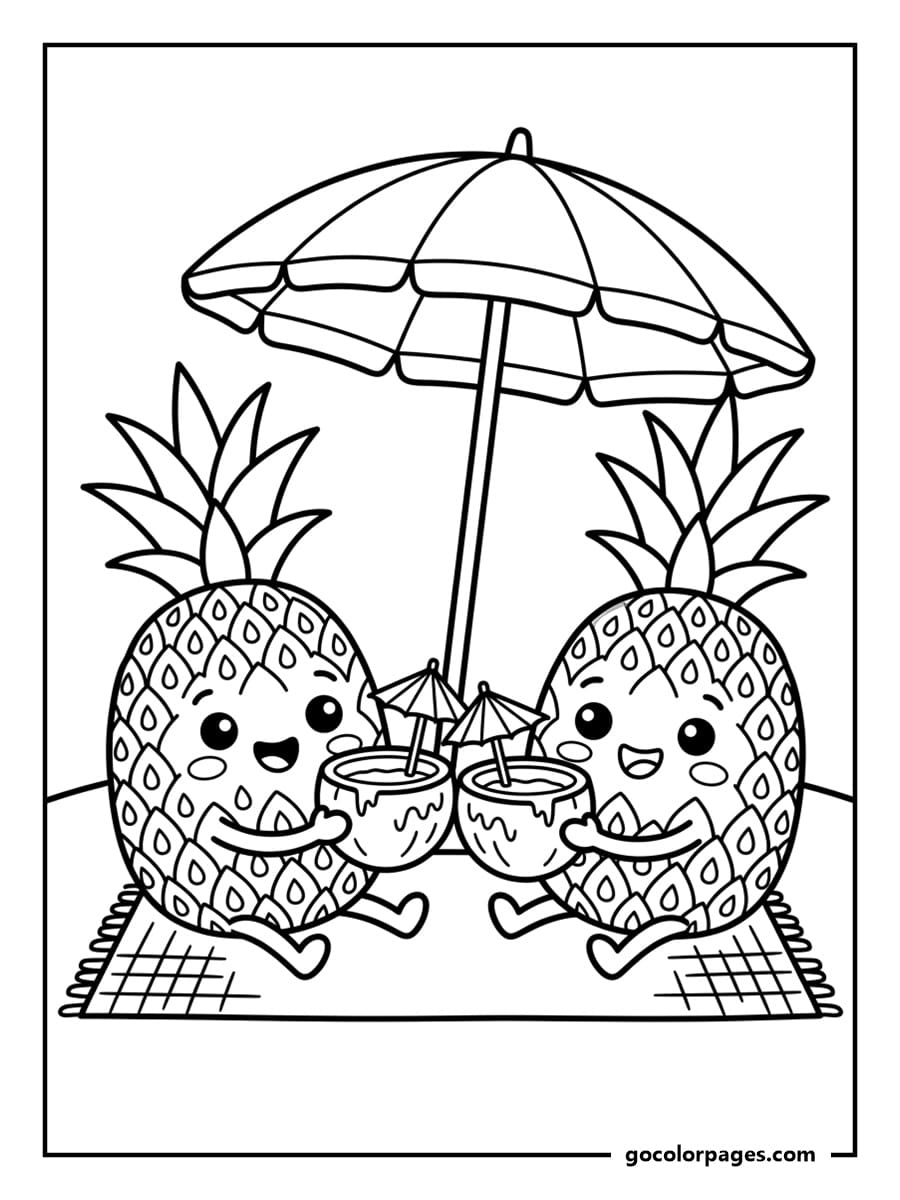
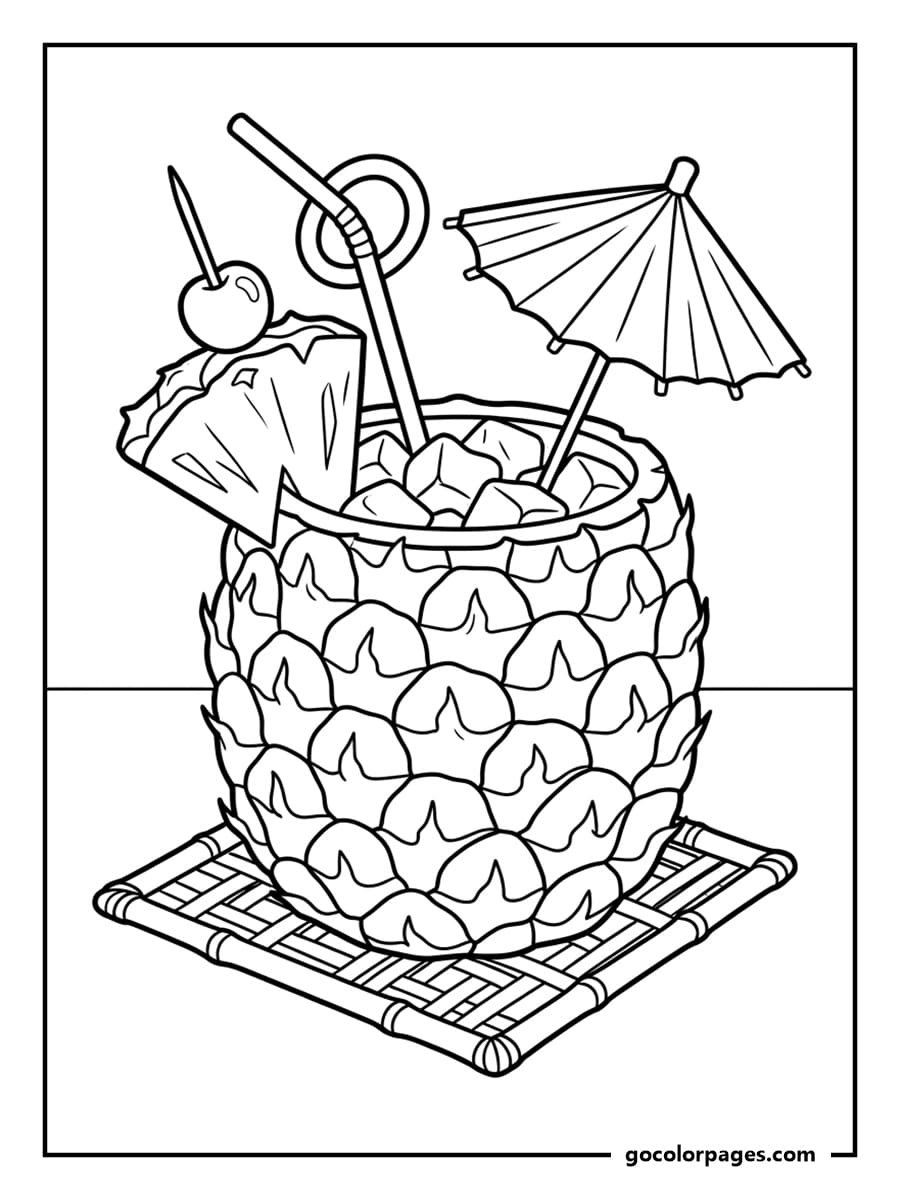
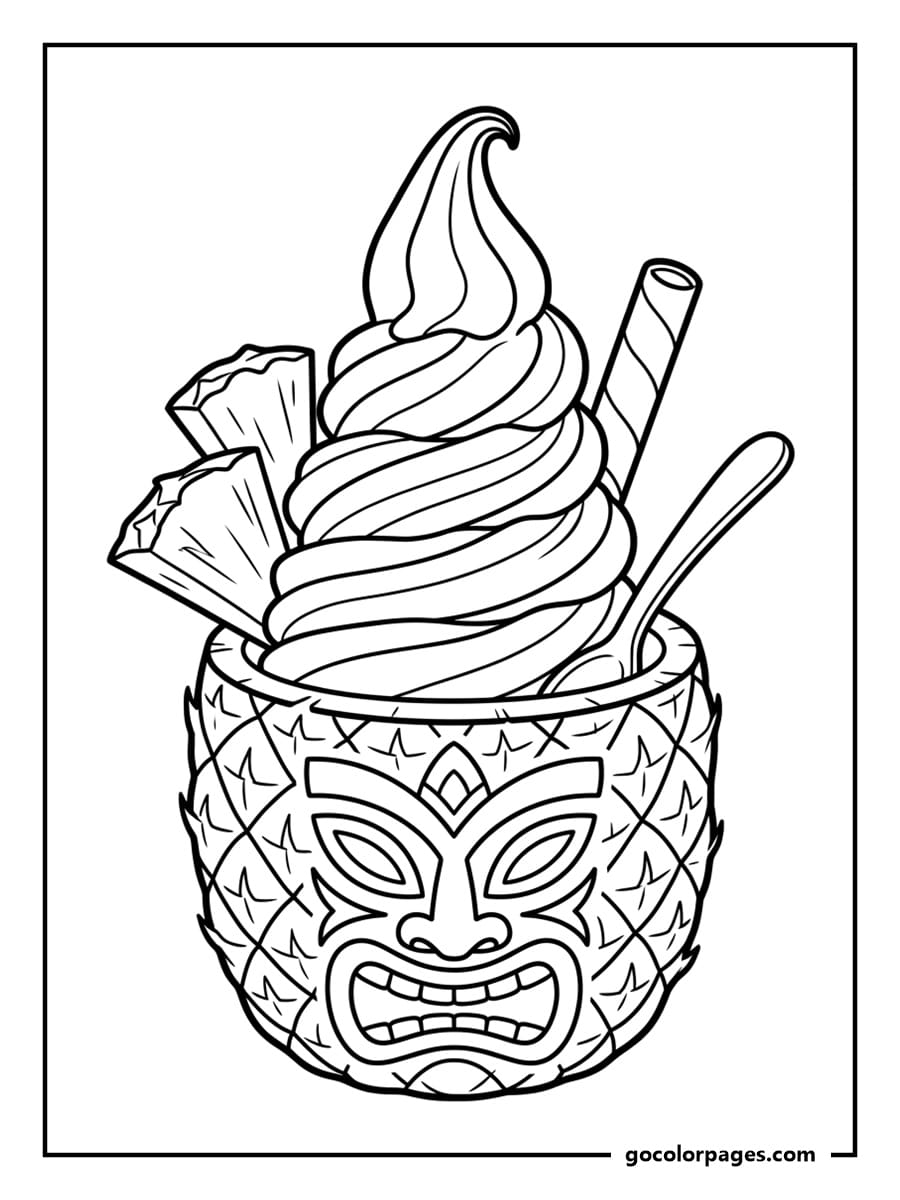
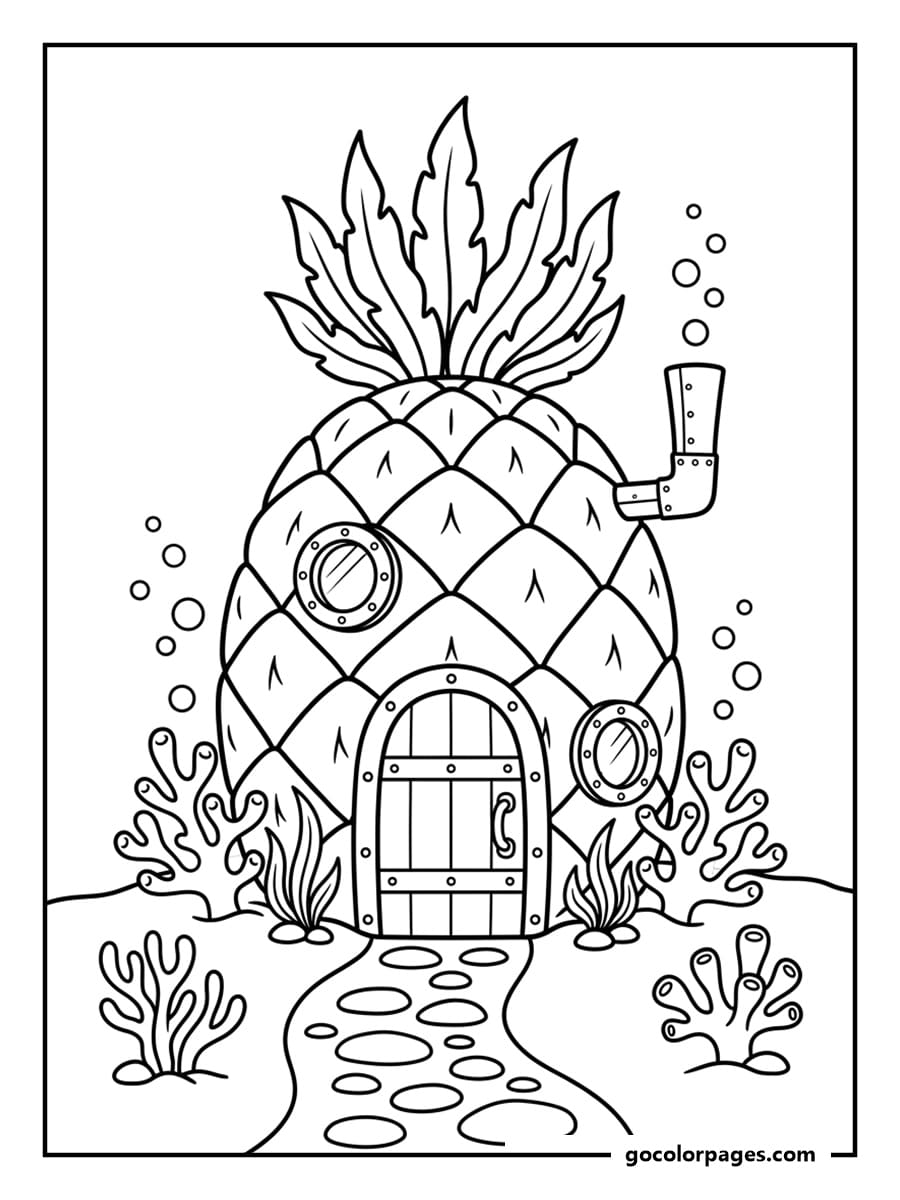
- Undersea Pineapple Houses and Tropical Luau Drink Spreads: Whimsical porous pineapple cottages resting on the ocean floor with round porthole windows and stone pebble paths, paired with hollowed pineapple tiki smoothies topped with paper umbrellas.
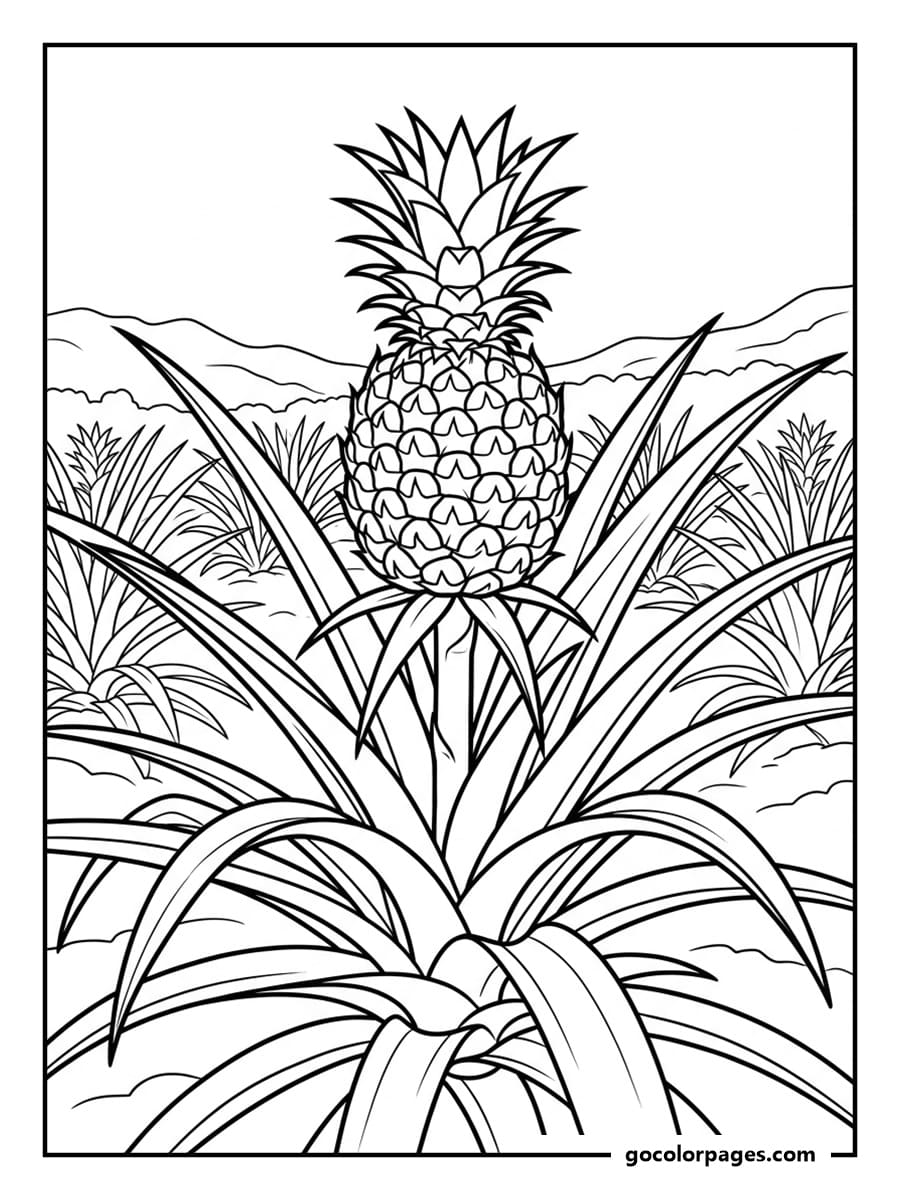
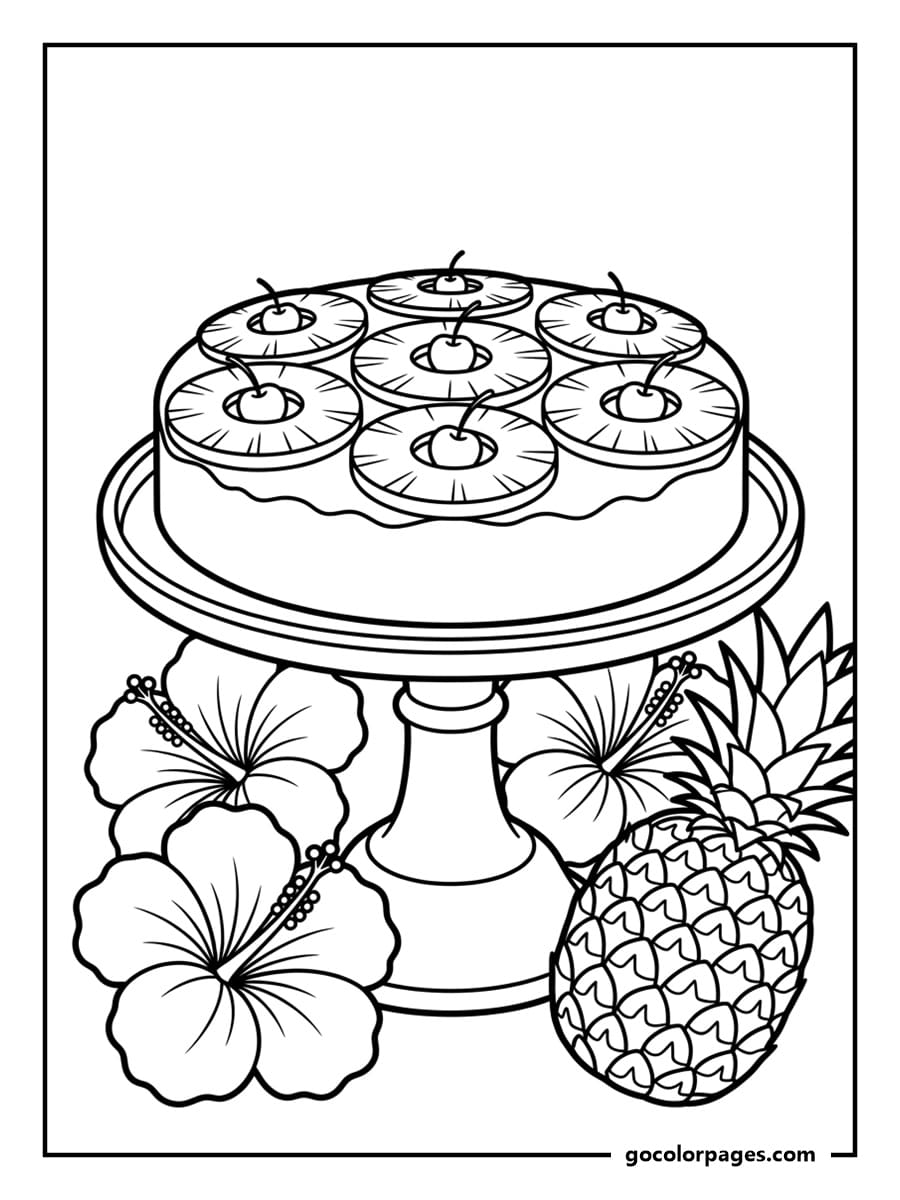
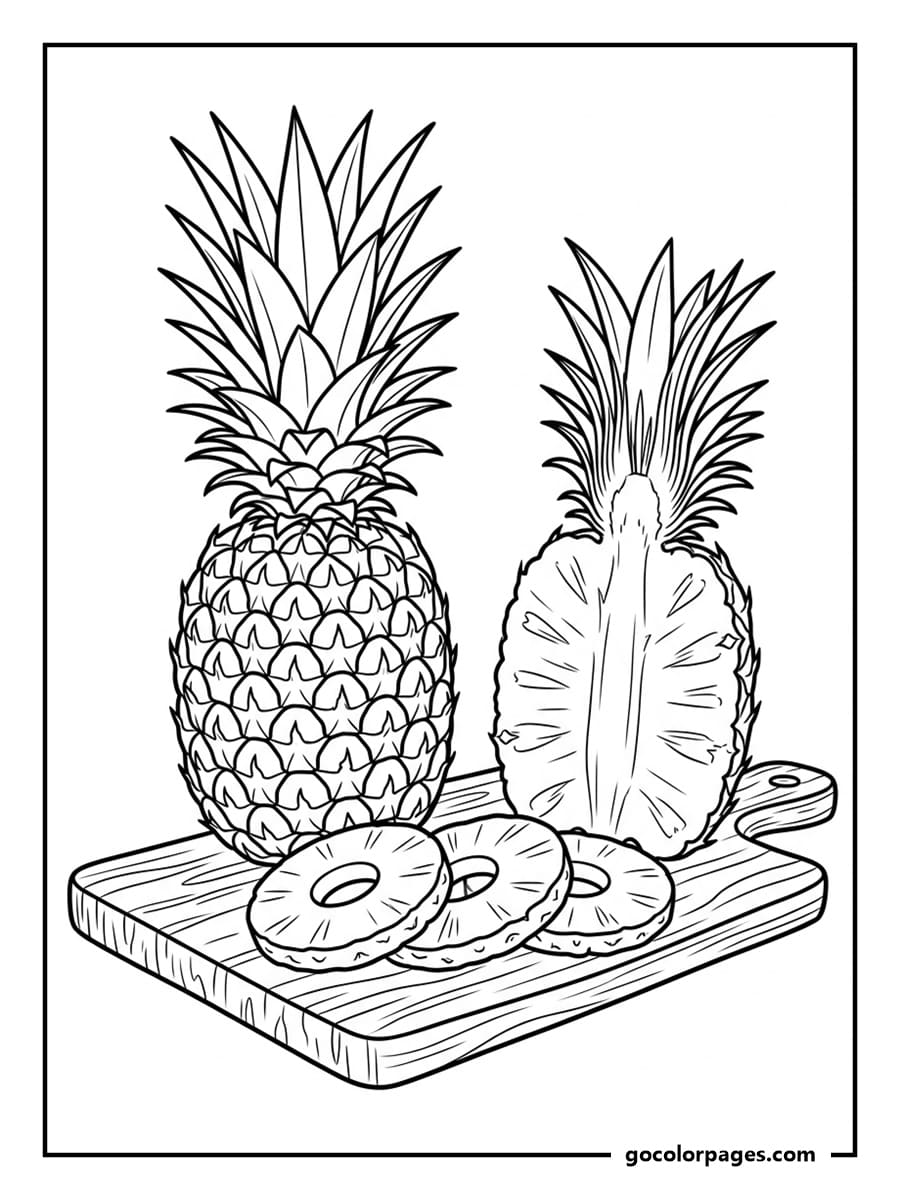
- Botanical Ananas Comosus Specimens and Sliced Fruit Platters: Naturalistic whole pineapples still nested inside their arching bromeliad stalks, accompanied by cored pineapple wheels, juicy wedges, and tropical hibiscus blooms.
- Intricate Zentangle Pineapples and Colonial Welcome Wreaths for Adults: Fine-line geometric sheets packing paisley teardrops, polynesian chevrons, and floral filigree inside every individual scale for intricate adult coloring pages collectors.
"A pineapple isn't one smooth piece of produce it is a miniature fortress of up to two hundred fused berries locked in eight-by-thirteen Fibonacci spirals."
Why Flat Yellow Turns Pineapples Into Waffles and How Bottom Up Ripening Fixes It
Watch ten kids or adults sit down with pineapple coloring sheets, and nine of them will grab one bright lemon crayon and scrub it uniformly from the top leaf crown to the bottom stem. Within thirty seconds, that rounded tropical armor flattens out into an Eggo waffle.
If you slice open a Smooth Cayenne or MD-2 Golden pineapple in your kitchen, you will notice it never ripens evenly from top to bottom. Because natural fruit starches convert into sugar at the stem base first and travel slowly upward, a ripe pineapple glows deep honey-orange at the bottom while its upper shoulders stay tart lime-green. Coloring your sheet in four vertical ripeness bands and banishing black from the diagonal grooves gives flat paper instant grocery-store weight.
- Glaze the Upper Shoulder in Tart Chartreuse and Key Lime: Lay a whisper-light wash of pale lime or yellow-green (
YG03in alcohol markers or Chartreuse in pencils) across the top two rows of diamond scales directly below the crown where chlorophyll lingers longest. - Sweep Canary Yellow and Mango Gold Across the Mid-Belly: Blend warm cadmium yellow into rich mango ochre across the wide middle equator where sunlight hits the rounded cylinder straight on.
- Anchor the Stem Base in Toasted Honey Amber and Tangerine: Deepen the bottom two rows of scales with warm tangerine and golden amber to capture concentrated bottom-up sugar ripeness.
- Swap Black Grid Lines for Burnt Sienna and Terracotta Creases: Never trace the diagonal grooves with black or lead gray; run a sharp burnt sienna or warm terracotta pencil strictly along the lower-right V-trough of each diamond so the seams glow like sunlit bark.
Three Anatomy Tricks for Spiky Crowns Diamond Eyes and Sliced Rings
Even with a warm bottom-up gradient, a pineapple outline only comes alive when you separate its three distinct textures: the puffy outer diamond scales, the stiff waxy leaf crown, and the wet fibrous interior. Using the exact same crayon pressure across all three zones blurs the contrast between the spiky armor and the sweet flesh inside.
Spend three extra minutes adjusting your stroke direction on these three anatomical details and your finished page will look sculpted off the table.
Cushioning Individual Diamond Bracts With Upper Left Crescents and Olive Eyes
If you have practiced how to draw textured cylinders, you know that flat diagonal crosshatching kills three-dimensional volume unless each individual cell casts its own micro-shadow. Every diamond on a pineapple rind is a raised, cushioned bract with a tiny dried blossom scar called the eye tucked into its center.
Instead of coloring right over the grid lines, treat each diamond like a tiny quilted pillow. Leave a two-millimeter curved crescent of pale lemon or bare white paper along the upper-left ridge of the diamond, blend golden orange into the lower-right corner, and dab the central eye scar with a pinpoint touch of dusty olive-green and plum-violet.
Layering the Spiky Bromeliad Crown From Indigo Pockets to Coral Leaf Margins
The fastest way to ruin a detailed pineapple sheet is coloring the thirty-leaf top crown known botanically as the comose with a single flat green marker. Without deep pocket shadows, the overlapping sword-shaped blades melt into a stiff green broom.
Work from the deepest inner crevices outward using an Inside-Out Bromeliad Frond Method. Tuck dark Prussian blue or forest teal right into the tight V-pockets where the lower leaves overlap the top of the fruit, pull smooth emerald strokes up the arching mid-blades, and flick bright chartreuse out to the curled tips. Finish by tracing a hairline one-millimeter rim of coral red or magenta along the serrated leaf margins a real botanical detail visible on sun-ripened Hawaiian crowns.
Shading Fibrous Core Rings and Caramelized Grill Marks on Sliced Wheels
Sliced pineapple rings, chunks, and tiki cocktail garnishes fall flat when colorists fill the tough central core disc and the juicy outer ring with the exact same shade of yellow. In a real cross-section, the dense central core refracts far less light than the translucent yellow flesh around it.
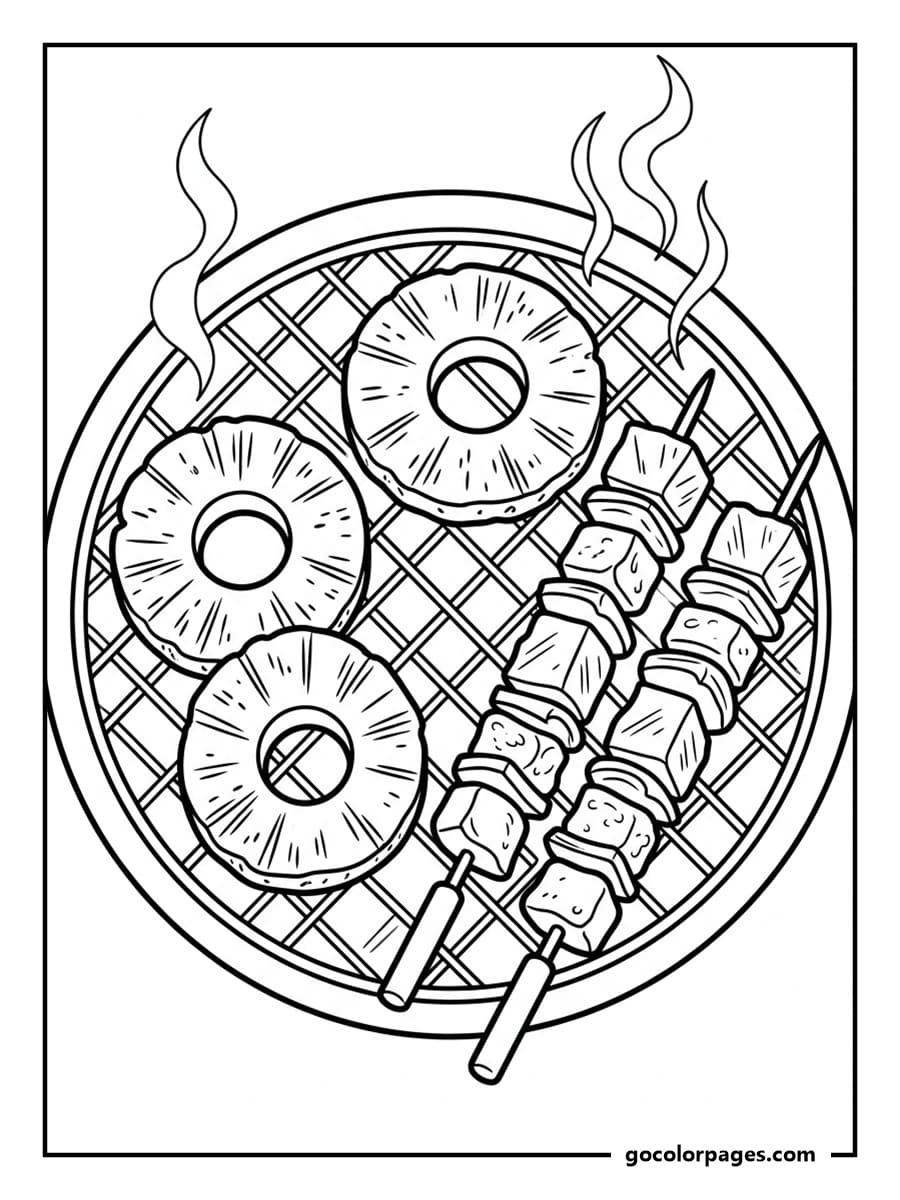
Color the round center core button one step warmer and denser using warm buff and golden ochre, while keeping the outer ring a translucent canary-yellow wash. Once dry, pull twelve thin white gel-pen spokes radiating outward from the core ring to mimic crisp bromeliad juice fibers or draw two parallel diagonal amber-brown hash marks across the ring if you are shading a sizzling summer BBQ sheet.
Making Kawaii Sunglasses Neon Headphones and Undersea Pineapple Houses Pop
Scroll through the most downloaded pineapple templates for kids and tweens, and half of them aren't sitting quietly in a fruit bowl. They are wearing retro shutter shades, jamming in over-ear DJ headphones, roller-skating down a boardwalk, or serving as a cozy undersea house with a round steel door.
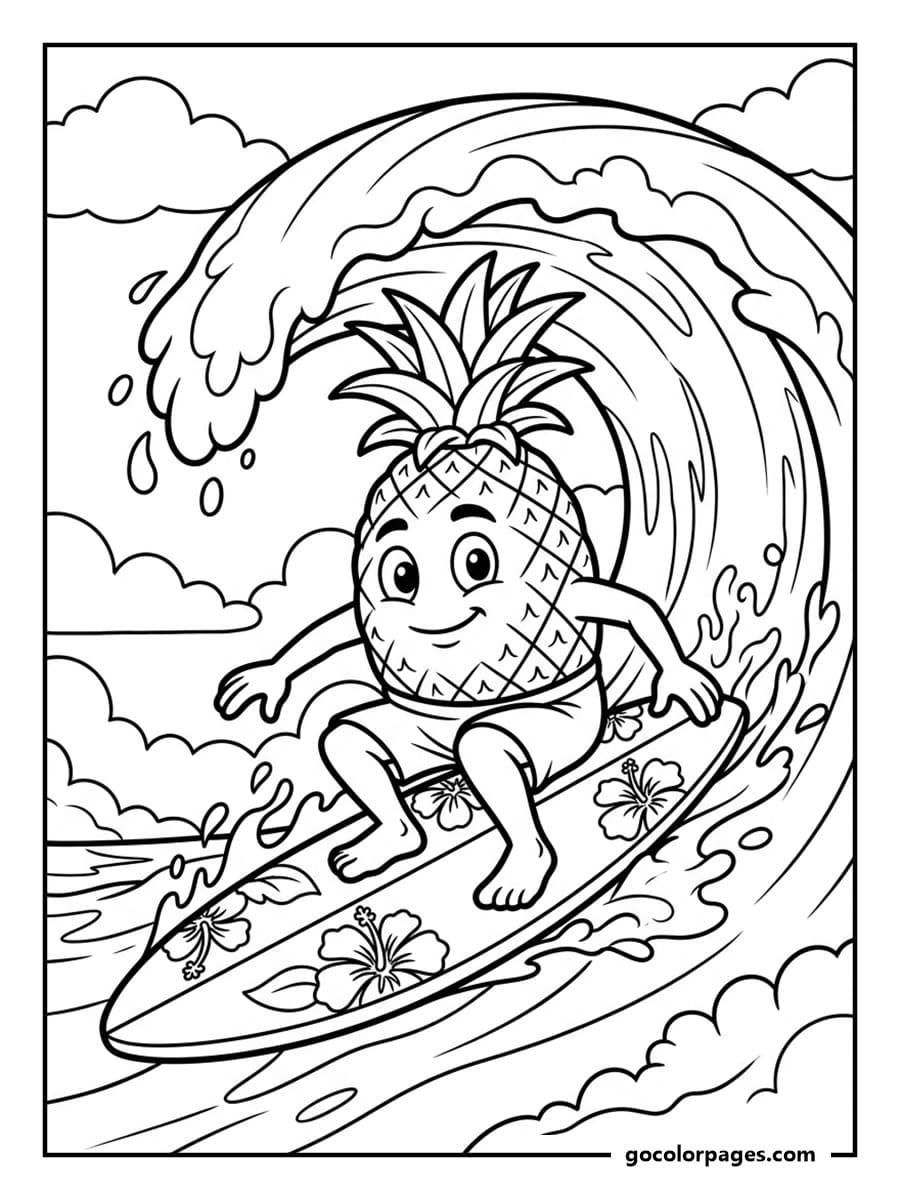
Because a pineapple's body already dominates the warm yellow-to-orange slice of the color wheel, coloring its sunglasses, surfboard, or flower lei in red, yellow, or orange makes the accessories vanish into the rind. Reaching directly across the color wheel for cool complementary hues gives cartoon characters instant poster-art punch.
- Pair Golden Rinds With Electric Cyan and Violet Shutter Shades: Since yellow-orange sits directly opposite blue-violet on the artist's wheel, color sunglasses frames, DJ headphones, and roller skates in electric turquoise, cobalt blue, or royal violet saving a crisp diagonal white glare slash across both lenses.
- Frame Smiling Kawaii Faces With Hibiscus Pink Cheeks and Plumeria Leis: Leave a tiny bare-white sparkle dot inside black cartoon eyes, buff soft coral-pink ovals beneath the cheeks, and alternate hot magenta and buttercream across Hawaiian flower necklaces.
- Contrast Porous Undersea Pineapple Cottages Against Cool Aqua Water: When coloring an ocean-floor pineapple house, keep the diamond walls warm tangerine-gold and shade the riveted porthole frames, curved chimney pipe, and surrounding sea sponges in cool seafoam teal and slate blue.
"Because a pineapple already owns the warm half of the color wheel, dressing it in electric cyan sunglasses and hot magenta hibiscus blooms creates instant complementary electricity."
Four Backyard Luau and Classroom Hospitality Crafts From Finished Pages
Thanks to its rigid symmetrical geometry and its eighteenth-century reputation as the ultimate emblem of a warm welcome, a colored pineapple printout naturally transforms into standing paper decor and classroom welcome signs. You only need safety scissors, a glue stick, and a few sheets of construction paper to take these designs off the flat desk.
When we test our printable coloring pages for kids with preschool teachers, elementary art specialists, and summer party hosts browsing our celebration coloring pages, these four pineapple-specific builds always steal the spotlight.
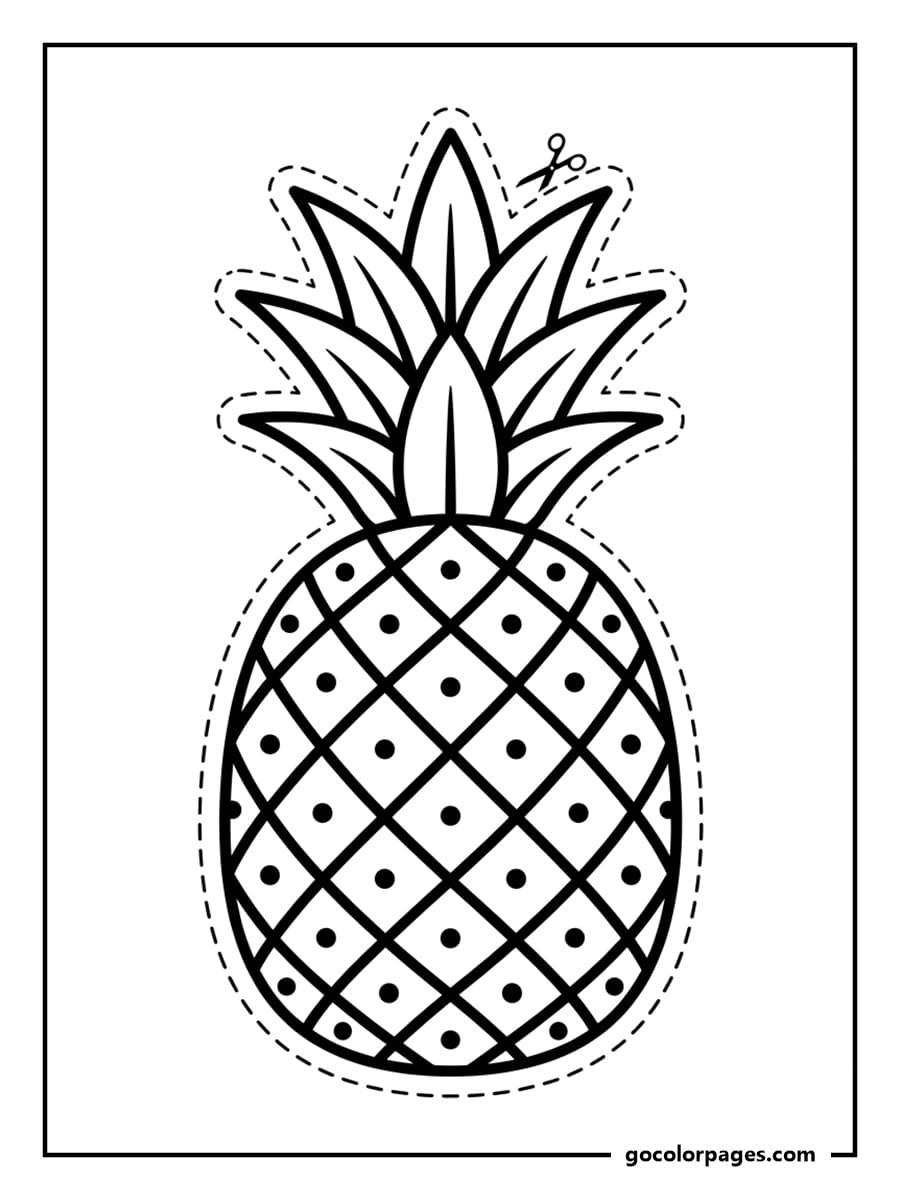
- 3D Accordion-Fold Honeycomb Luau Centerpieces: Print threeentical copies of a symmetrical pineapple sheet, color all three, cut out the outlines, fold two of the pineapple bodies vertically down the center line, and glue their folded backs onto the flat third sheet so the fruit pops out in 180-degree honeycomb relief on your party table.
- Preschool Thumbprint-Scale Letter P Sensory Collages: Hand toddlers a wide-grid pineapple outline during "Letter P" week, let them press a thumb into yellow and orange washable ink pads to stamp one plump fingerprint inside every diamond cell, and glue crinkly green tissue-paper strips at the top for a spiky 3D crown.
- Colonial "Warm Welcome" Classroom and Guest-Room Door Hangers: Revive the classic port-city hospitality tradition by mounting a botanically shaded pineapple onto heavyweight cardstock, lettering "Welcome to Our Crew" across a ribbon scroll at the base, and hanging it from jute twine on a classroom door on the first day of school.
- Fibonacci Diagonal Paper-Weaving Mats for Elementary Art: Fold a colored pineapple body in half horizontally and snip parallel one-inch slits across the belly (stopping half an inch inside the outer border), then let second-graders weave half-inch strips of golden and amber construction paper over-and-under to lock in a tactile checkerboard crust.
Frequently Asked Questions About Pineapple Coloring Pages
How do you color a pineapple so the diamond scales look 3D instead of flat?
Skip scrubbing one flat yellow crayon across the entire grid, and treat each diamond cell like a tiny quilted pillow instead. Leave a two-millimeter pale lemon crescent along the upper-left edge of each scale, shade the lower-right V-groove with warm terracotta or burnt sienna, and dot the center eye scar with a speck of olive green.
Should a realistic pineapple be colored yellow at the top or the bottom?
Real pineapples ripen from the bottom stem upward because natural fruit sugars accumulate at the base first. Blend deep honey amber and warm tangerine across the bottom rows, sunny golden yellow through the middle belly, and tart lime-chartreuse across the upper shoulder right beneath the leafy crown.
Why do so many pineapple coloring sheets say Welcome or hang on doors?
During the 1700s, rare imported pineapples were the ultimate status centerpiece in Colonial port towns. Sea captains returning safely from the Caribbean speared a fresh pineapple on their front gatepost to announce their arrival and invite neighbors inside for food and warm hospitality a tradition still celebrated on porch and classroom door signs today.
What are the best colors to pair with a yellow pineapple on kids' coloring pages?
Because golden yellow and mango orange dominate the warm side of the color wheel, use cool complementary colors for accessories and backgrounds. Electric cyan sunglasses, royal violet headphones, hot magenta hibiscus blossoms, and shallow turquoise ocean waves make a yellow pineapple pop off the page.
Print One Pineapple Sheet and Cushion Five Diamond Scales Tonight
You don't need a botanical illustration degree or a sixty-marker tropical set to turn a flat crosshatched outline into a glowing, sun-ripened centerpiece. Pull out one free printable PDF right now and run these two quick tabletop tests in under ten minutes.
- Run the Five-Scale Cushion Test (4 minutes): Print any whole pineapple sheet, pick five adjacent diamond cells in the center belly, leave a tiny pale-yellow crescent on the upper-left rim of each cell, and tuck burnt sienna into the lower-right V-groove to watch the armor puff out in 3D.
- Layer Three Spiky Crown Pockets in Indigo and Lime (3 minutes): Shade the deep V-creases at the very bottom of the leafy crown with dark blue or forest teal before sweeping bright chartreuse out to the pointed blade tips.
When you print out a fresh stack of pineapple coloring pages, do you gravitate toward cool kawaii characters rocking neon sunglasses and headphones, or realistic botanical pineapples framed by hibiscus flowers and sliced tropical fruit?