
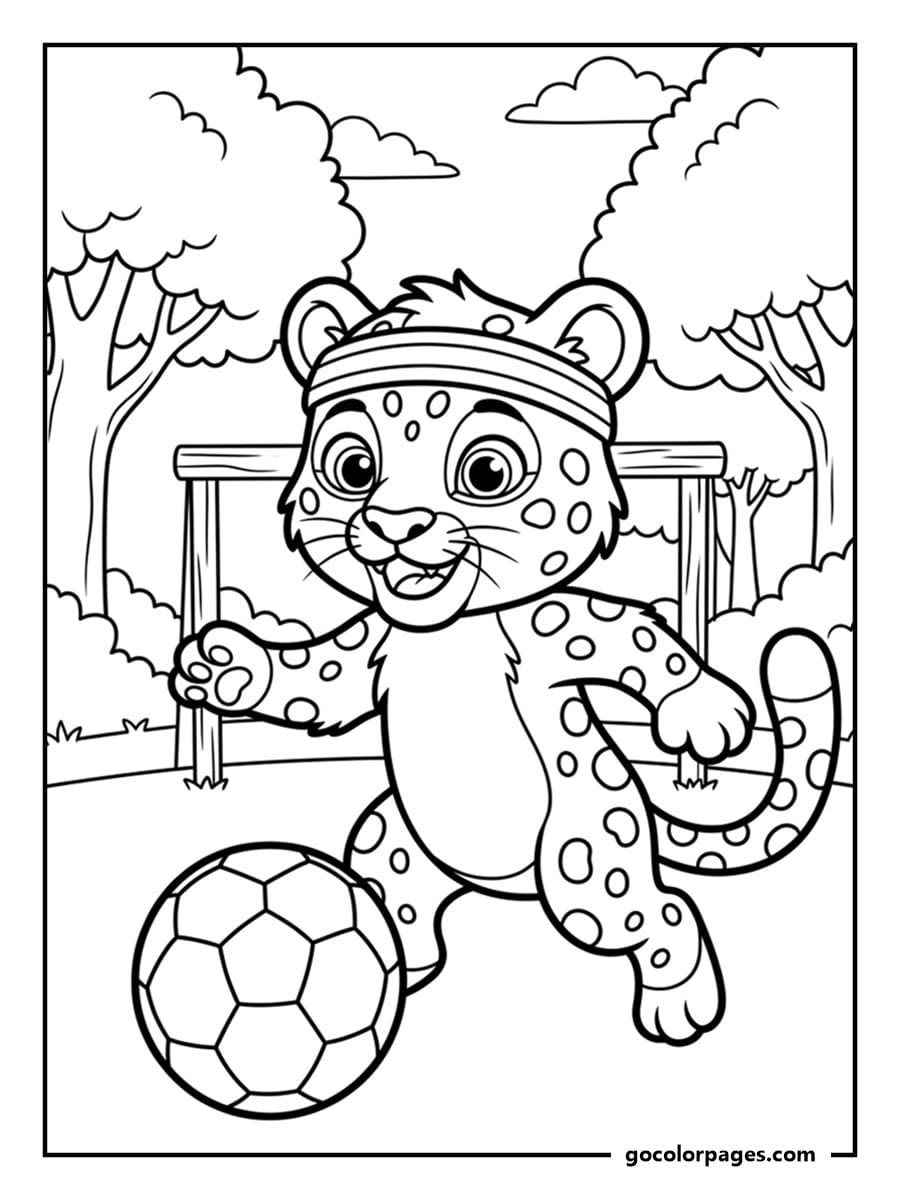
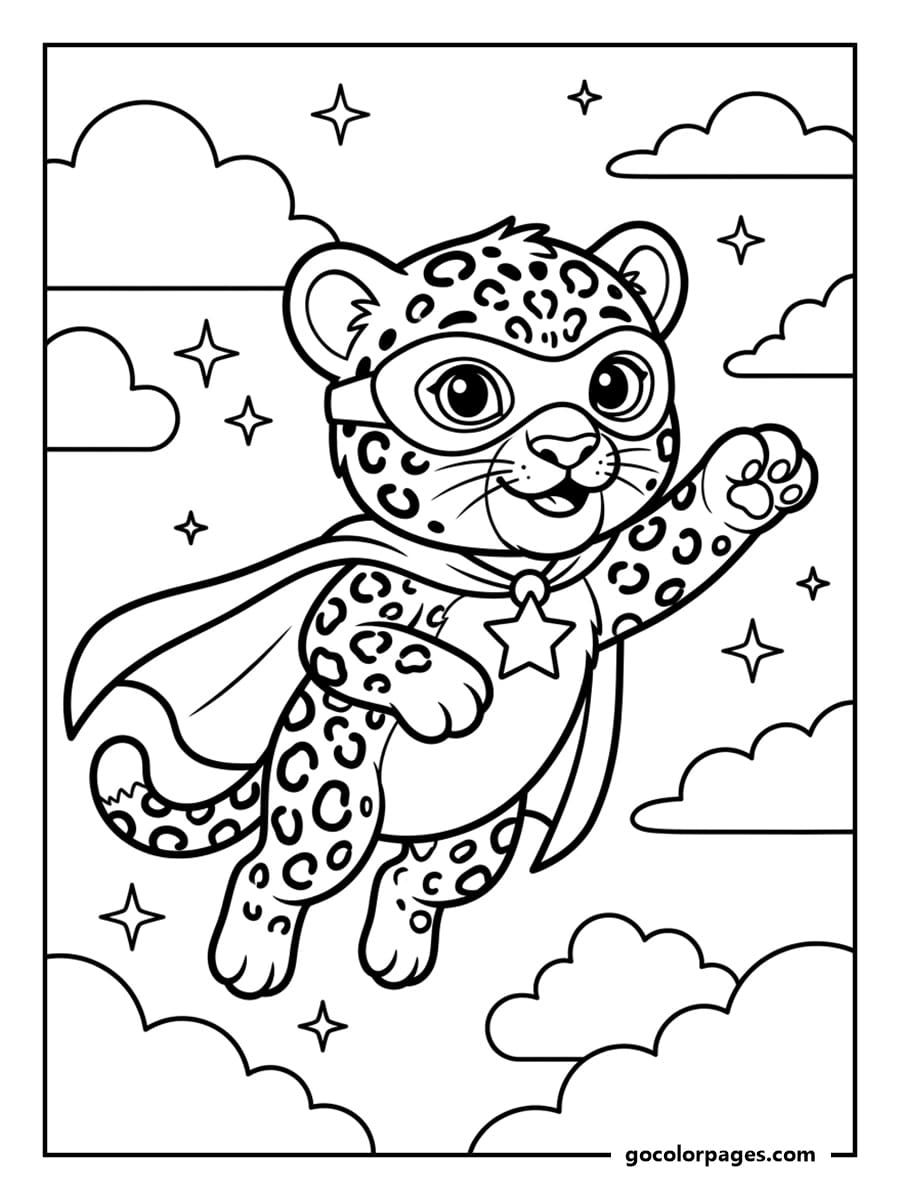
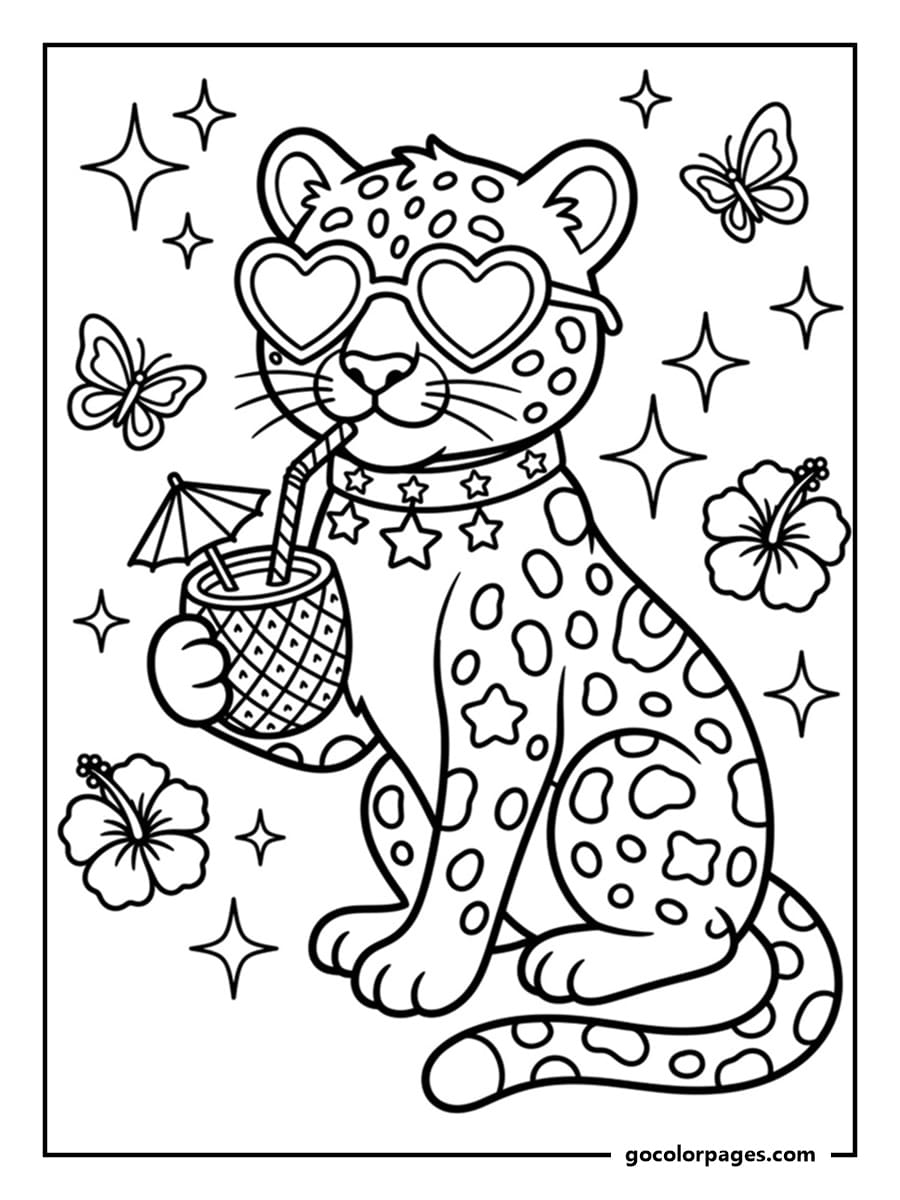
Over a third of the big-cat templates floating around the internet are mislabeled. Before you waste printer paper on a mystery feline, run a three-second spot check that separates the three spotted cats in our master animals coloring pages library.
Look directly inside the black rings on the cat's torso. A true leopard (Panthera pardus) wears tight, broken rose-shaped black rings called rosettes with warm golden-brown centers and zero black dots inside the ring. A jaguar (Panthera onca) has a stockier bulldog chest and wears much wider, blocky polygon rosettes with one to three small black dots sitting right inside the center of each ring. A cheetah (Acinonyx jubatus) has no open rings at all just solid round black polka dots and two unmistakable black "tear stripes" (malars) curving from its inner eye corners down to the corners of its mouth.
Once you confirm those hollow rose rings inside our printable coloring pages vault, matching the line density to your table's age group takes ten seconds.
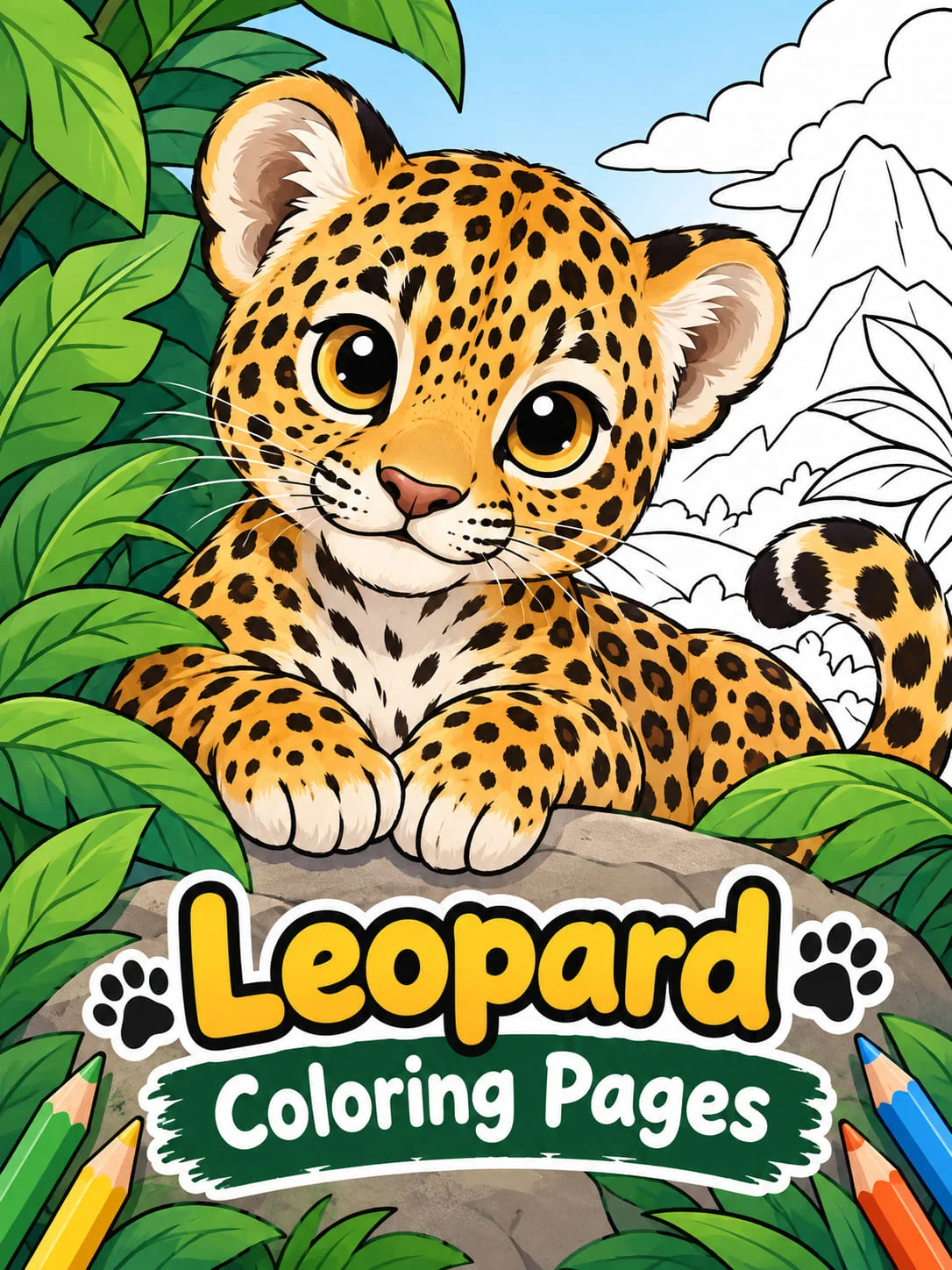
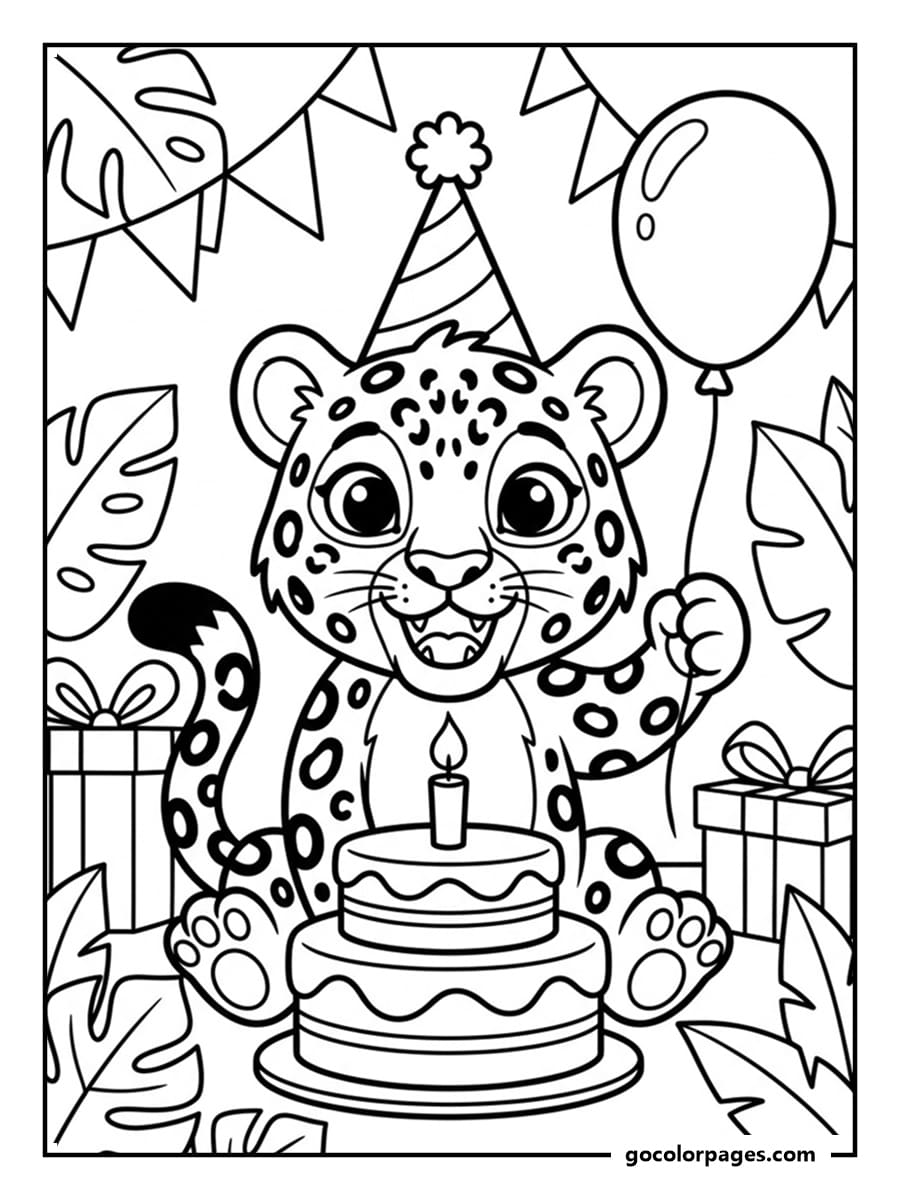
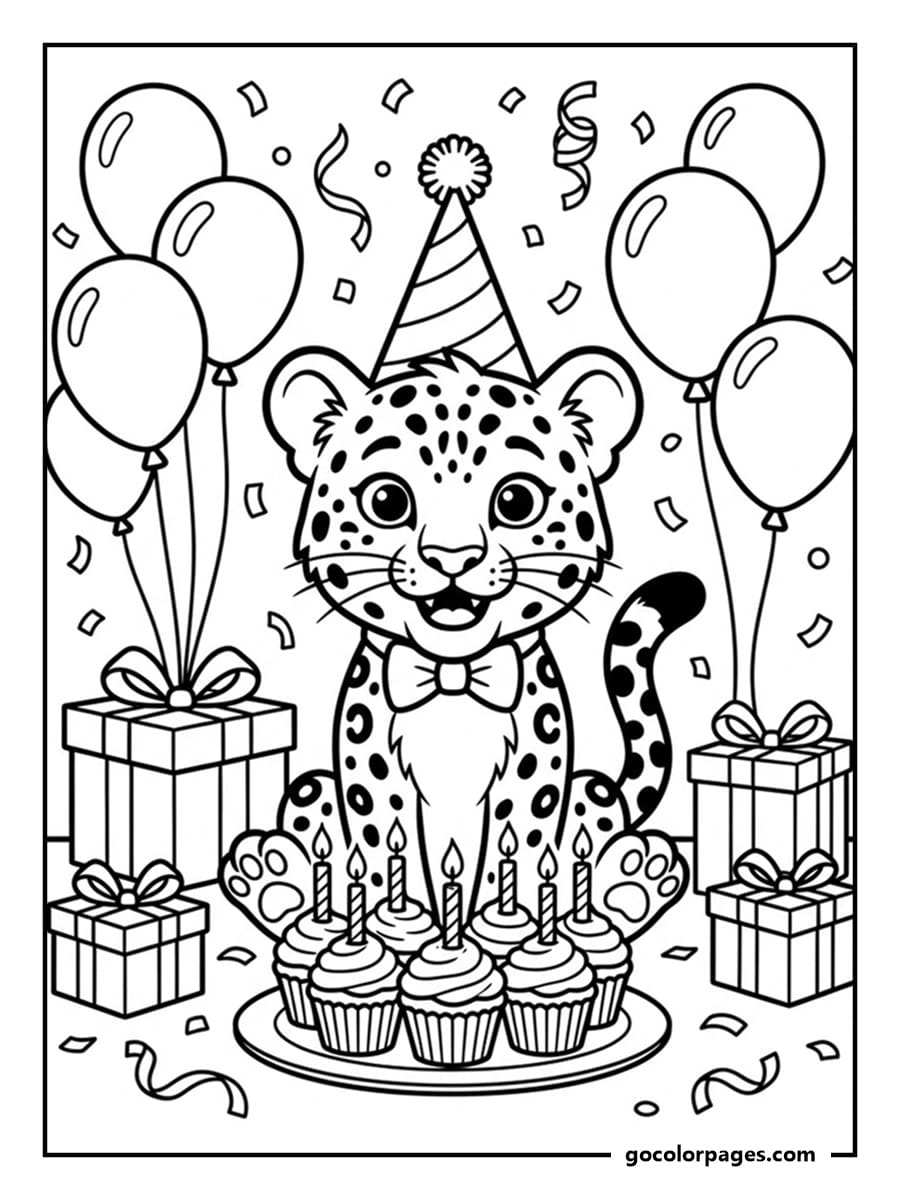
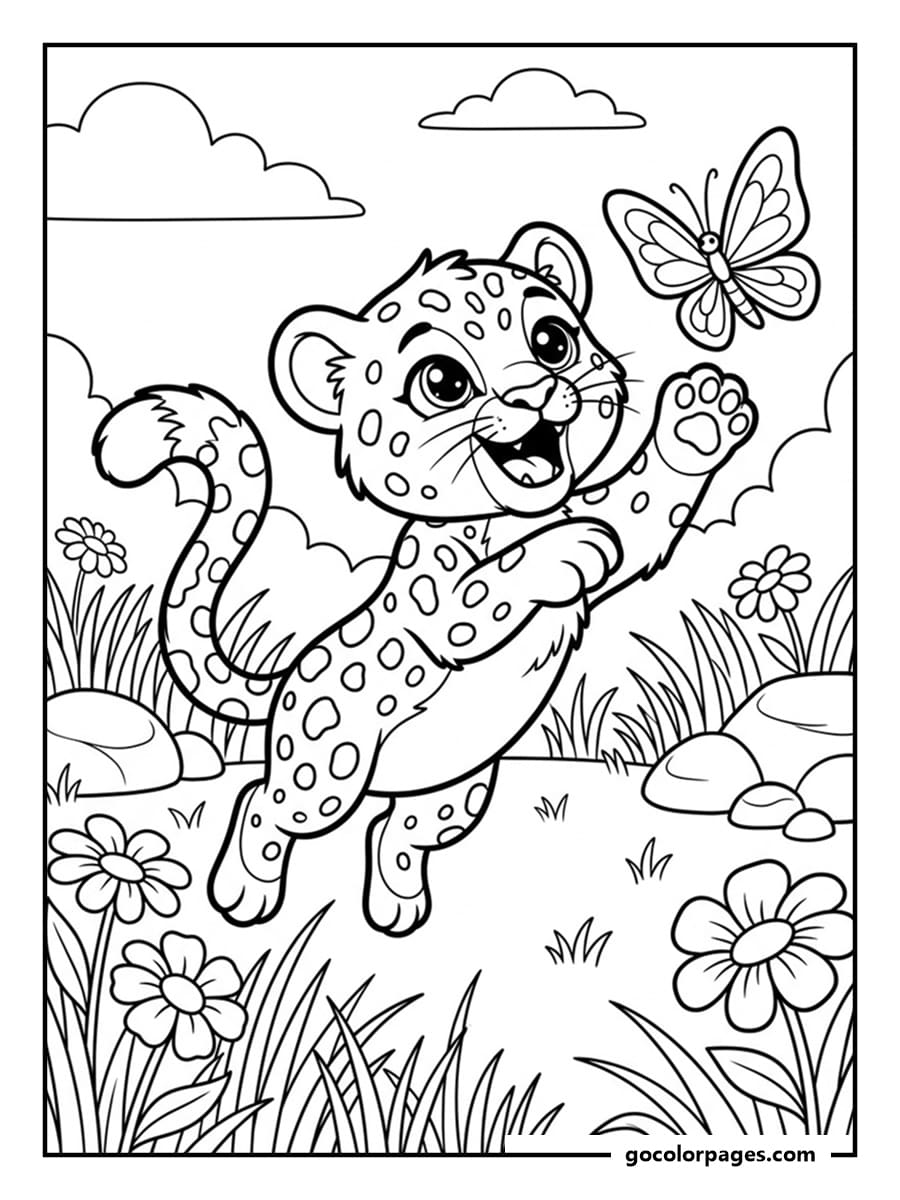
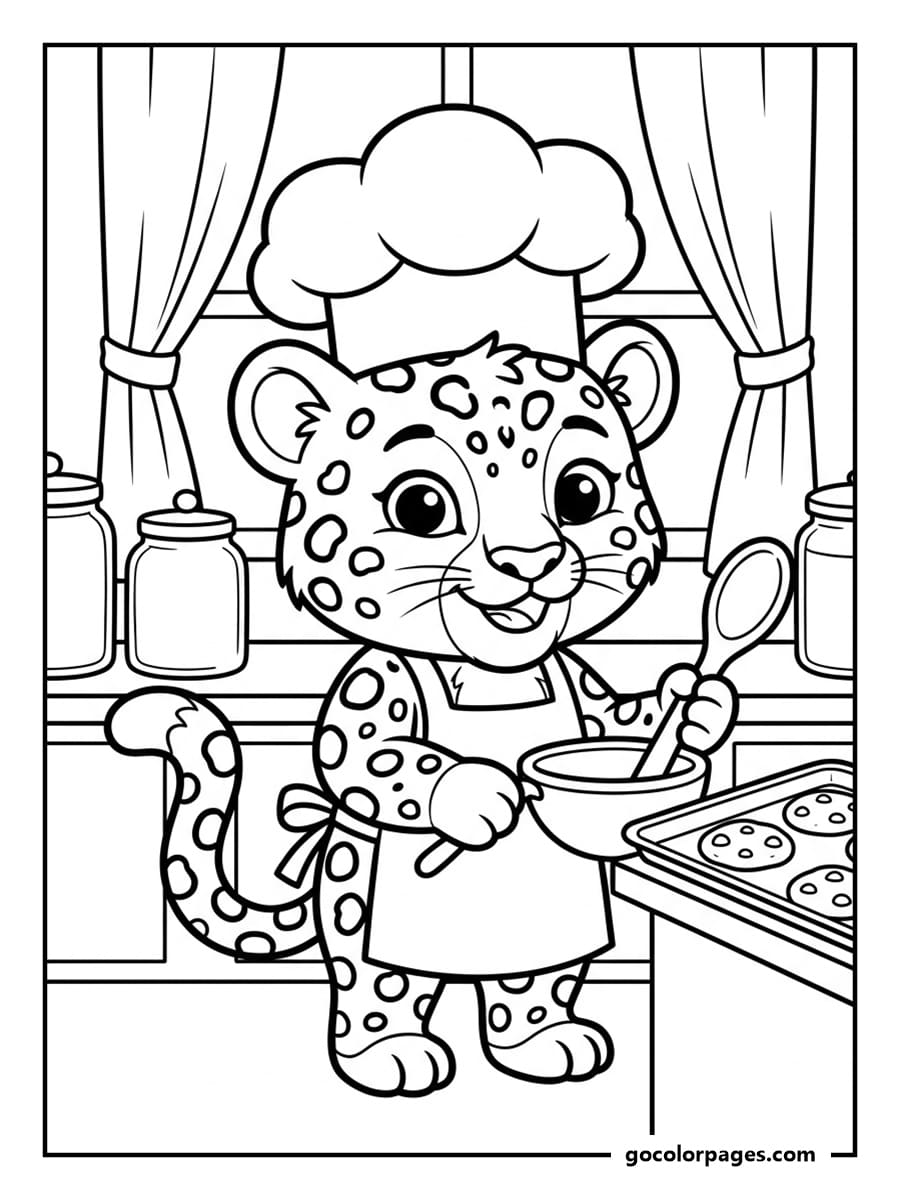
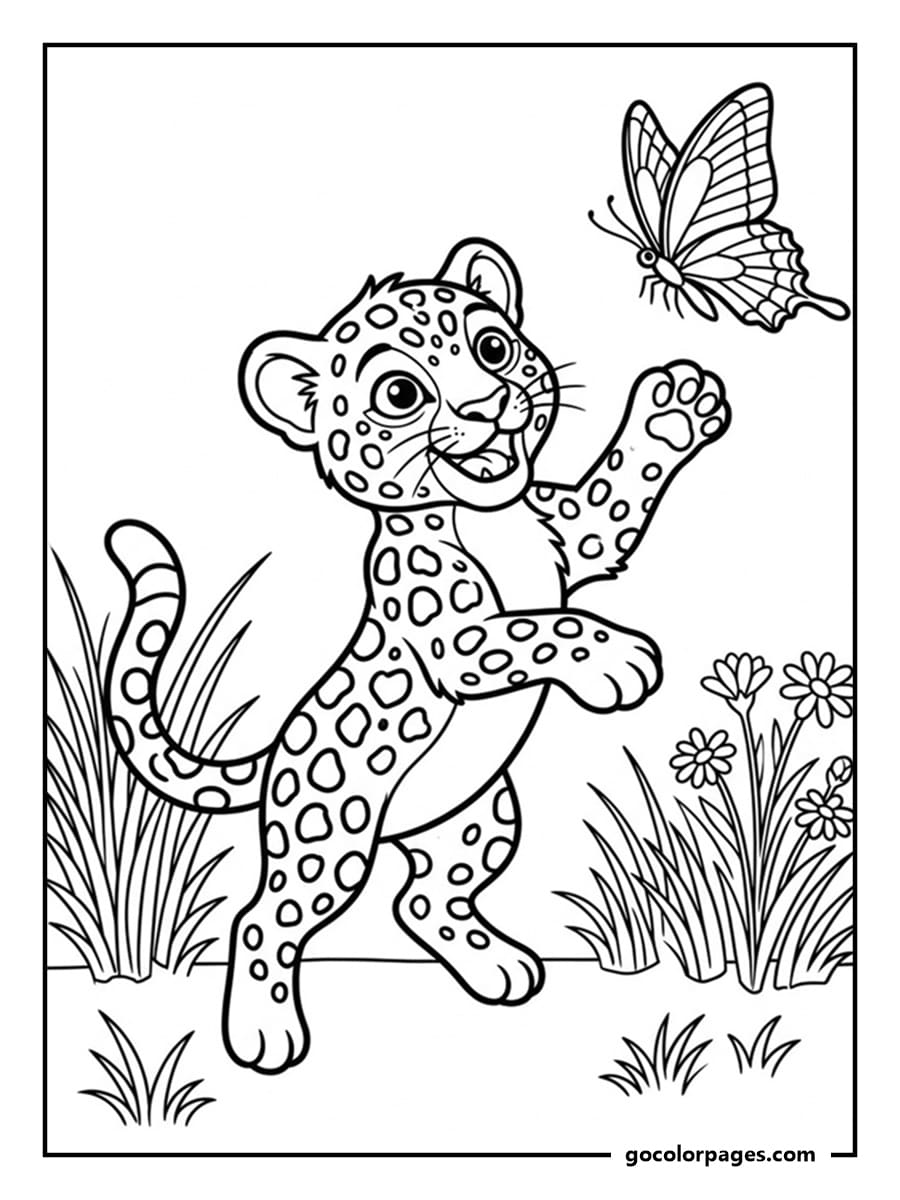
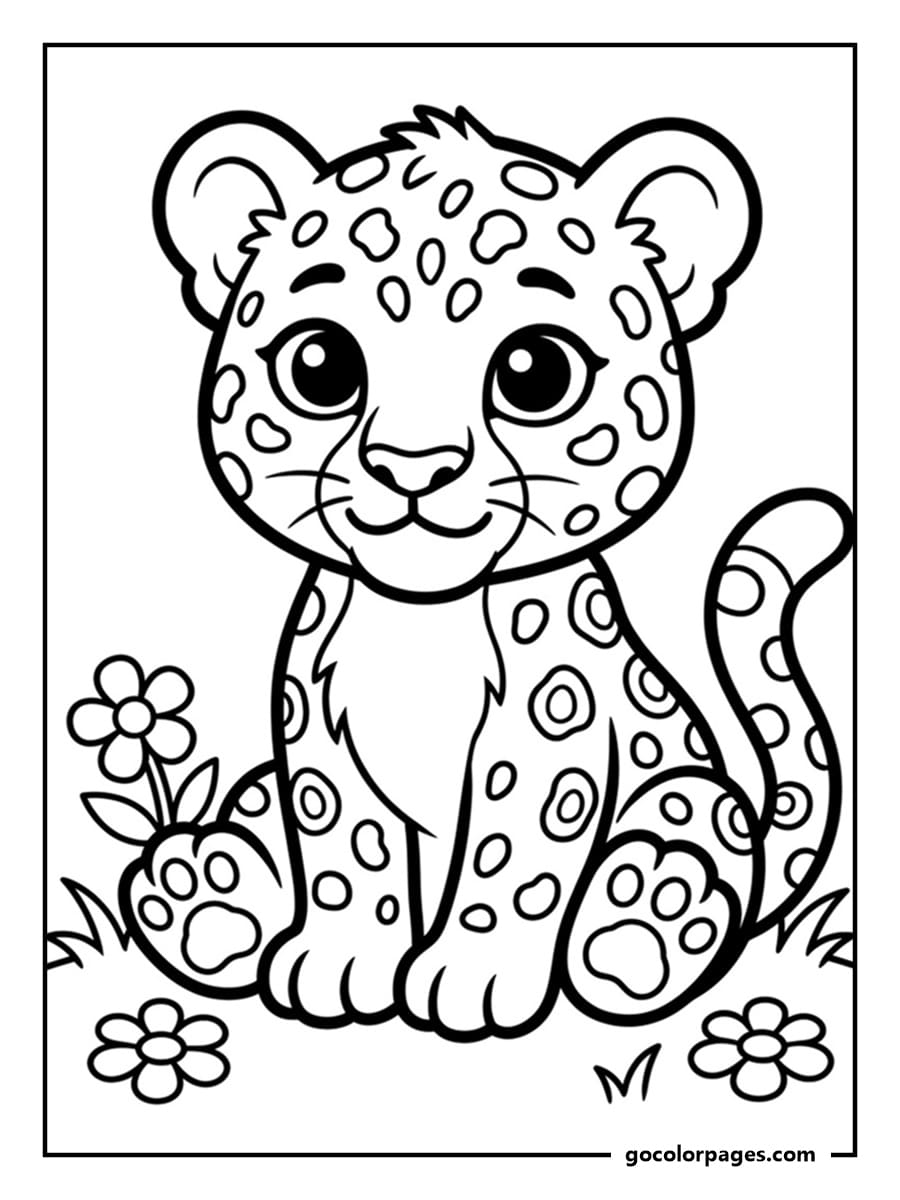
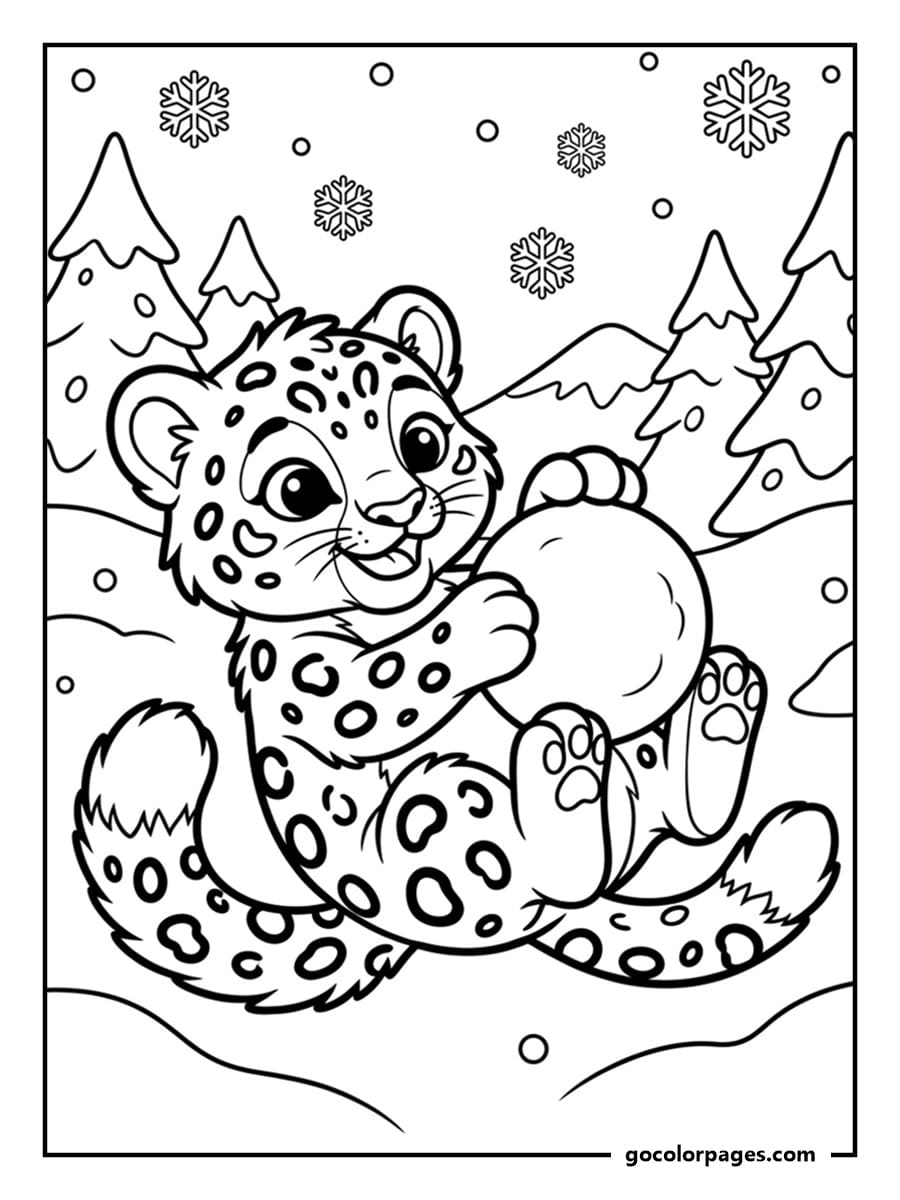
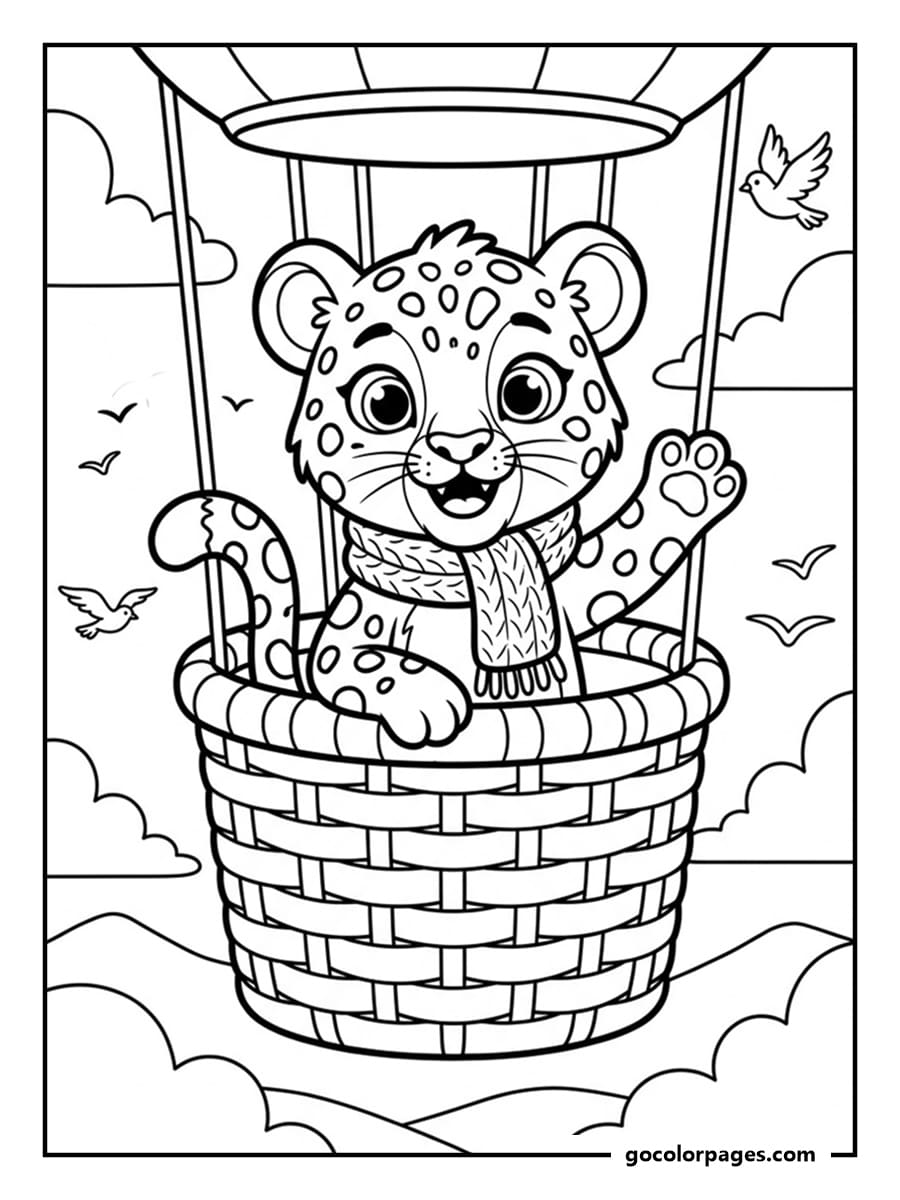
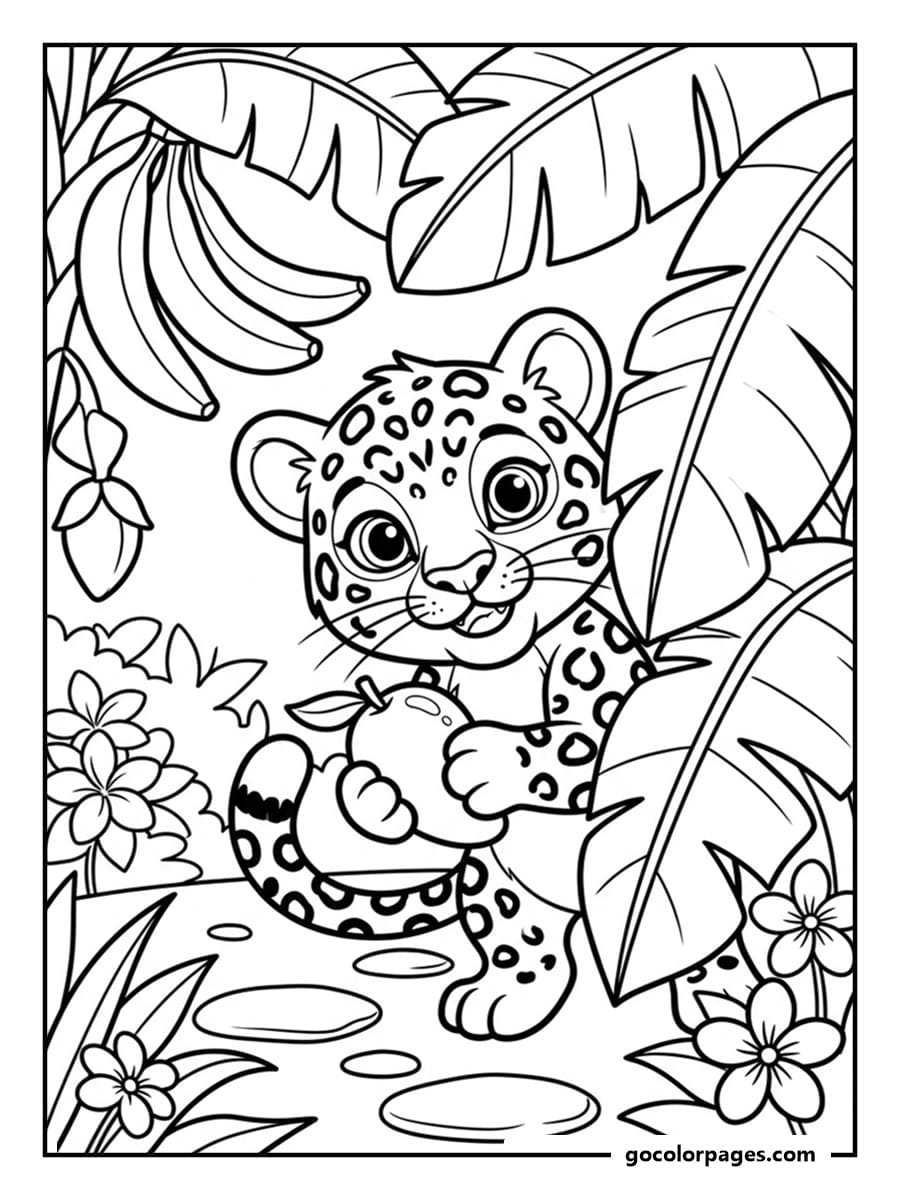
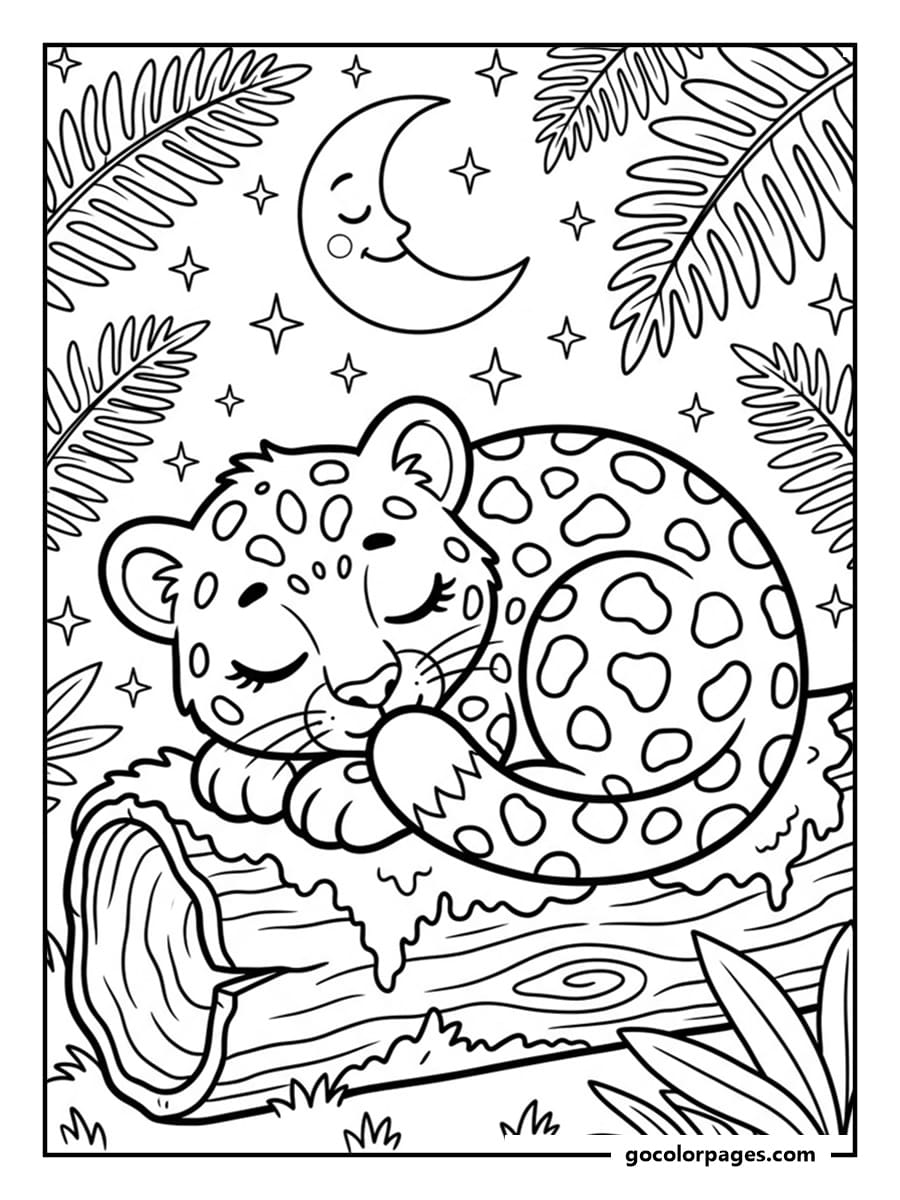
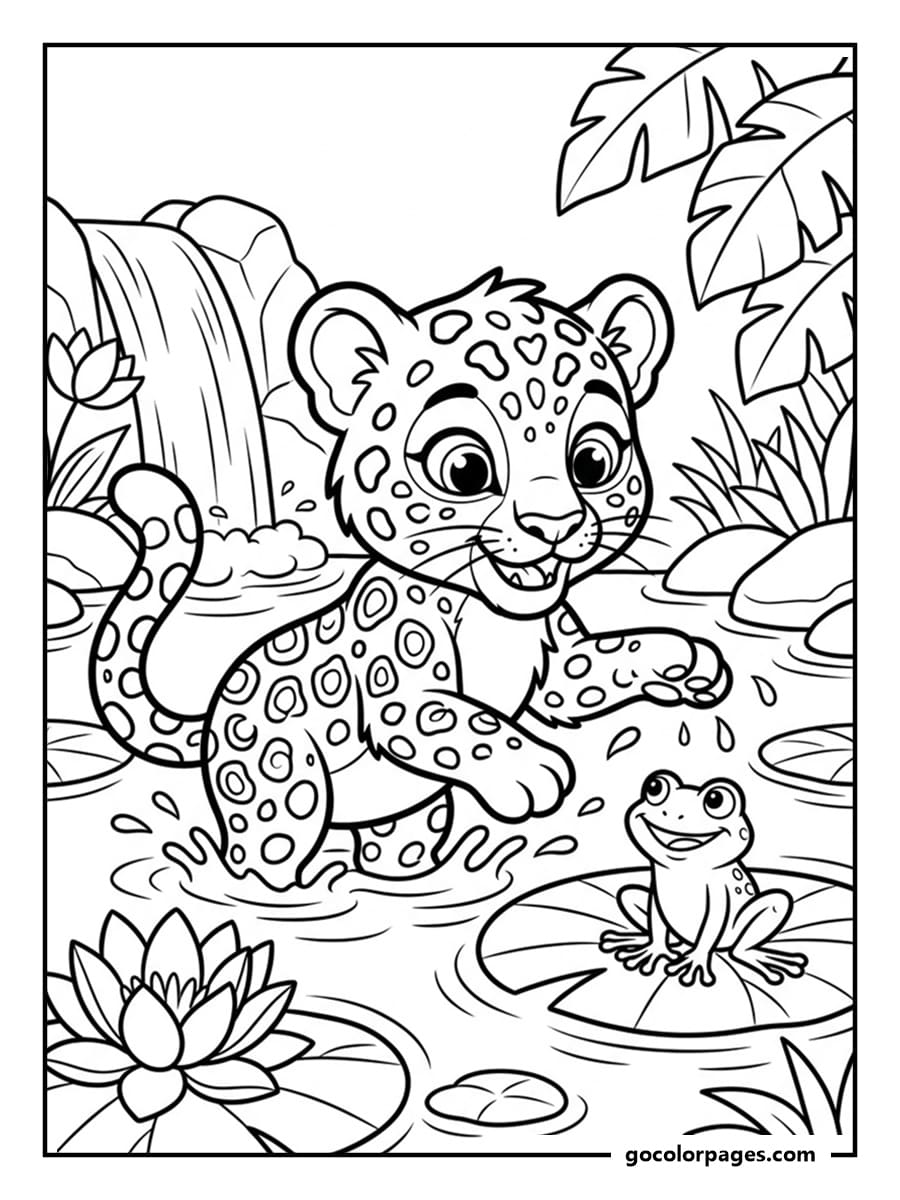
- Easy Baby Leopard Cub Coloring Pages for Toddlers and Preschoolers: Drawn with thick contours, oversized paws, and ten to fourteen wide open rosettes with zero tangled jungle vines so two-to-five-year-olds can color without frustration.
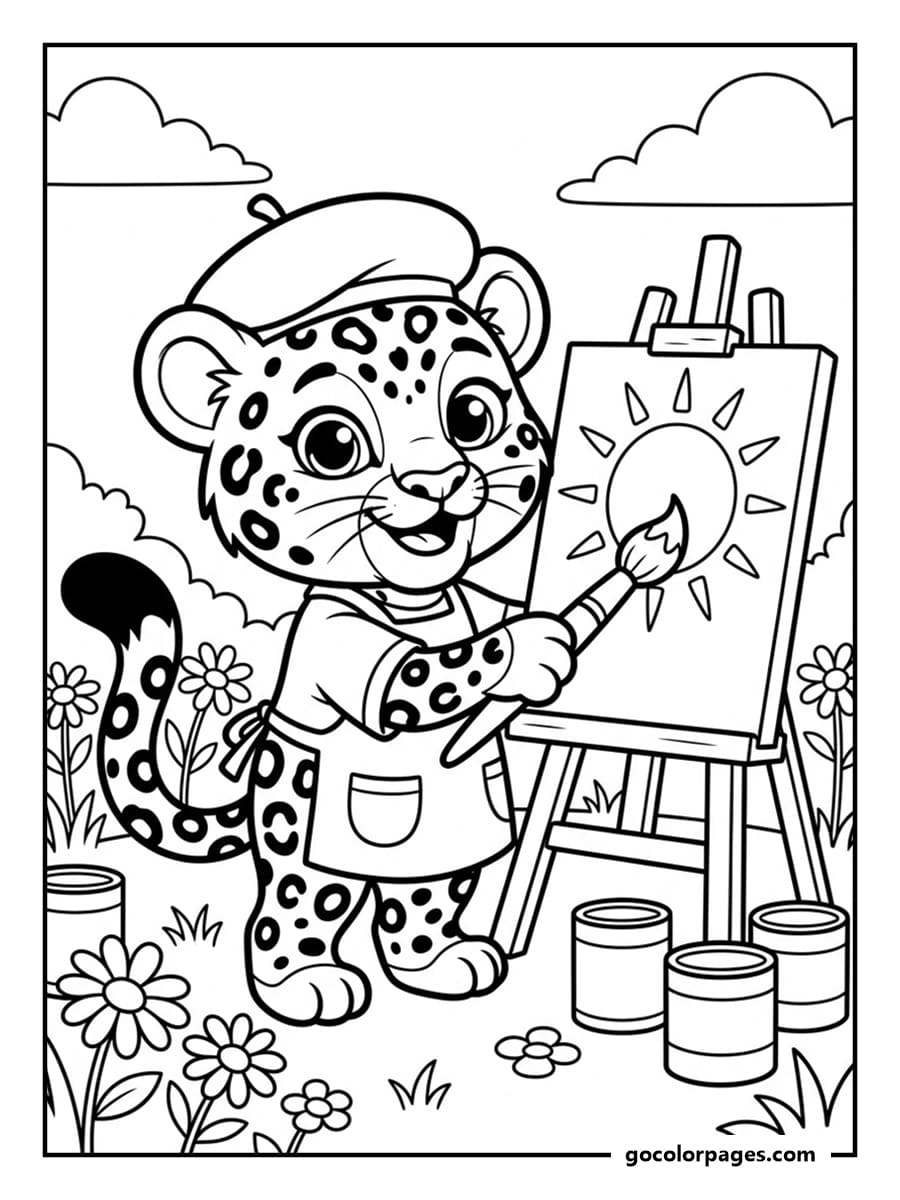
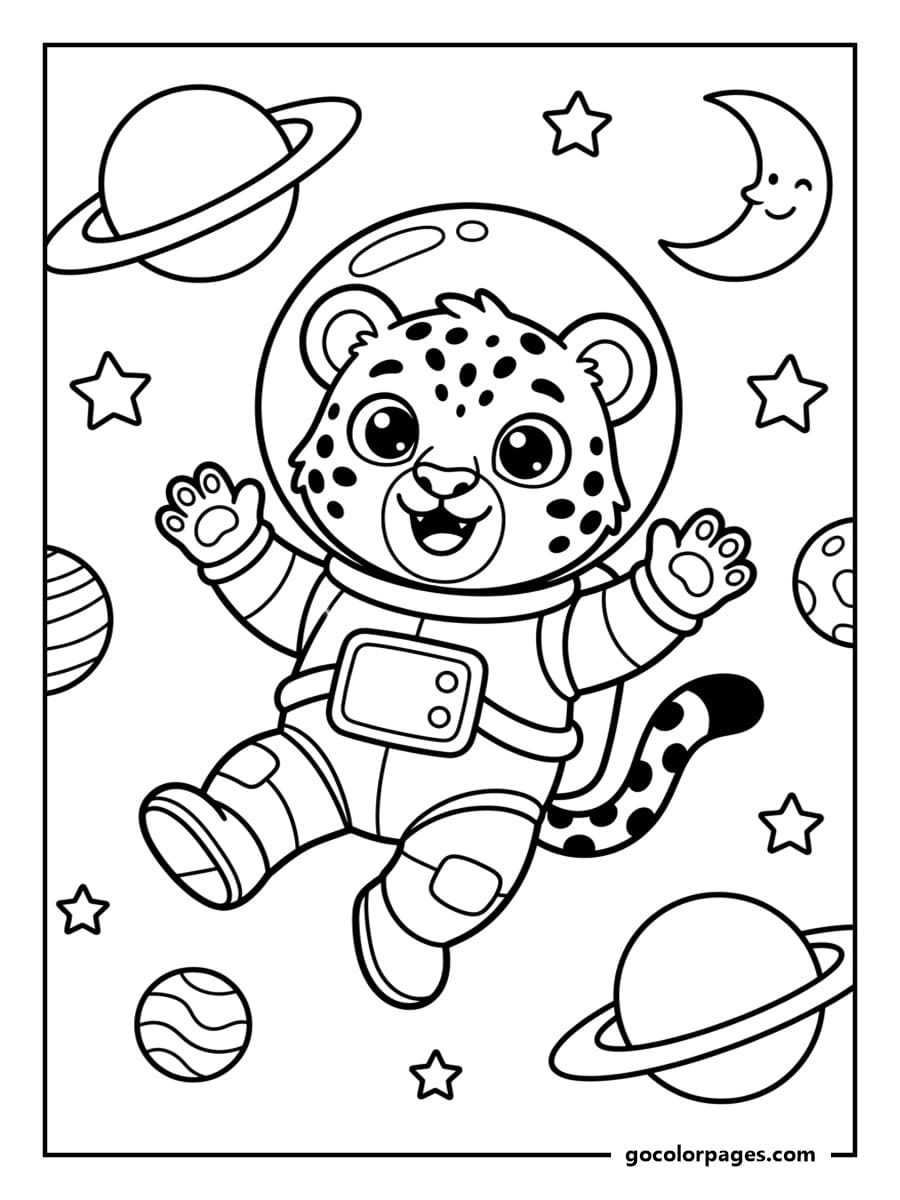
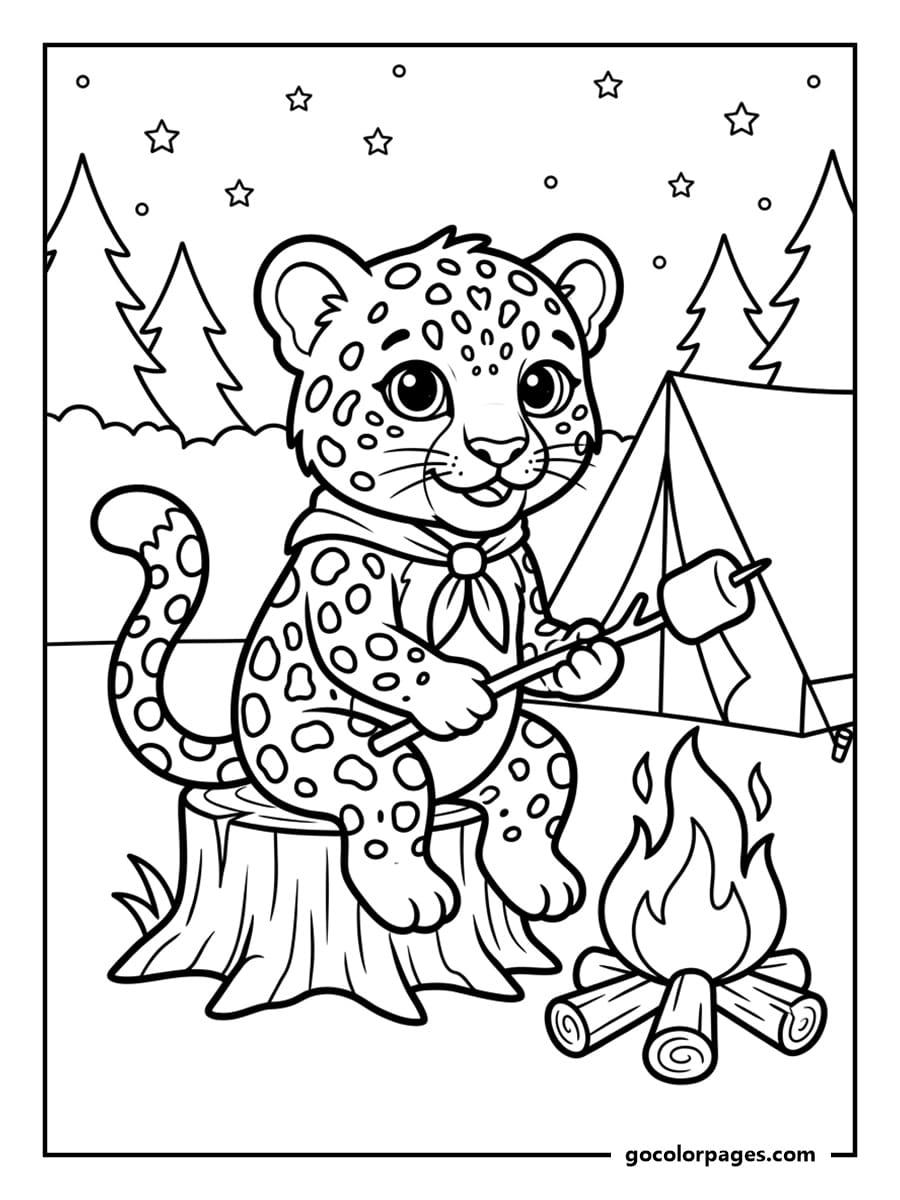
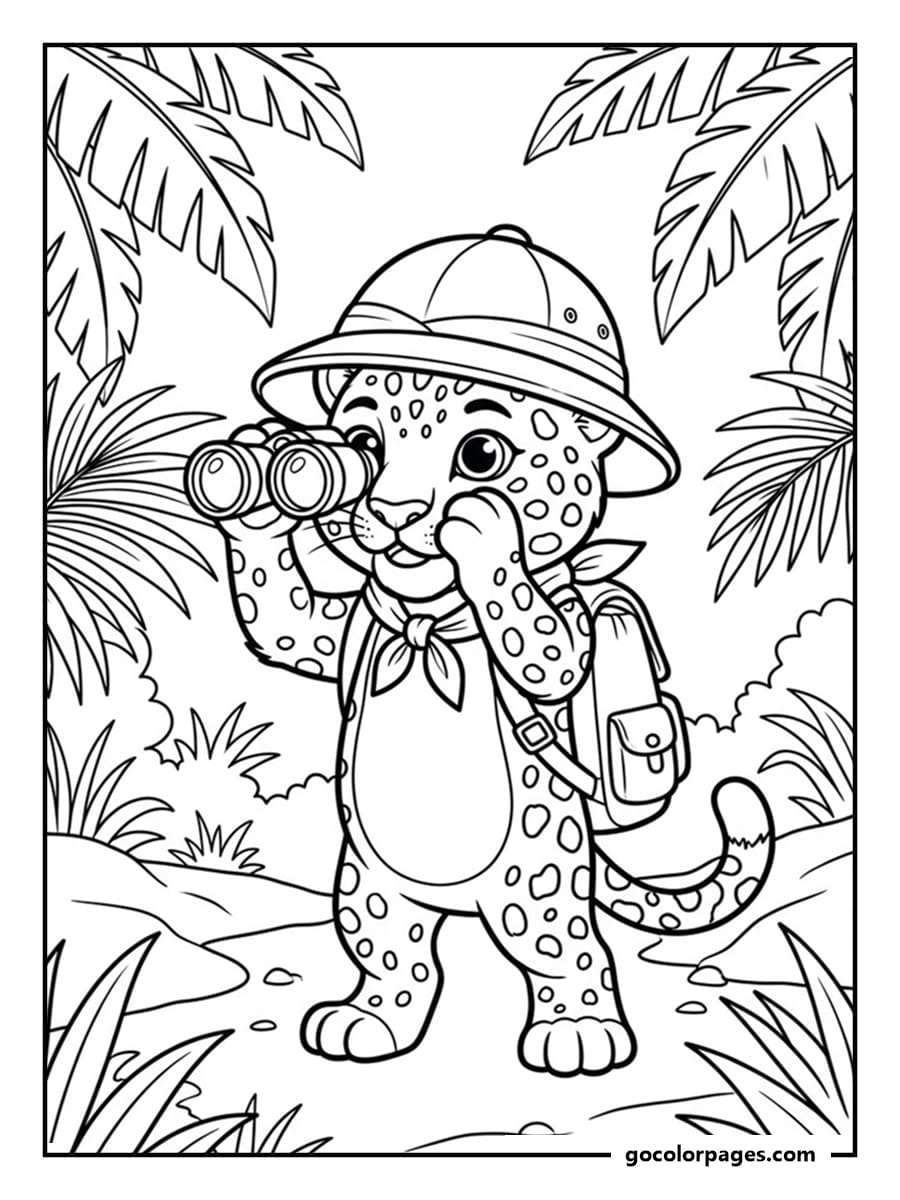
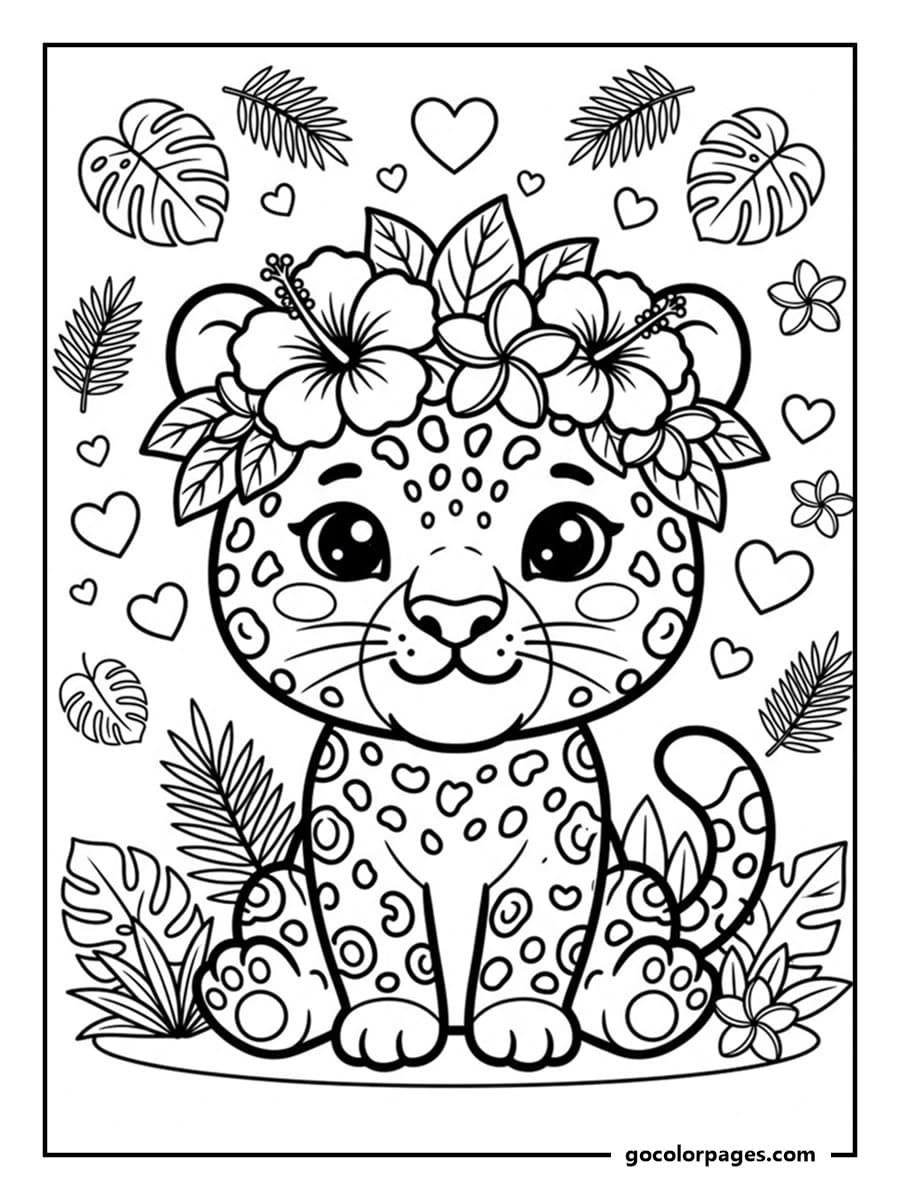
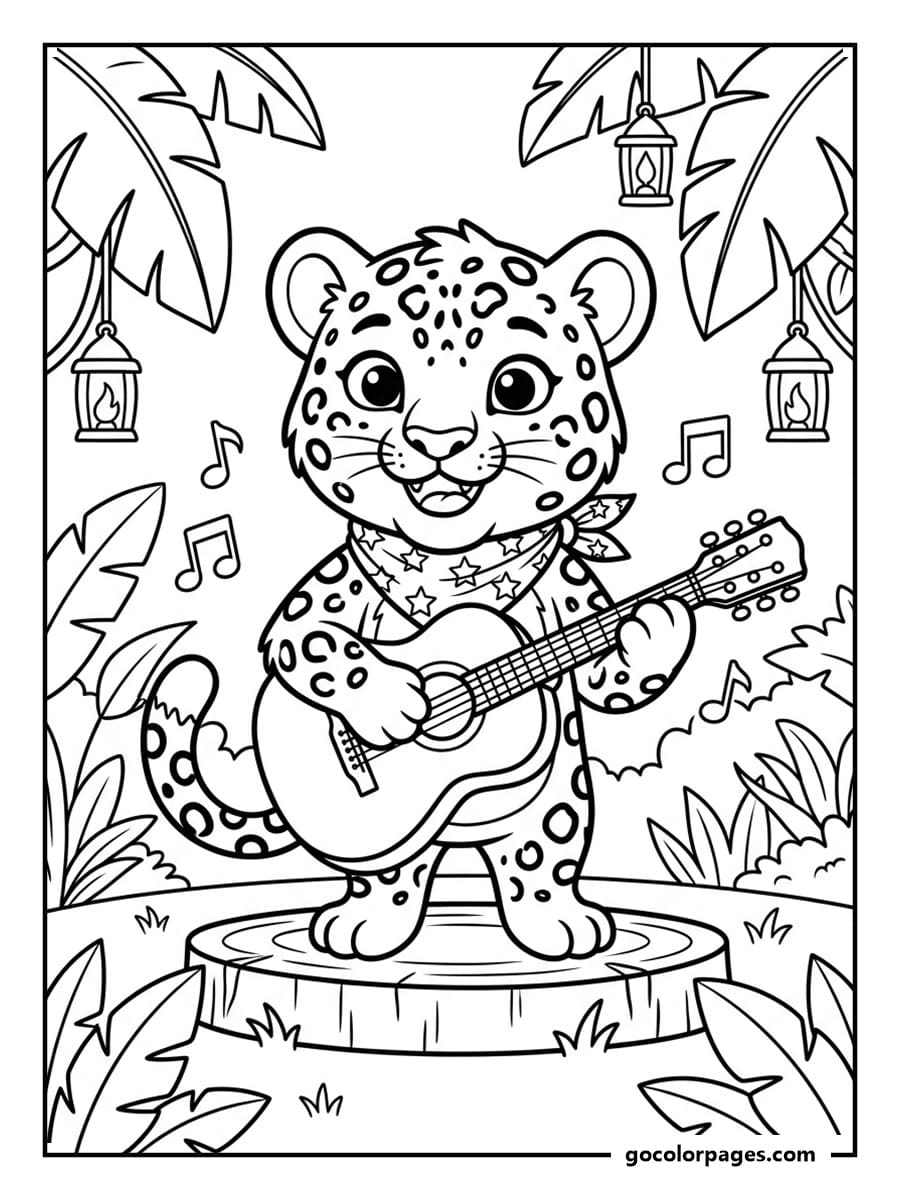
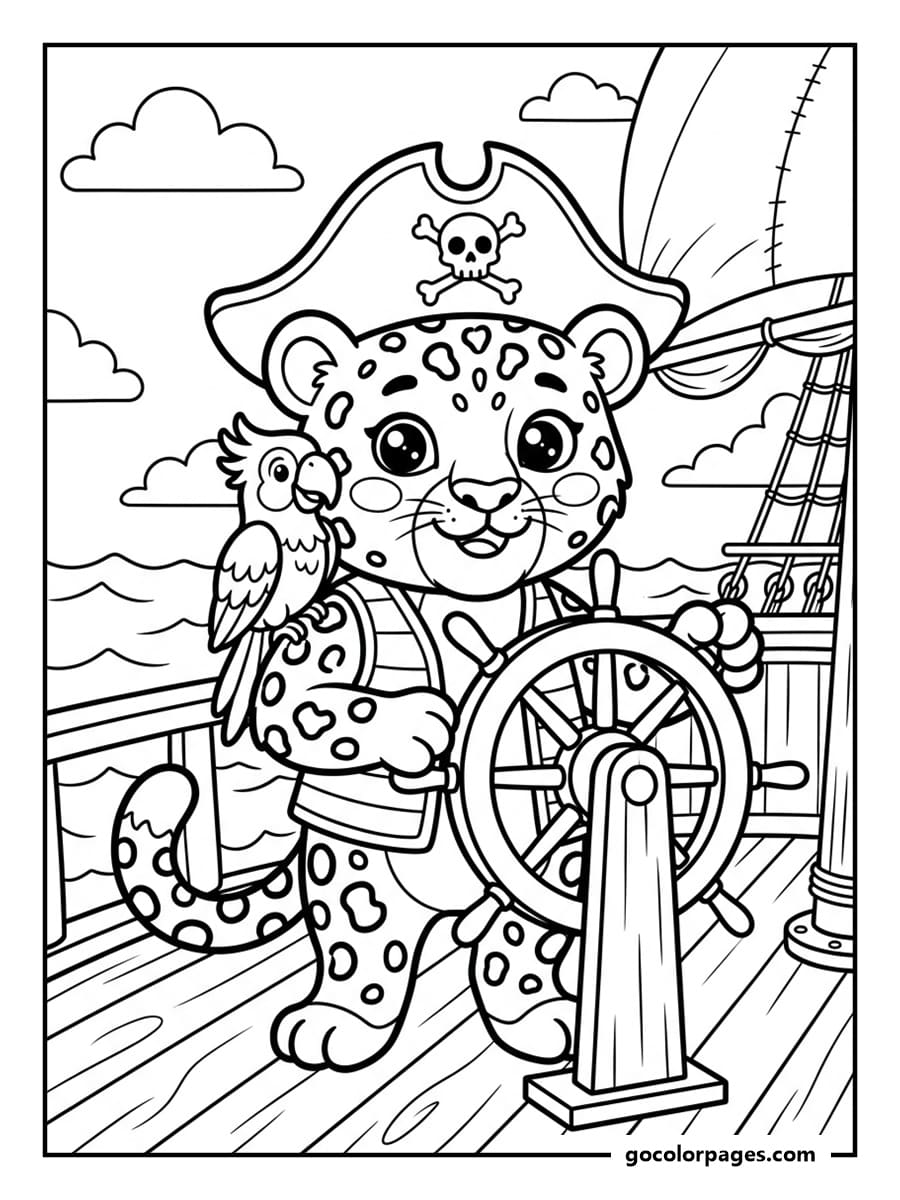
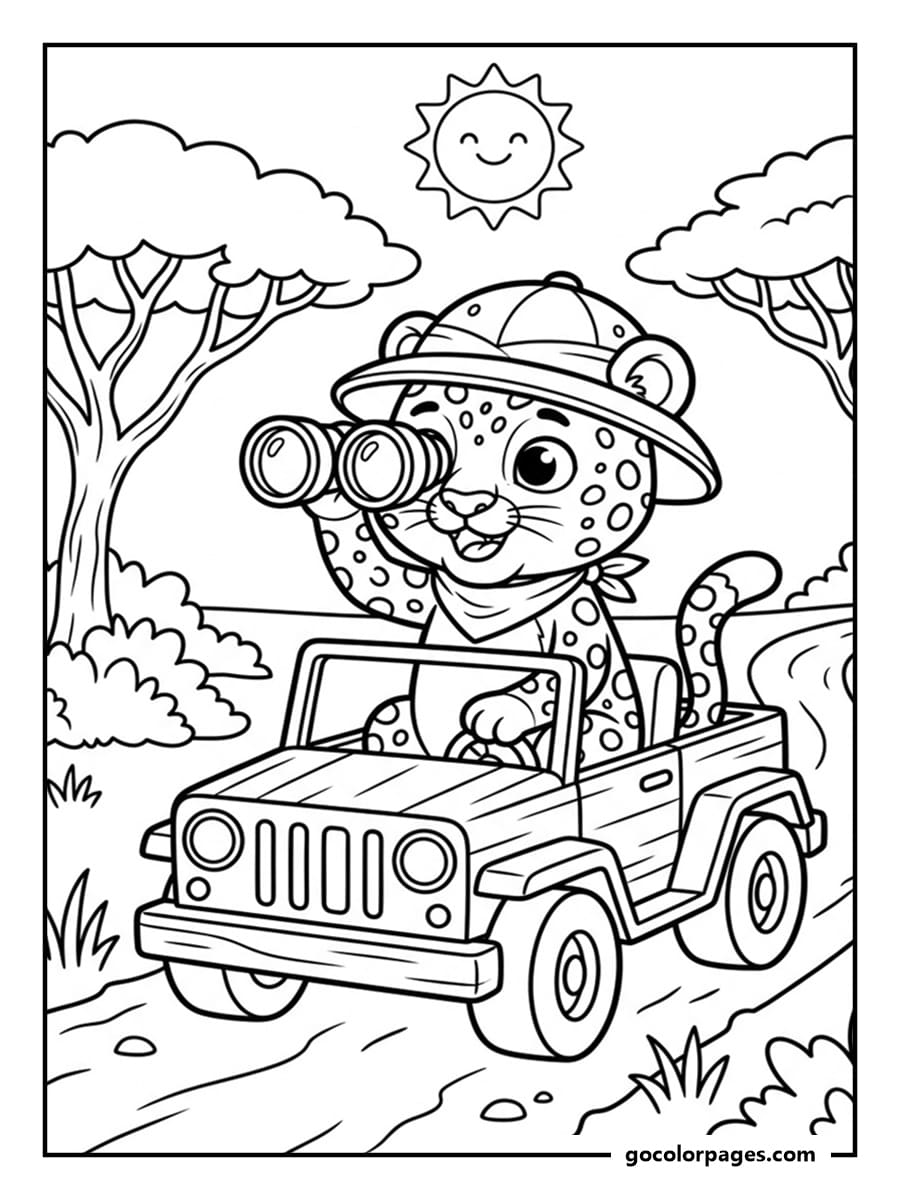
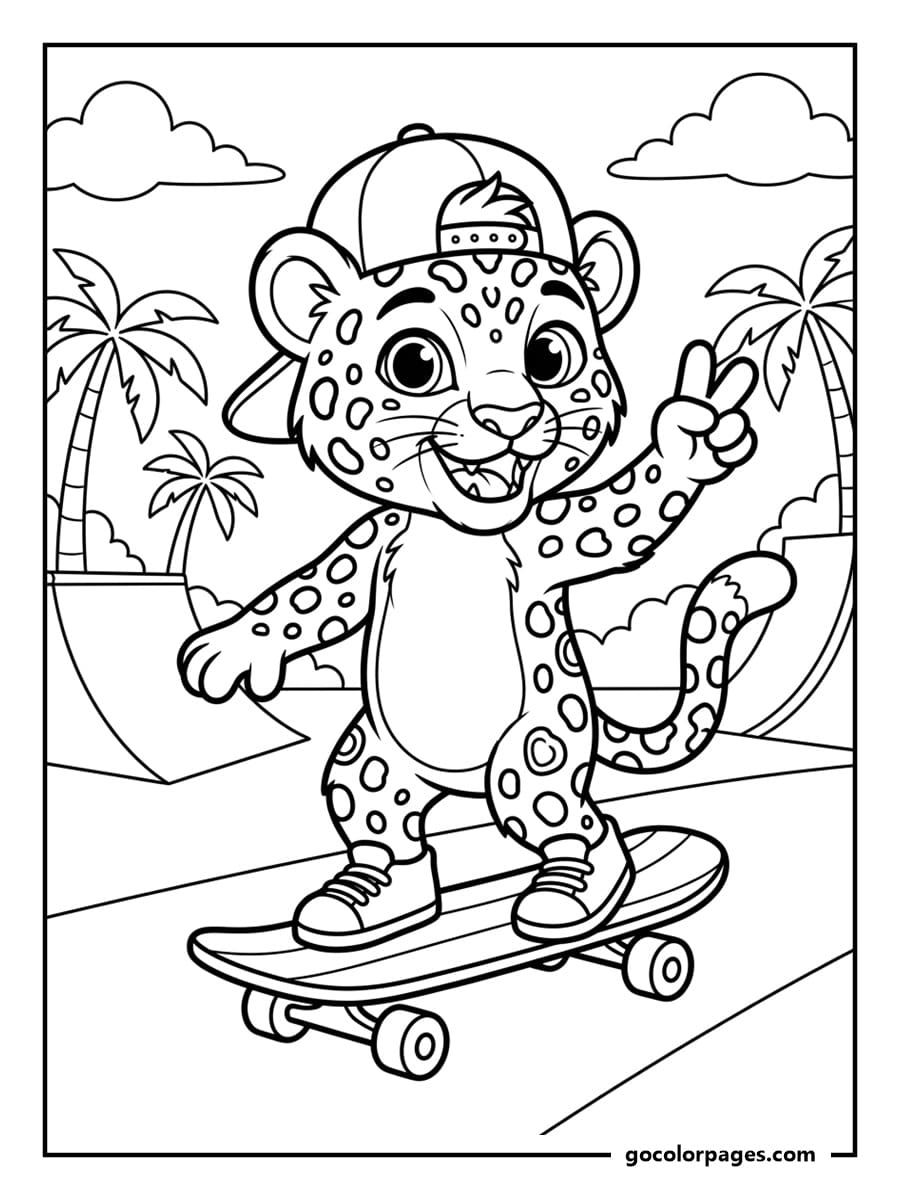
- Cute Kawaii and Rainbow Leopard Printables: Chubby cartoon cubs wearing hibiscus flower crowns, heart sunglasses, or safari pith helmets a bright, streak-free match for our cute and easy coloring pages collection.
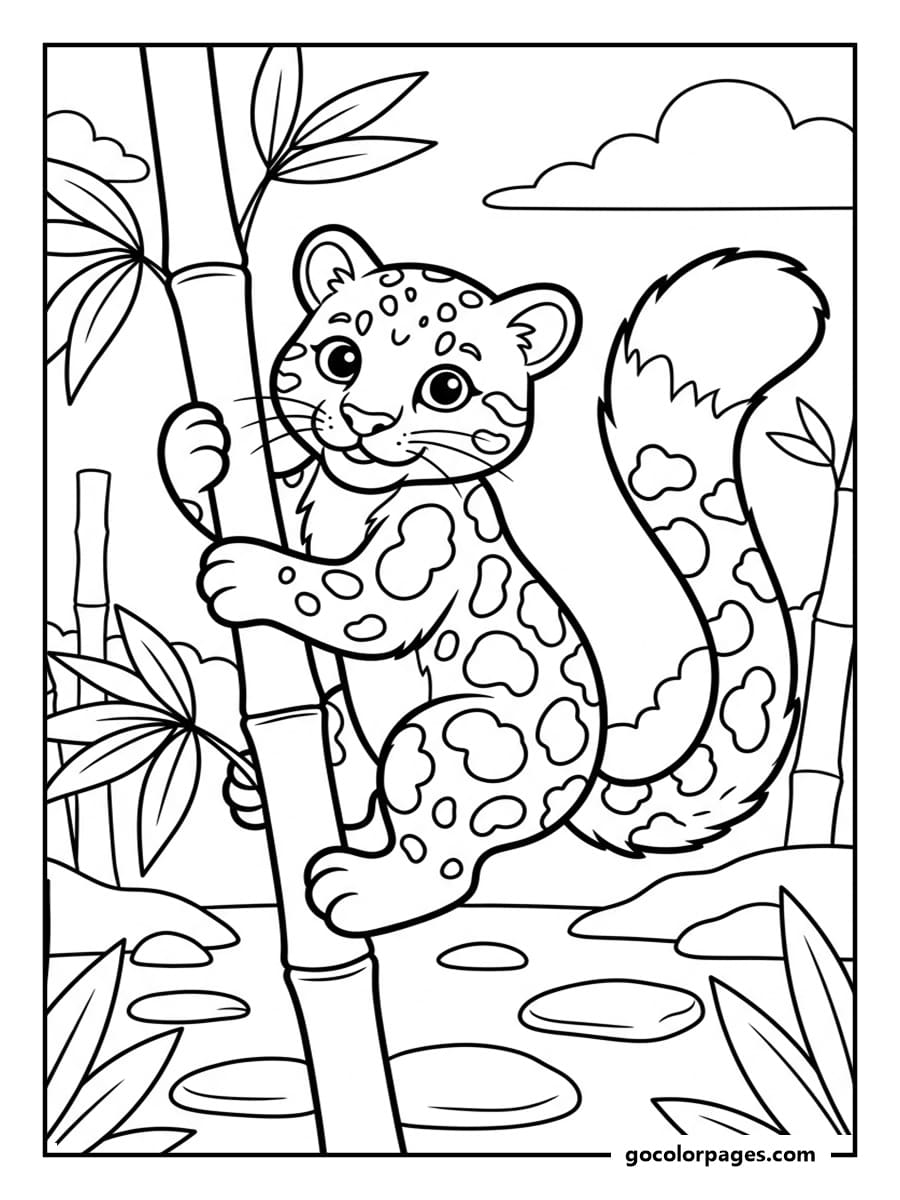
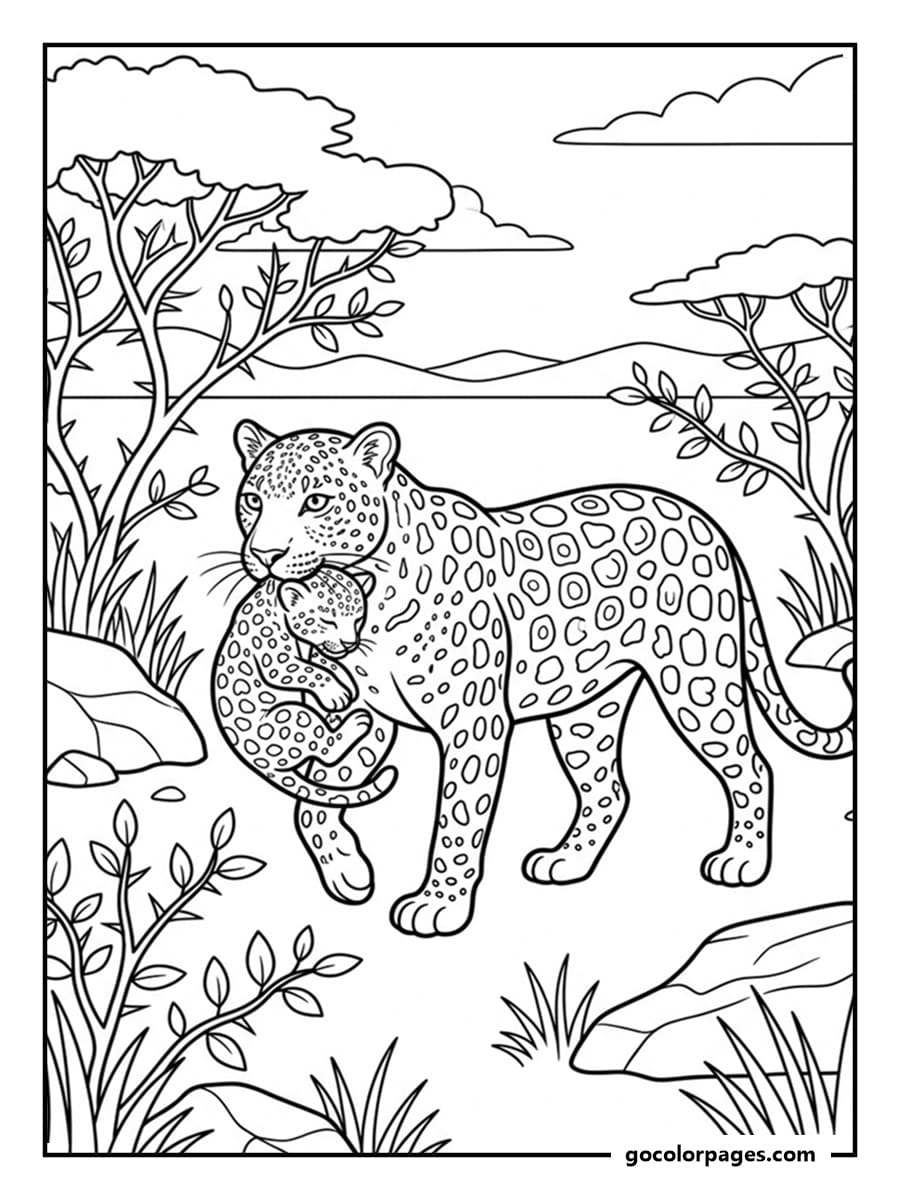
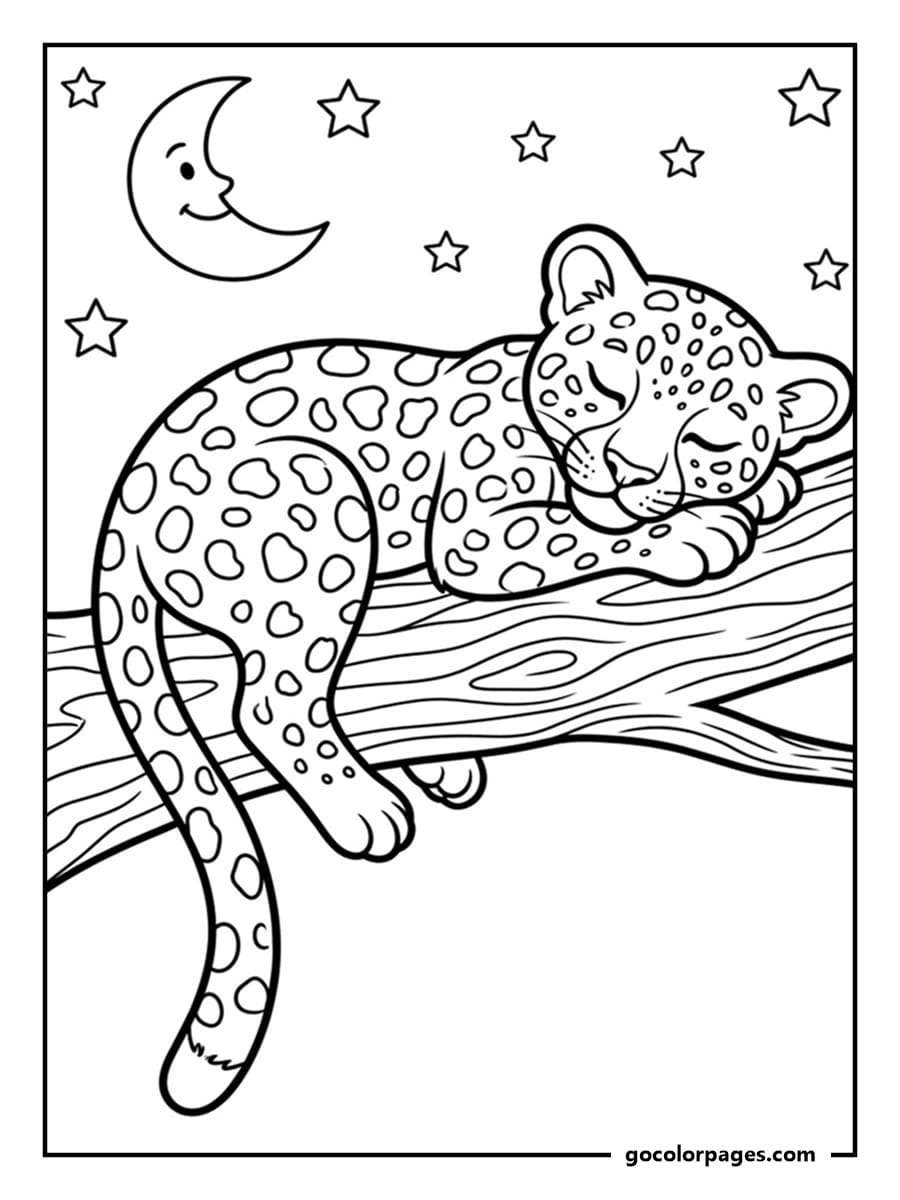
- Realistic African Acacia Tree and Rainforest Canopy Leopards: Muscular ambush predators lounging across gnarled Acacia tortilis branches with all four legs dangling, stalking through savanna grass, or crouching beside rocky watering holes.
- Fluffy Himalayan Snow Leopard Coloring Sheets: High-altitude Panthera uncia cats sporting thick winter ruffs and body-length counterbalance tails wrapped around snowy Himalayan crags.
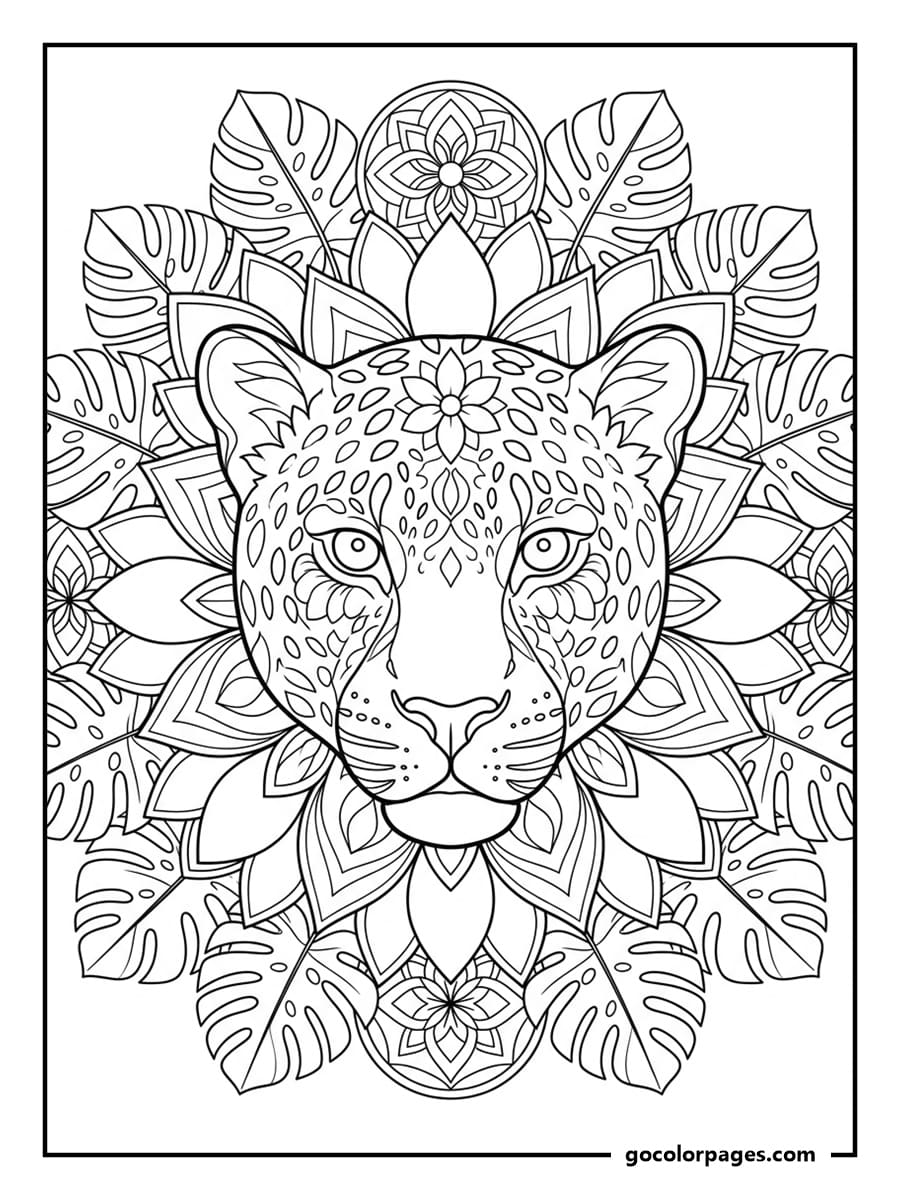
- Full-Page Seamless Leopard Print and Mandala Patterns for Adults: All-over fashion rosette repeats, zentangle portraits, and tropical hibiscus mandalas crafted for intricate adult coloring pages enthusiasts.
"Look inside the ring before you uncap a marker dots inside the ring belong to a jaguar, solid dots with black eye tear stripes belong to a cheetah, and hollow rose rings mark a true leopard."
Four Wild Coat Palettes From Golden Savanna Leopards to Ghostly Snow Leopards
Hand someone one of our leopard coloring sheets and they almost always grab two sticks a lemon-yellow crayon and a black marker. Five minutes later, the cat looks like a flat traffic sign because the space inside every rosette was colored the exact same yellow as the outer fur.
Wild cat biologists at Panthera point out that a leopard's rosette is actually a two-tone biological bullseye. The center of each broken black ring holds a higher concentration of warm pheomelanin pigment than the surrounding coat, creating a toasted cinnamon core that helps the cat vanish into dappled leaf shadows. Stepping beyond plain yellow also unlocks four distinct wild leopard morphs right inside a standard pencil tin or alcohol marker case.
- The Two-Tone Golden Savanna and Indian Leopard Recipe: Wash the main coat in pale straw-gold or warm buff (
Y11orYR31), fill the interior center of every rosette two shades darker using burnt sienna or toasted cinnamon (YR18orE08), and leave the throat, chest bib, and underbelly crisp bare white paper. - Smoky Pewter and Frost-Cream for Himalayan Snow Leopards: Put the yellow pencils away when coloring Panthera uncia; glaze the upper spine in icy slate-blue and warm pebble gray (
W3toC3), leave the thick winter belly snow-white, and fill the wide, open cloud rosettes in smoky charcoal-pewter rather than jet black. - Mossy Olive-Ochre for Rare Clouded Leopards: Pair a muted olive-gold torso with large, irregular dusky-taupe cloud polygons edged in heavy black along the back border and pale cream along the front border to mimic Southeast Asia's tree-dwelling Neofelis nebulosa.
- The Indigo-Plum Velvet Trick for Black Panthers: A black panther isn't a separate species it's a leopard carrying a recessive melanistic gene whose hollow rosettes still shimmer like silk damask in bright sunlight. Color the main coat in deep indigo-navy and blackberry plum (
B39orV09), reserving true carbon black strictly for tracing the hidden ghost rosettes.
Three Studio Techniques for Crisp Rosettes Smudge-Free Markers and Tree Bark
Even when you pick a gorgeous palette, spotted big-cat pages have three sneaky tabletop traps. Yellow markers reactivate black ink into olive mud, open ring rosettes look strange when drawn on a leopard's nose, and golden fur disappears the moment it touches a brown tree trunk.
Switching your layering order and background temperature fixes all three headaches in under three minutes.
The Inside-Out Rosette Order That Stops Yellow Markers From Smearing Black Ink
If you have ever practiced how to draw and color spotted animals with markers or soft wax pencils, you have probably suffered the dreaded olive-green smear. When you color the black C-shaped spot rings first and then sweep a bright yellow or buff marker across the whole body, the wet alcohol or water solvent dissolves the black pigment and drags dirty streaks across the coat.
Flip your workflow to the Three-Step Inside-Out Rosette Order. First, sweep your pale straw-gold or buff base coat freely across the entire torso right over the uncolored rosettes, stopping at the white belly line. Second, dot the warm cinnamon-amber core inside the center of each ring. Third, use a fine-tip black pen or sharpened black pencil dead last to crisp up the broken C- and U-shaped outer bean rings so your yellow fur stays spotless.
Mapping Where Hollow Rosettes Morph Into Solid Freckles and Tail Bands
Beginners often try to draw hollow cinnamon-centered rings on a leopard's cheeks and toes. In nature, a leopard's coat pattern shifts dramatically as it moves from the center of the torso out to the extremities.
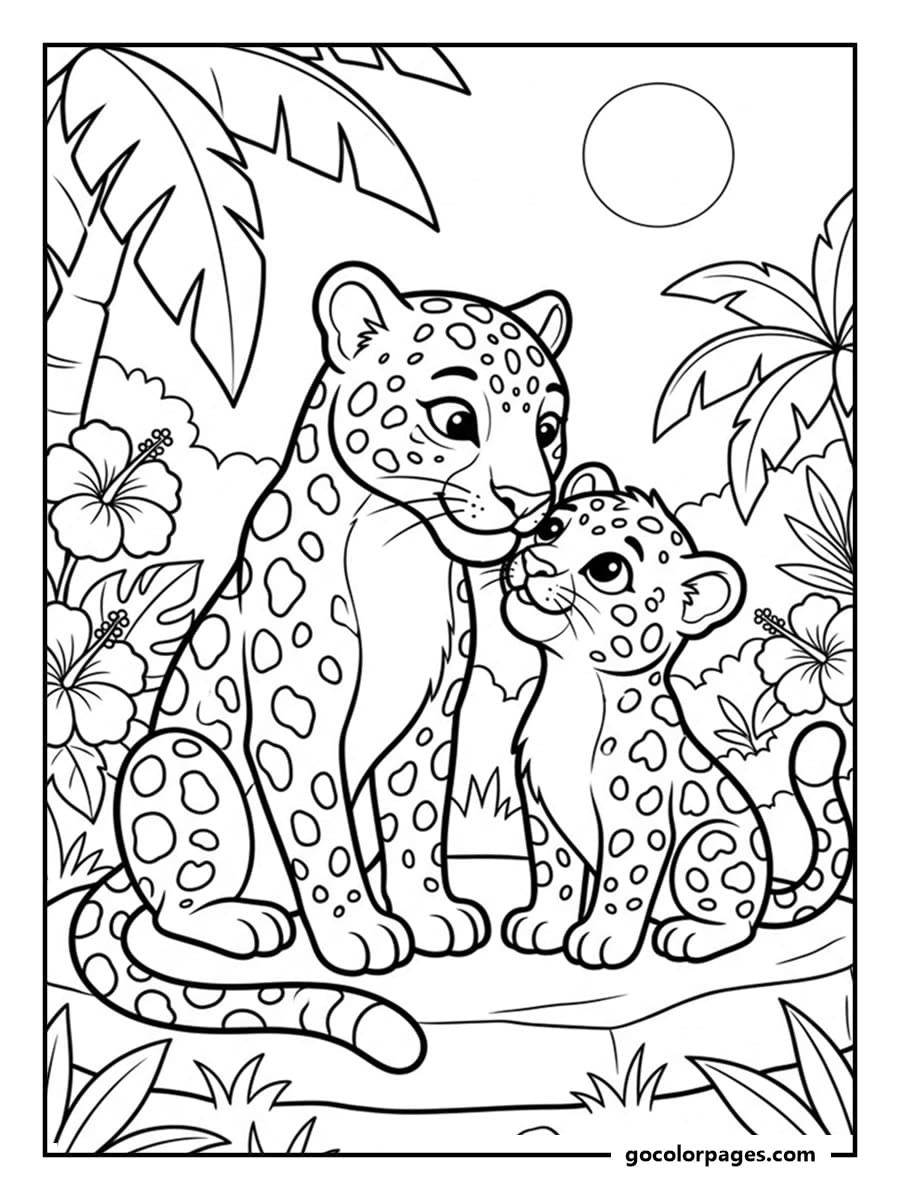
Keep your open, two-tone rosettes strictly on the back, flanks, shoulders, and upper thighs. The moment your pencil crosses onto the forehead, whisker pads, throat necklace, and lower legs below the knee, switch to solid black freckles of shrinking size. Finally, fuse the rosettes along the last six inches of the heavy tail into three bold black rings right above a pure white tail tip the built-in white "follow-me lantern" mother leopards flick in tall grass to guide their cubs at dusk.
Separating Golden Leopard Fur From Gnarled Acacia Branches and Jungle Vines
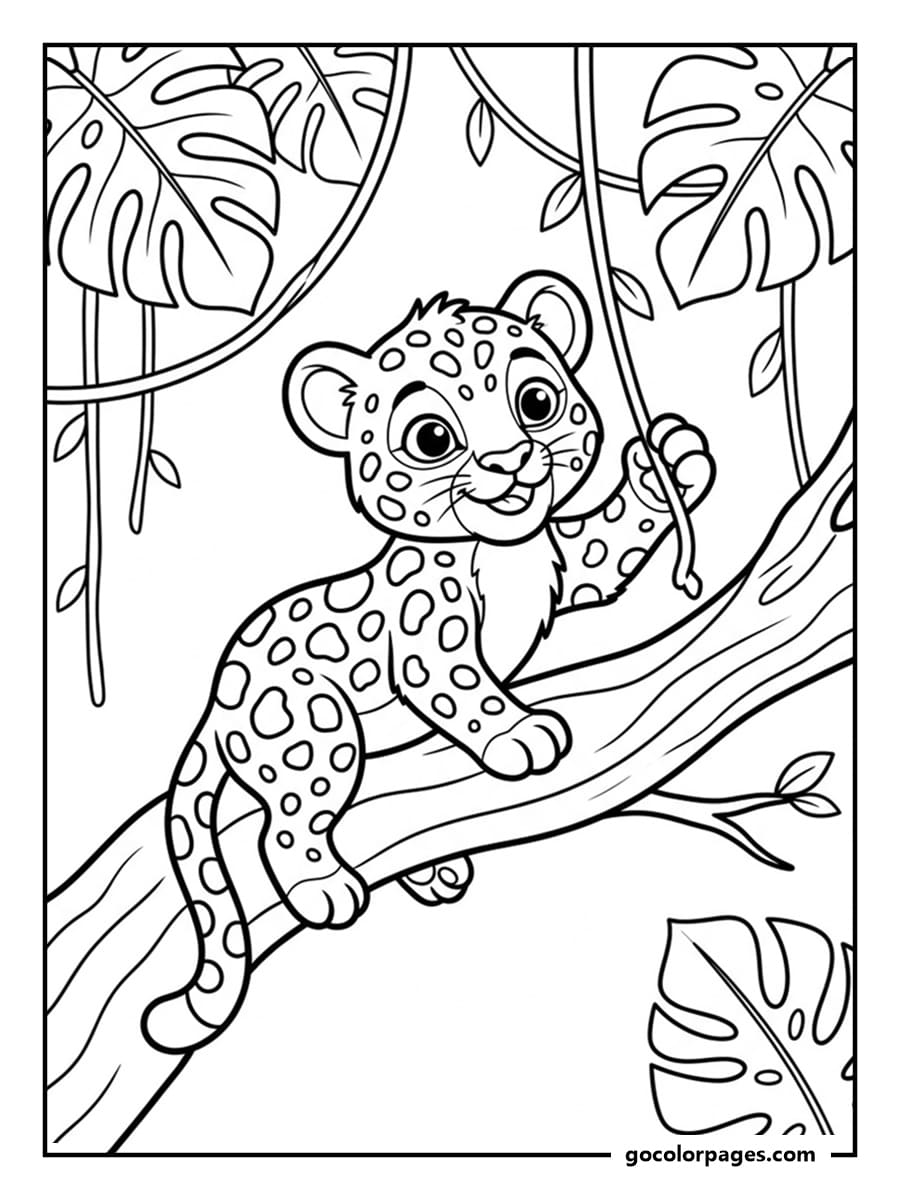
Over seventy percent of realistic leopard printables pose the cat draped effortlessly across a high tree limb with its paws and tail hanging down. If you color that tree branch with a warm brown crayon right underneath a golden-cinnamon leopard, the cat's belly and legs melt straight into the bark.
Use Cool Violet-Taupe Bark Contrast to push the tree backward in space. Shade the supporting Acacia or rainforest branch with cool weathered ash-gray, slate-brown, and muted violet-taupe (E44 layered with C5), and tuck a narrow shadow of indigo-gray directly along the bottom curve of the branch. Frame the scene with cool blue-emerald monstera and fern leaves so the warm amber cat glows like sunlight in the canopy.
"Never color a leopard's tree branch the same warm brown as its rosettes a cool ash-gray and violet-taupe limb makes a golden leopard pop off the bark in instant 3D."
Hands-On Leopard Print Crafts and Jungle Masks for Kids and Classrooms
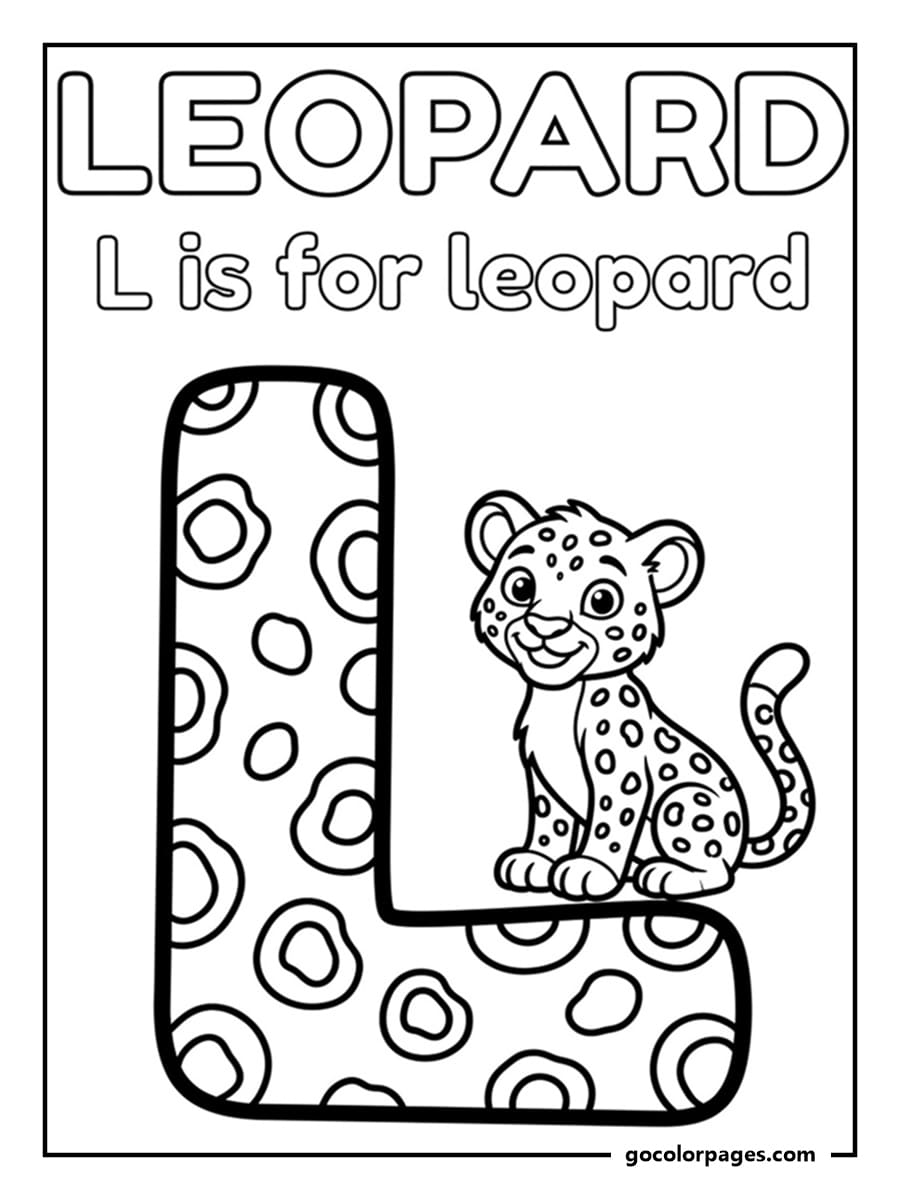
A finished leopard page doesn't have to sit flat in a folder. Because leopards combine unmistakable spot geometry with acrobatic tree balance, they are a natural anchor for preschool "Letter L Is for Leopard" units and elementary rainforest habitat lessons.
When we test our printable coloring pages for kids with kindergarten teachers and homeschooling parents, these three low-prep tabletop crafts keep kids busy long after the crayons go back in the box.
- Pencil-Eraser Dip-Stamped Rosette Art for Preschoolers: Print a wide-outlined cub template and let three-to-five-year-olds color the body golden yellow first; next, have them dip the round rubber eraser of a standard #2 pencil into orange washable paint to stamp twenty warm center dots, then use a cotton swab dipped in black paint to tap three curved C-dots around each orange circle.
- Clothespin Counterweight Balancing Tree Leopards: Have kids color a lounging tree leopard, glue the sheet onto thin cereal-box cardboard, and cut out the cat's silhouette; clipping two wooden clothespins onto the bottom tip of the long hanging tail lowers the center of gravity so the paper leopard balances on the edge of a ruler, finger, or houseplant branch without falling.
- Wearable Jungle Safari Leopard Masks With Pipe-Cleaner Whiskers: Cut out a bold portrait sheet, snip out the eye openings, punch three tiny holes into each spotted cheek pad to thread stiff white pipe cleaners as 3D sensory whiskers, and staple a 1.5-inch cardstock headband strip to fit around the child's head.
Frequently Asked Questions About Leopard Coloring Pages
How can you tell a leopard coloring page apart from a cheetah or a jaguar?
Check the insides of the spots and the face first. Leopards have broken rose-shaped black rings (rosettes) with warm golden-brown centers and zero inner dots; jaguars have wider, blockier rosettes with one to three black dots inside the ring; and cheetahs have solid black polka dots paired with black tear stripes running from their eyes to their mouth.
What colors do you need for a realistic leopard coloring sheet?
Skip the single yellow crayon and use a three-part biological palette. Wash the main body in pale straw-gold or buff, color the centers inside the hollow rosettes two shades darker using burnt sienna or warm cinnamon-orange, crisp up the broken outer rings in black, and leave the throat, chest, belly, and tail tip bare white paper.
How do you color a black panther on a leopard coloring page so the spots still show?
A black panther is a melanistic leopard whose rosettes are still visible like velvet under direct light. Instead of flooding the cat with a solid black marker that erases the line art, color the main fur in deep indigo-navy and dark blackberry plum, then trace the rosette rings in true carbon black.
What is the best way to color snow leopard coloring pages?
Leave yellow and orange markers out of your snow leopard palette completely. Shade the upper back and tail top with icy slate-blue and warm French gray, leave the thick winter belly and chest 80% bare white paper, and fill the large, open cloud-shaped rosettes with smoky charcoal-pewter instead of harsh black.
How do you keep black leopard spots from smearing into yellow marker ink?
Always color your leopard from the inside out. Lay down your pale yellow or golden-buff base coat across the torso first, fill the warm cinnamon centers of the rosettes second, and add the black C-shaped outer rings dead last so wet yellow ink never drags black pigment across the fur.
Print One Leopard Sheet and Try the Two-Tone Rosette Trick Tonight
You don't need a safari jeep or a seventy-two-piece marker suitcase to make your next big-cat printout look alive. Grab one free printable leopard sheet right now and test these two studio upgrades in under ten minutes.
- Try the Inside-Out Two-Tone Rosette Recipe on Five Spots (4 minutes): Sweep pale golden yellow across a small patch of your leopard's flank first, tuck warm cinnamon-orange inside the center of five rosettes, and outline the broken black C-rings last to see how realistic jungle camouflage works.
- Cool Down the Tree Branch With Ash-Gray and Violet (3 minutes): Instead of reaching for a brown crayon on the tree limb, shade the bark with cool pebble gray and a touch of violet so your golden leopard immediately steps forward off the wood.
When you print a stack of leopard coloring pages for your table, do you gravitate toward cute baby cubs and rainbow leopard-print patterns, or realistic jungle leopards and snowy Himalayan cats?