
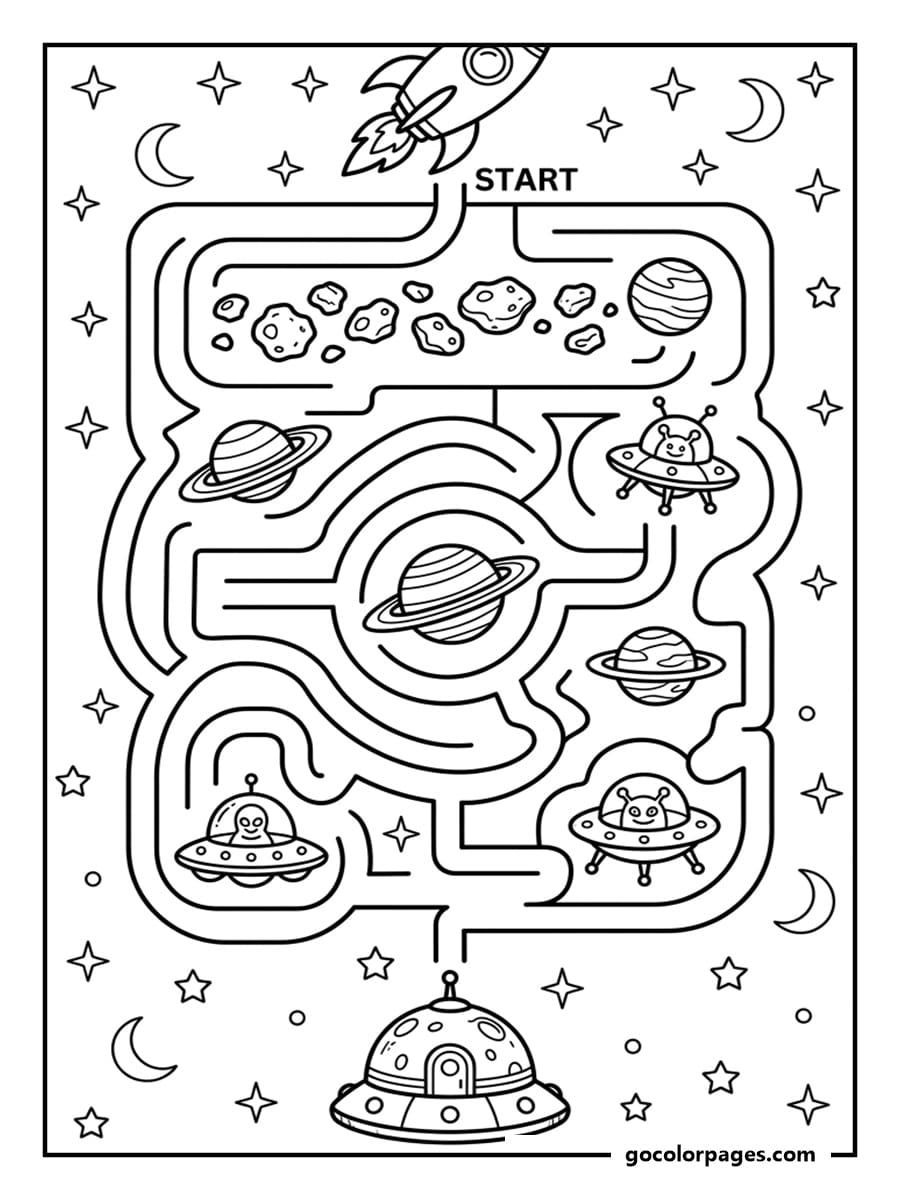
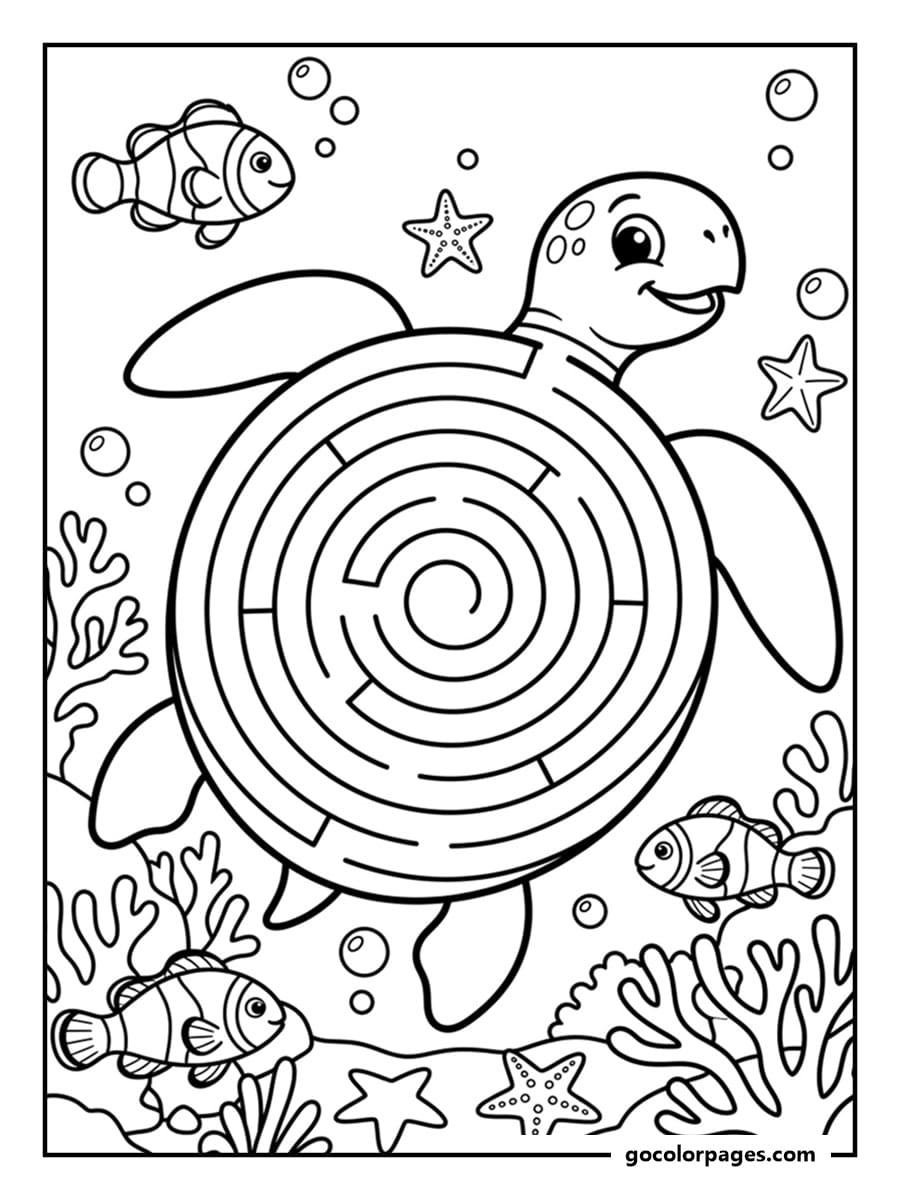
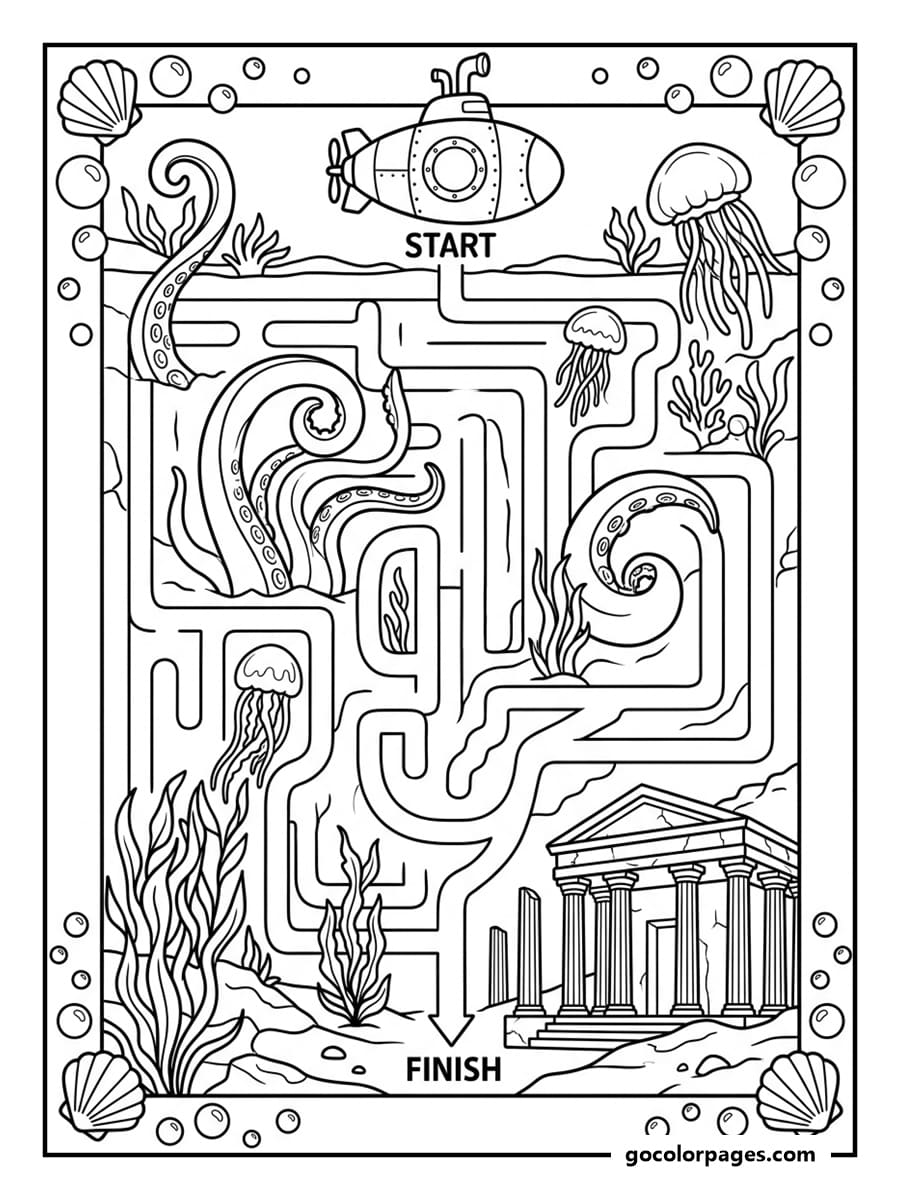
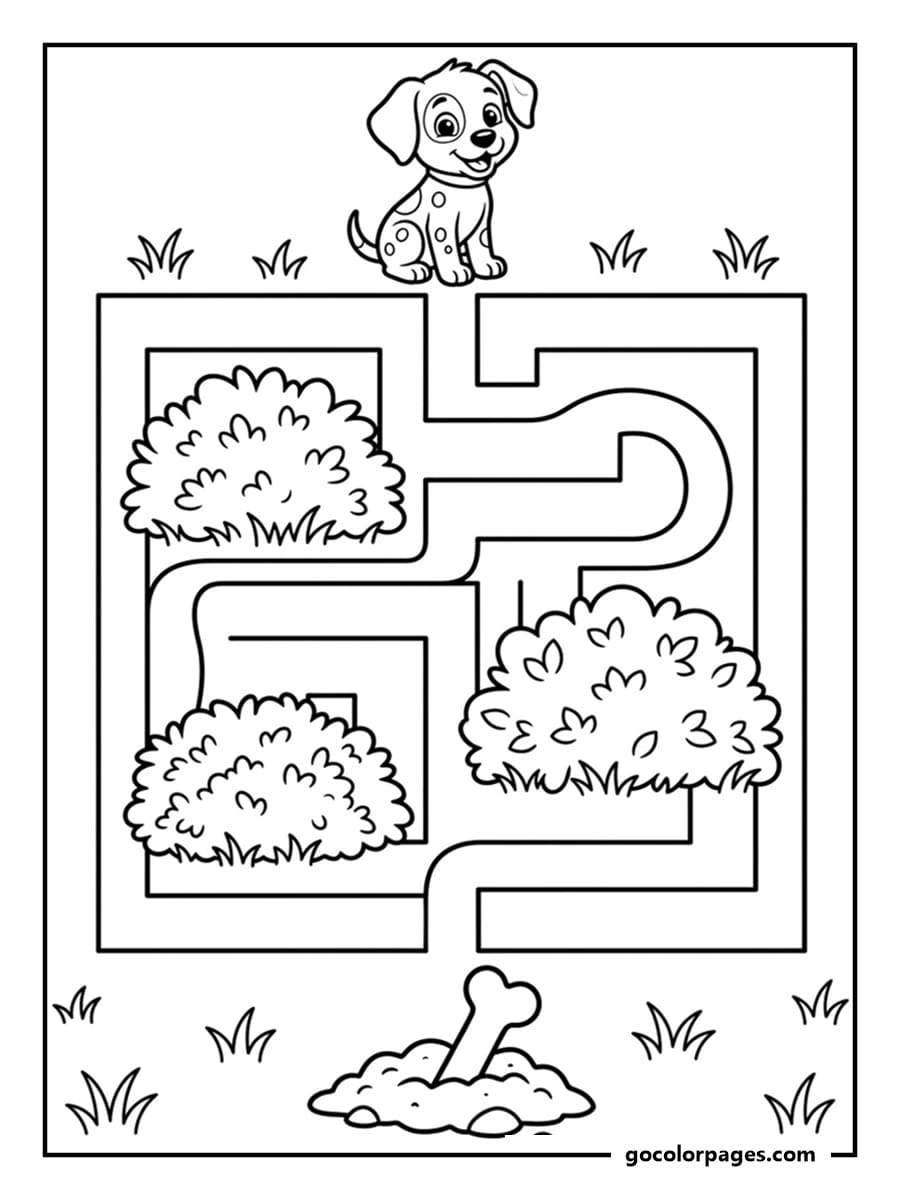
Most activity sheets only hold a child's attention for as long as it takes to scrub wax across the center character. Maze sheets earn a permanent spot in our master printable coloring pages and printable coloring pages for kids libraries because they ask the brain to do two completely different jobs in sequence scanning two junctions ahead of the pencil tip to solve a spatial puzzle, then slowing down to bring the surrounding obstacle course to life.
Yet handing an eight-circuit geometric labyrinth to a four-year-old is a recipe for crumpled paper, just as a three-turn preschool path bores a fourth-grader in ten seconds flat. We organize our printable maze packs into six distinct structural tiers so you can match corridor width and branching complexity to the exact hands at your table.
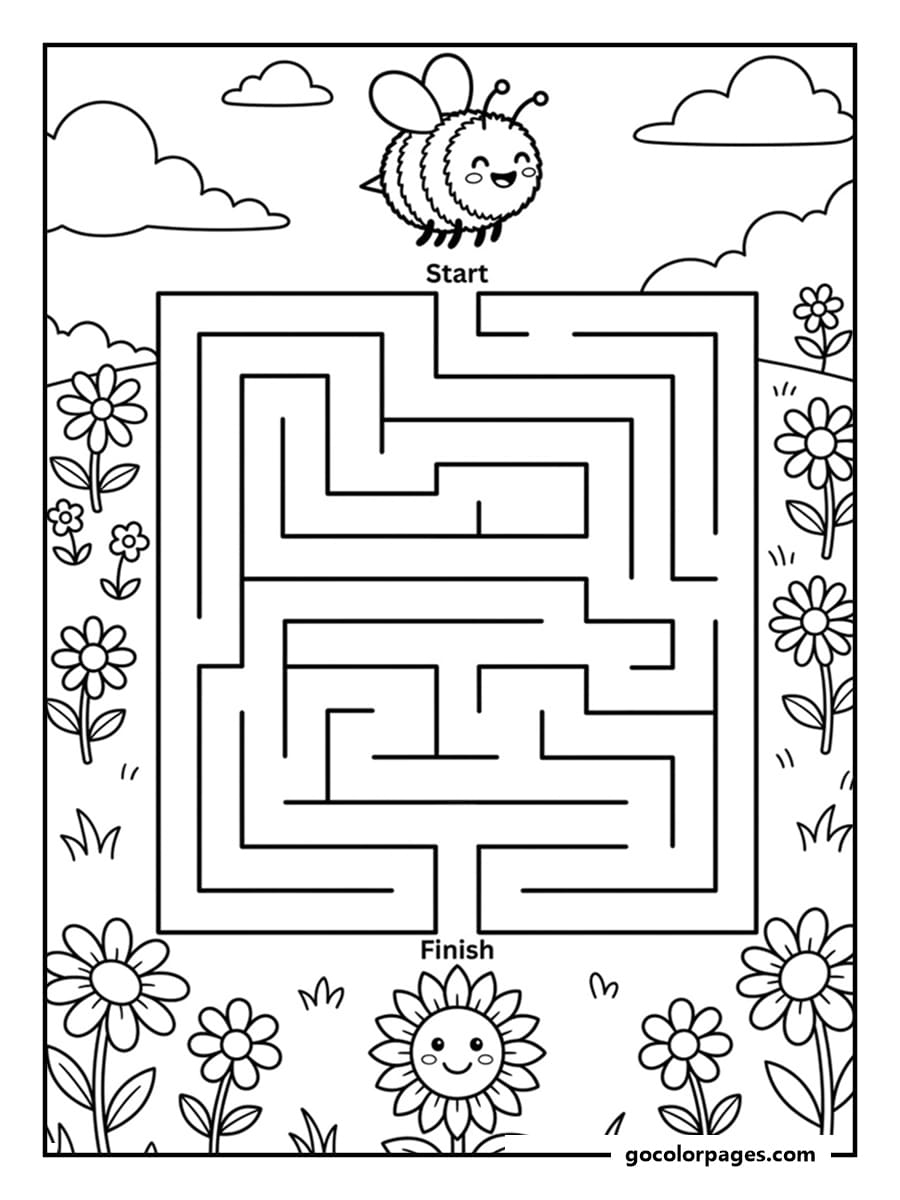
- Easy Preschool Finger-Trace and Wide-Corridor Mazes for Toddlers: Drawn with generous half-inch lanes and only two or three gentle turns like helping a fuzzy bumblebee reach a single sunflower that pair naturally with our cute and easy coloring pages for ages three to five.
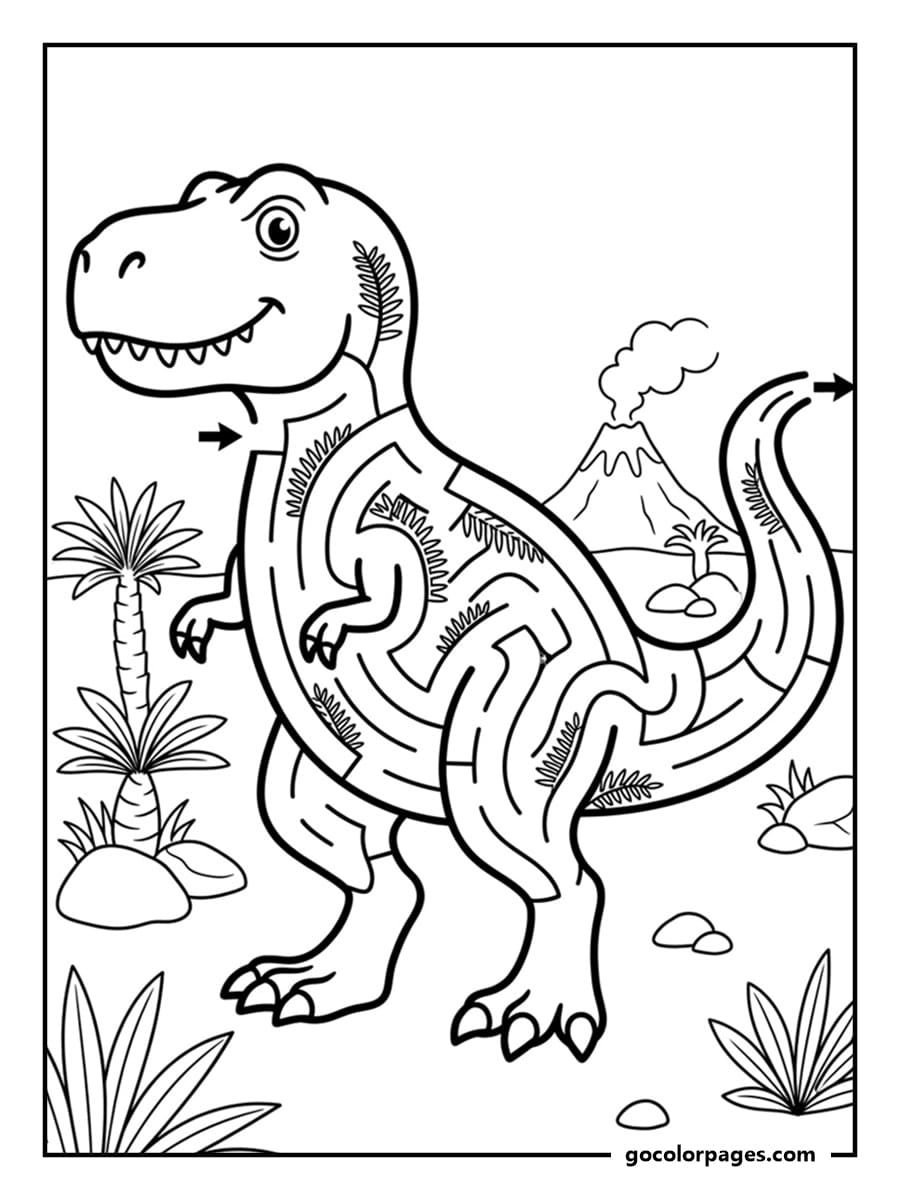
- Cute Shaped Animal, Dinosaur, and Sea Creature Silhouette Mazes: Character puzzles where the branching hallways wind directly inside the belly of a roaring T-Rex, a coiled snail shell, or a diving blue whale from our animals coloring pages collection.
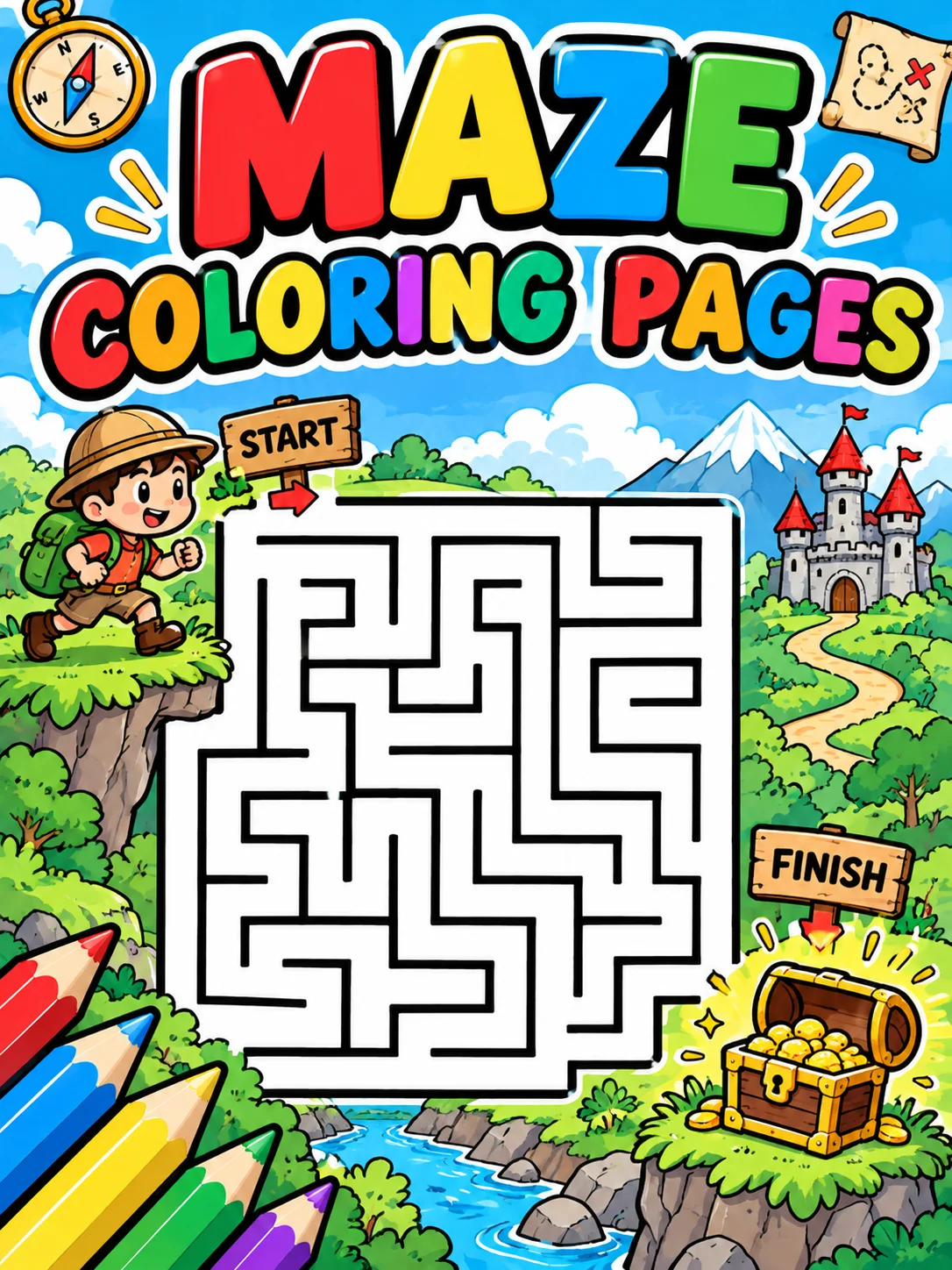
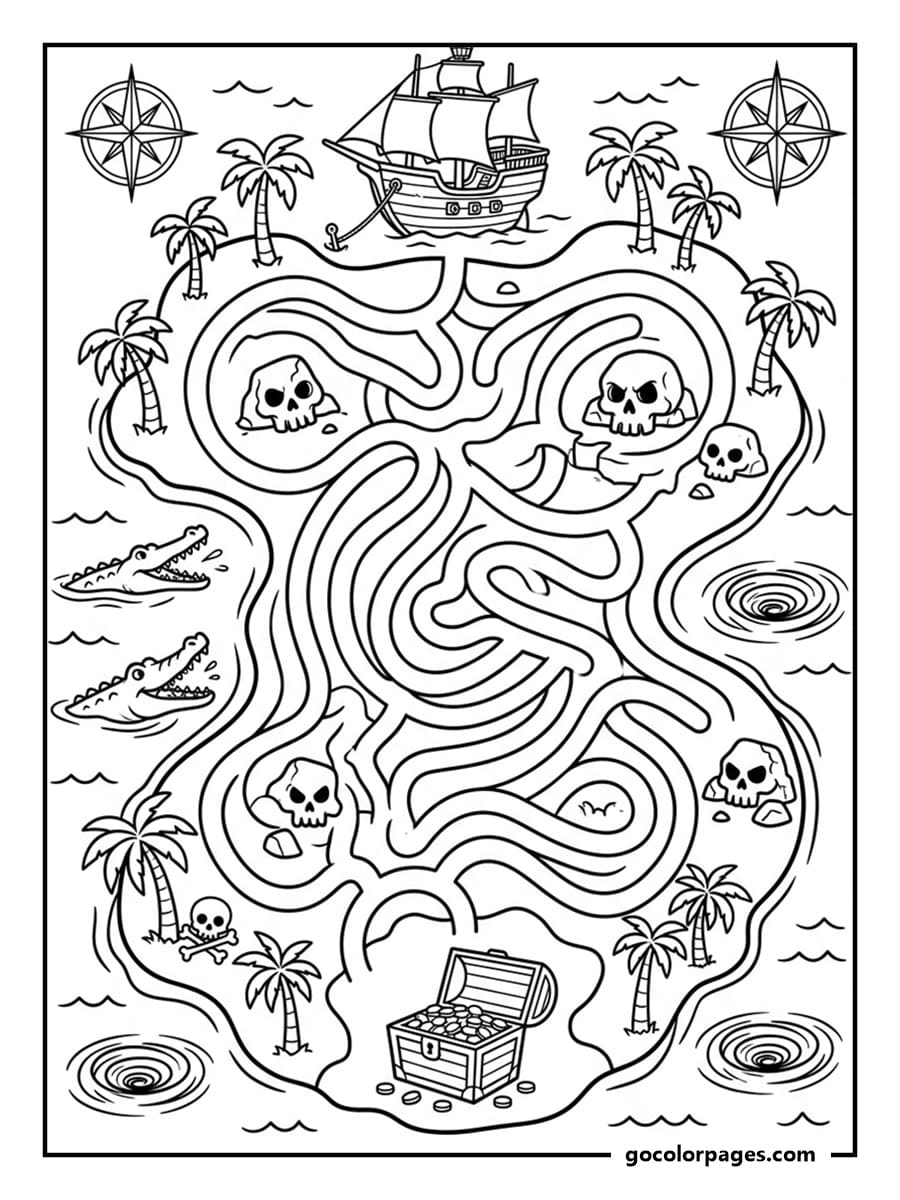
- Storybook Adventure Quests From Pirate Treasure Maps to Space Rockets: Narrative obstacle courses inspired by Hiro Kamigaki's Pierre the Maze Detective, where kids dodge snapping crocodiles, bubbling lava pits, or asteroid belts to connect the
STARTbanner to theFINISHchest. - Alphabet Letter, Number, and Sight-Word Classroom Mazes: Block-letter
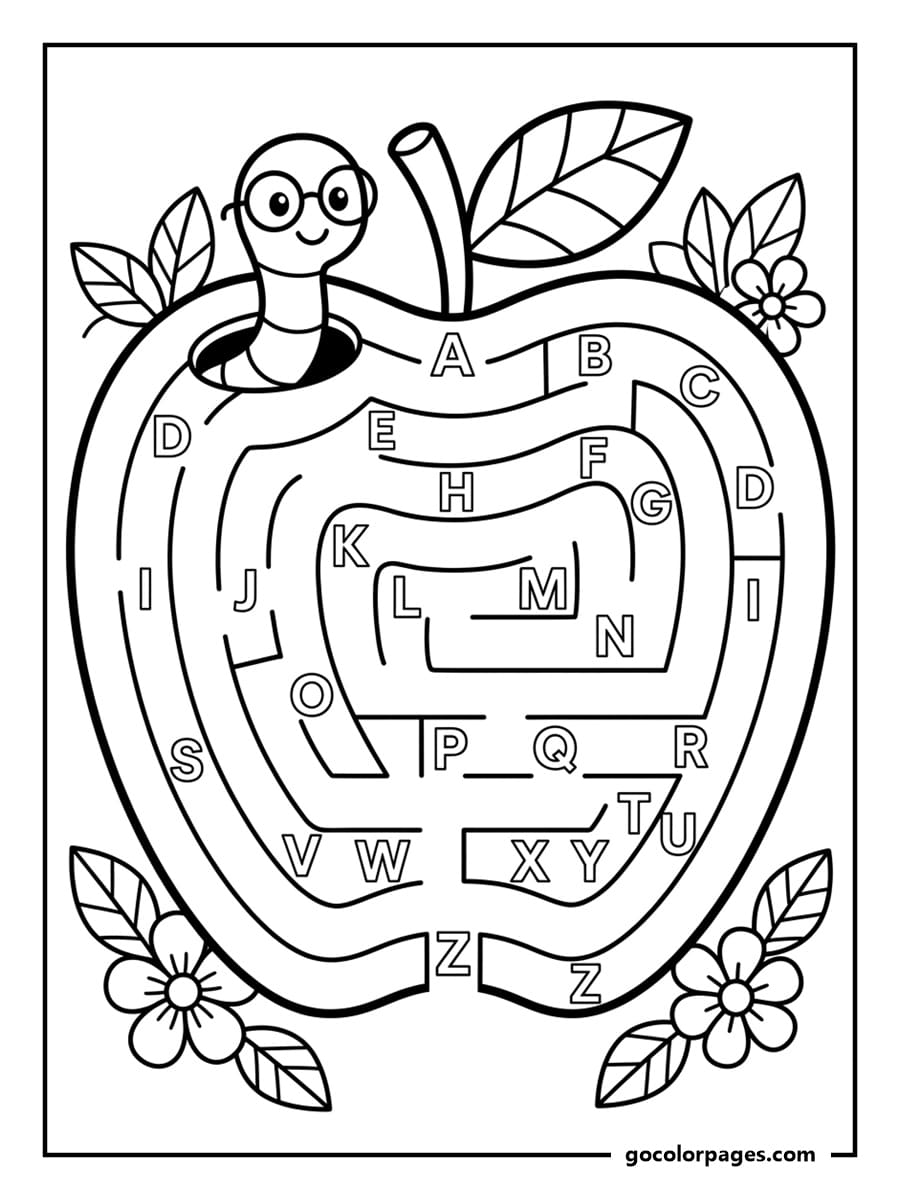
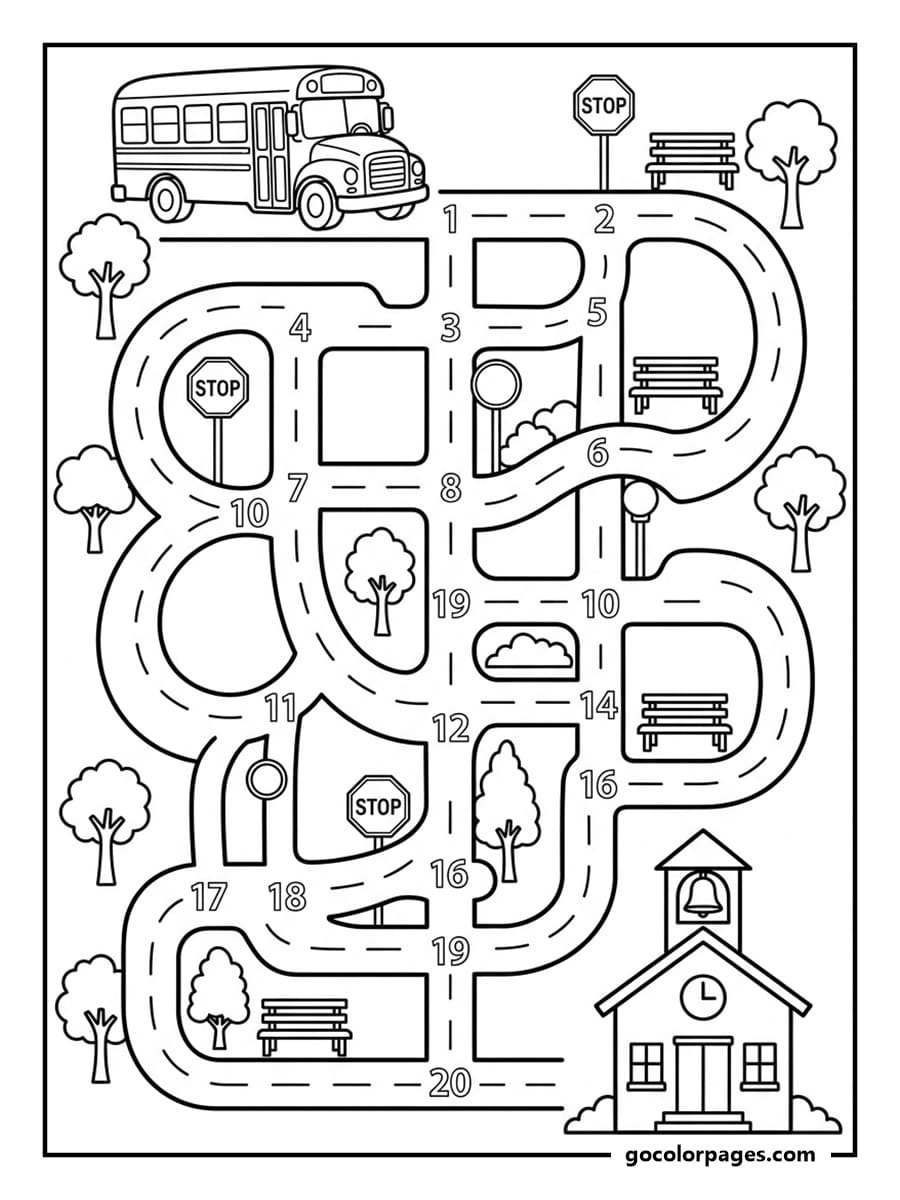
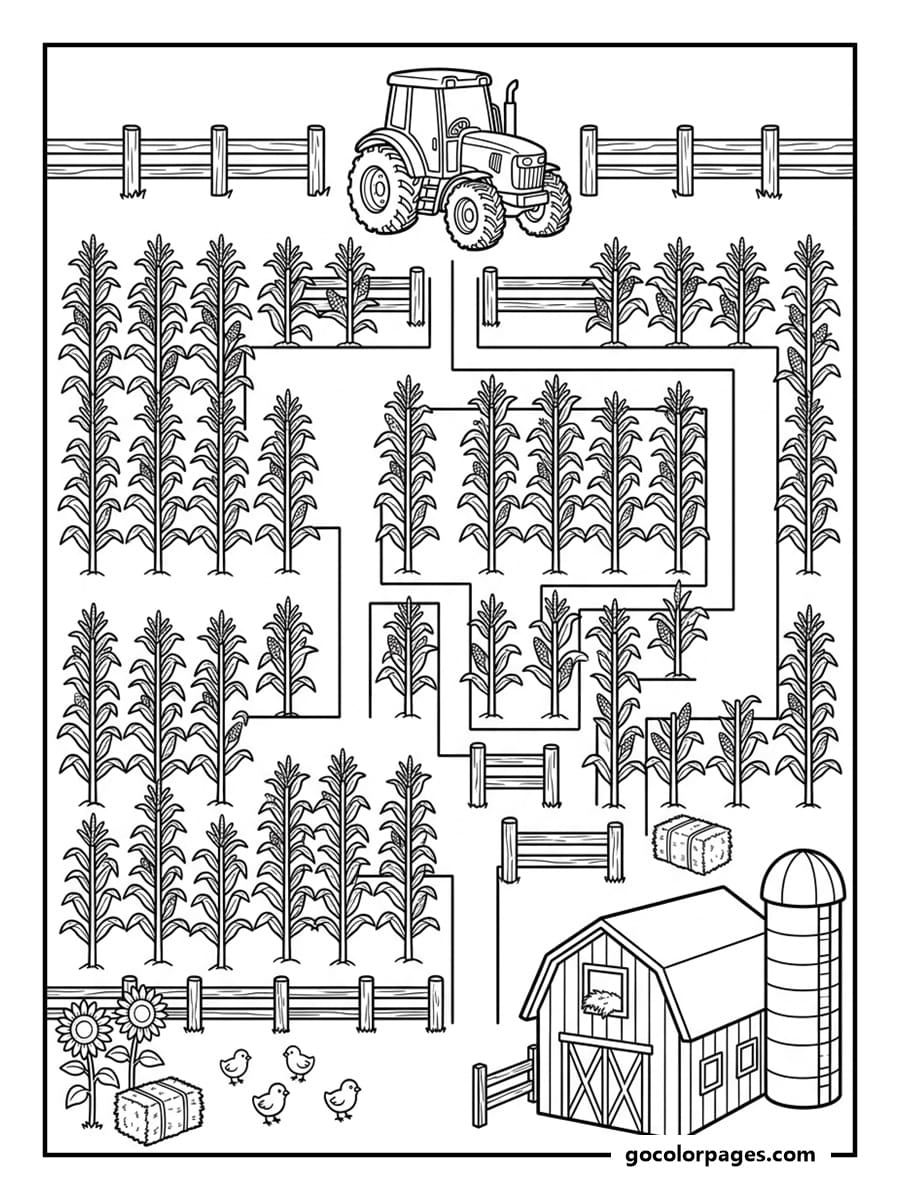
A–Zand number1–20frames where early readers trace the letter's outer contour while navigating internal cul-de-sacs during morning bell-work. - Seasonal Holiday Mazes for Halloween, Autumn, and Christmas: Spooky haunted-house corridors, harvest pumpkin-patch corn mazes, and Santa's rooftop chimney runs curated alongside our celebration coloring pages.
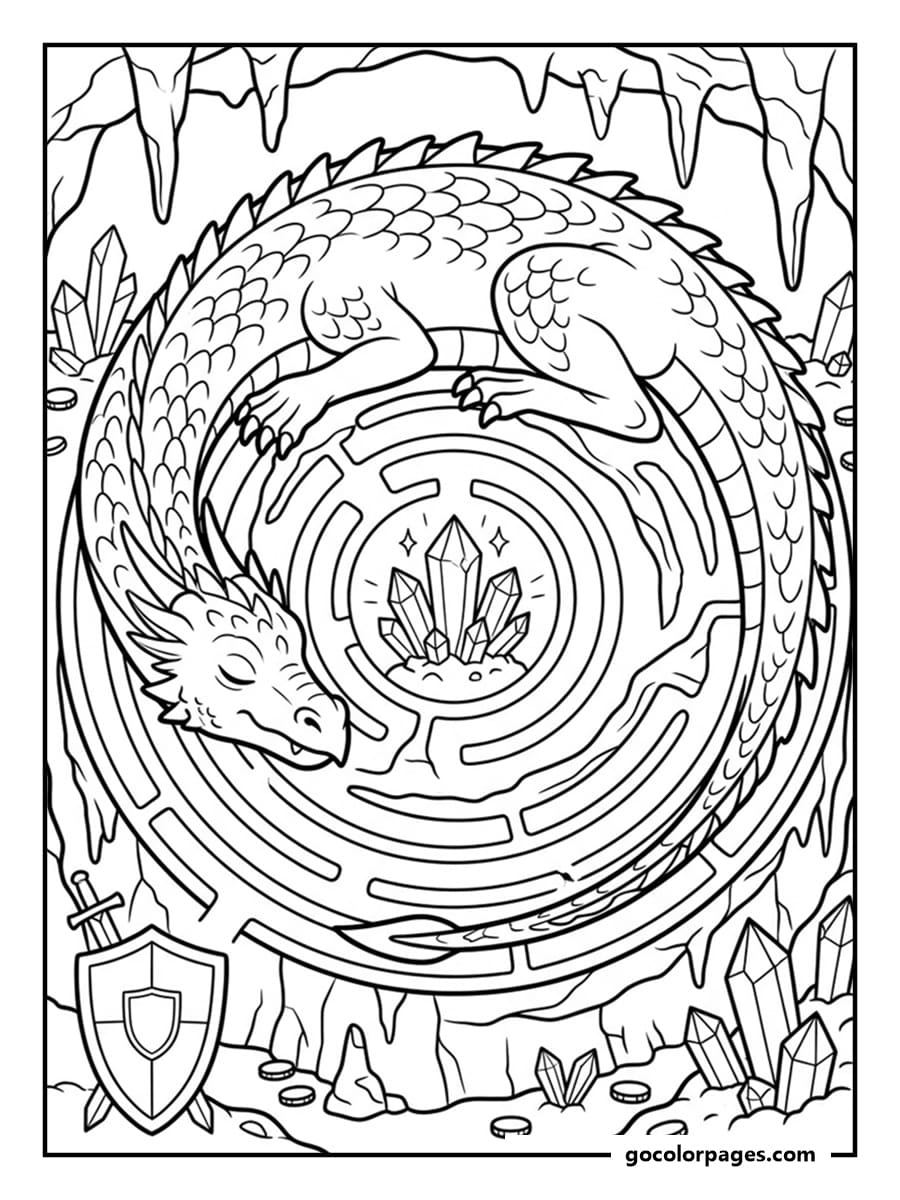
- Intricate Circular Mandala Mazes and 3D Isometric Labyrinths for Adults: Concentric ring grids, over-and-under viaduct pipes, and medieval stone labyrinths engineered for 0.4-millimeter fine-liner pens and fans of intricate adult coloring pages.
"Match the corridor width to the child's grip a four-year-old needs half-inch lanes they can trace with an index finger first, while ten-year-olds thrive on multi-bridge quests that reward working backward from the finish line."
How to Solve and Color Maze Coloring Sheets Without Losing the Winning Path
Read the instructions on almost any generic worksheet site, and they'll tell you to "solve the maze with a pencil before coloring." Try that on a challenging puzzle, and you'll see why it fails: dragging a continuous graphite line down three wrong hallways leaves muddy gray eraser tracks across half the sheet before you ever uncap a marker.
Even worse is wall-versus-corridor optical inversion. Because a printed maze is just alternating strips of white paper separated byentical black ink lines, your eye inevitably swaps the solid walls with the open walking lanes halfway through coloring causing kids and adults alike to color straight across an open doorway or camouflage their solved route inside a rainbow of competing wall colors.
- Scout With Erasable Breadcrumb Dots Instead of Solid Lines: Never drag a continuous pencil line down an untested corridor; hover your pencil tip ahead of your eyes and place a tiny, whisper-light dot strictly at each branching fork until you reach
FINISH, so backing out of a dead end takes one tap of an eraser. - Reverse-Engineer Tough Grids From the Finish Goal Back to Start: Professional puzzle designers build hard mazes by radiating dozens of false decoy branches outward from the
STARTarrow, meaning you can cut solving time in half by tracing backward from the singleFINISHexit. - Light Up the Winning Route Like Ariadne's Golden Thread: Named after the mythical golden spool Princess Ariadne gave Theseus to escape the Minotaur's Cretan labyrinth, color your solved route in a glowing warm gradient flowing from canary yellow (
Y13) into tangerine orange (YR04) and coral rose so the winning highway shines across the room. - Lock Raised Walls in Cool Greens or Slates and Leave Dead Ends Pale: Color all solid maze walls in a unified cool family like boxwood emerald, slate blue, or deep violet, and leave unvisited dead-end corridors bare white paper or whisper-pale ice gray (
C00) so your warm solution path never competes for attention.
Three Shading Tricks for 3D Hedge Walls Isometric Pipes and Story Mazes
Once you lock in your warm solution path, a computer-generated square or circular maze can still look like a flat math worksheet if you color the walls with plain, edge-to-edge strokes. Flat black grid lines sit flush against the paper with zero sense of height or depth.
Adding a directional light source and surface texture takes less than four minutes. Those tiny shifts turn a two-dimensional grid into an aerial view of a carved stone dungeon, a living garden hedge, or a bustling storybook map.
The 45-Degree Drop-Shadow Trick That Turns Flat Grids Into 3D Walls
Whether you print a classic rectangular grid or a concentric ring puzzle, you can make the walls pop three-dimensionally off the table using a single gray or dark green marker. Picture afternoon sunlight shining diagonally from the top-left corner of your desk.
Take a cool gray (W3), moss green, or deep indigo fine-liner and draw a uniform 1.5-millimeter shadow strip strictly along the bottom edge and right-hand outer edge of every interior wall segment, stepping slightly into the white corridor floor. Leave the top and left edges of every wall unshadowed. Instantly, the human eye reads the bare white corridors as a sunken flagstone floor and the black lines as raised three-dimensional walls casting crisp afternoon shadows.
Sculpting Tudor Boxwood Hedge Mazes and Over-Under Isometric Pipes
Garden mazes modeled after the famous 1690 trapezoid boxwood maze at Hampton Court Palace in England lose all their leafy charm when someone colors the wall bands with straight, ruler-flat marker stripes. Instead, build organic foliage using tiny, overlapping C-shaped colored-pencil loops: layer sunlit chartreuse-lime (YG03) along the top ridge of the hedge wall, fill the middle with rich forest green (G17), and tuck deep pine-teal (BG78) along the shadowed base.
When you switch to 3D isometric pipe and viaduct mazes where pathways weave over and under each other, borrow the cylinder highlight rule from our how to draw tutorials. Leave a razor-thin strip of bare white paper running straight down the center spine of every rounded pipe, and drop a dark two-millimeter cast shadow on both sides of the lower lane every time it ducks underneath an overhead bridge.
Selective Chroma Spotlighting on Crowded Story and Adventure Mazes
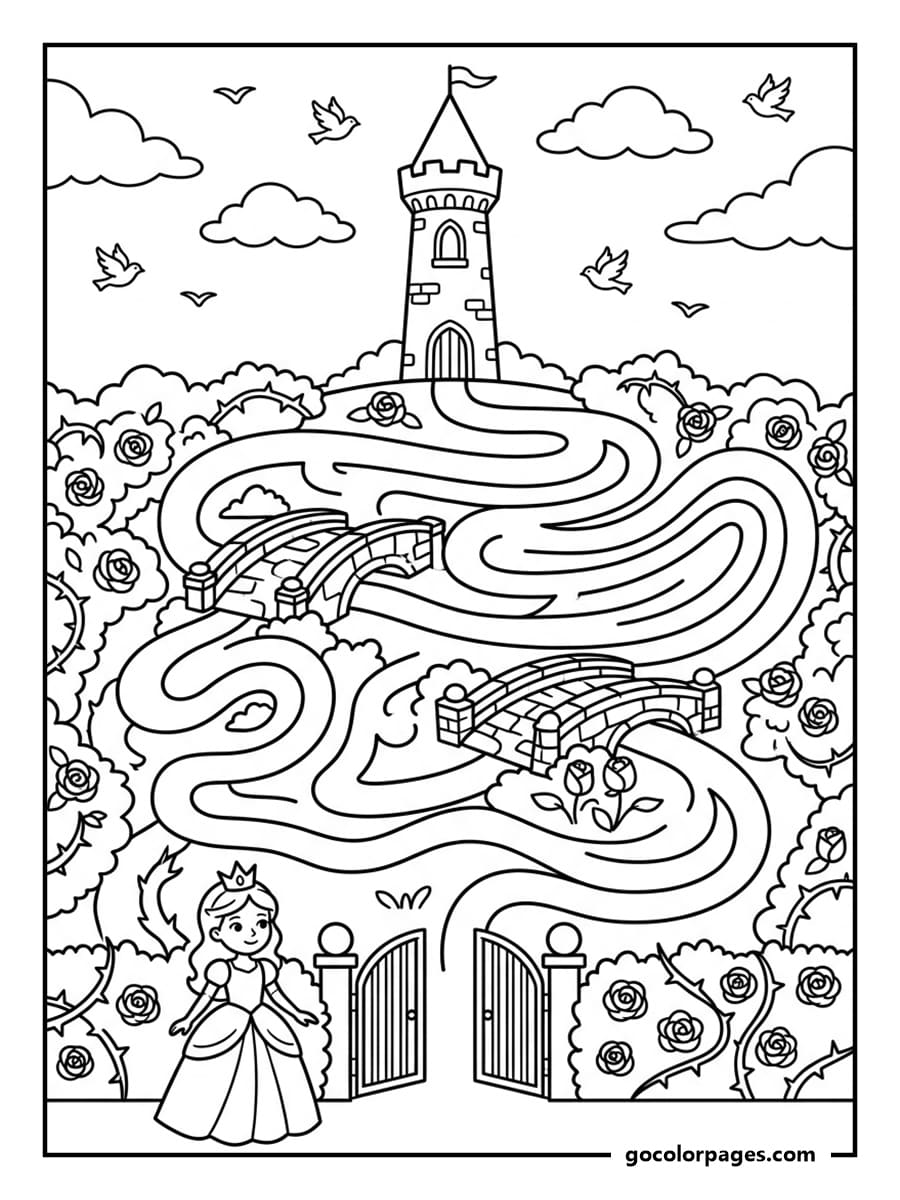
On narrative "wimmelbilder" adventure mazes packed with medieval castles, pirate coves, or outer-space stations, coloring every background cloud, ocean wave, and cobblestone at 100% marker intensity buries the puzzle corridors in visual noise. Your eye shouldn't have to fight fifty neon background objects to find the path.
Use Selective Chroma Spotlighting to organize the page like an illustrated game board. Shade the surrounding water, hills, and sky in soft, 30%-pressure pastel colored-pencil washes, then switch to full-saturation felt-tip markers strictly for the START hero, the FINISH treasure chest, your warm golden solution trail, and the three or four mid-maze checkpoint icons like golden keys, drawbridges, or warp portals.
Why Unicursal Labyrinth Coloring Pages Are Secret Weapons for Calm Focus
Nearly every printable site on the internet lumps mazes and labyrinths into the exact same bucket, yet they do opposite things to your nervous system. A true maze is multicursal it is packed with branching junctions, trick cul-de-sacs, and dead ends designed to wake up your analytical prefrontal cortex through trial and error.
A true labyrinth is unicursal. Modeled after the ancient seven-circuit Classical Cretan Labyrinth or the famous eleven-circuit stone Chartres Cathedral Labyrinth laid in a French nave in 1201, a unicursal labyrinth has zero dead ends and zero false turns just one continuous, folding path that winds through every ring before arriving peacefully at the center rosette.
- Twelve-Step Rainbow Ombré Path Flowing to the Center Rosette: Because a unicursal labyrinth never splits or dead-ends, you can line up twelve colored pencils in spectral order from lemon yellow at the entrance through emerald, cerulean, amethyst, and magenta at the center rosette blending a seamless color transition every time the path makes a 180-degree hairpin turn.
- Breathing Cadence Pacing for Five-Minute Classroom Resets: Elementary counselors and occupational therapists use circular labyrinth printables after noisy recess blocks by having kids inhale slowly while coloring an inward sweep and exhale while rounding each turn.
- Metallic Gel-Pen Stone Mason Joints on Medieval Rosettes: On historic Chartres or Gothic labyrinth sheets, wash the narrow stone divider walls in warm parchment buff and pewter gray, then trace the six-petal central rosette with a 0.8-millimeter metallic gold or copper gel pen.
"Branching mazes wake up your problem-solving brain with choices and traps; single-path labyrinths quiet a racing mind by letting your pencil flow from entrance to center without a single dead end."
Four Hands-On Games and Reusable Crafts Using Printable Maze Sheets
The only downside to a great paper maze is how fast a puzzle fan burns through it: three minutes to scout the route, ten minutes to color the world, and the puzzle can never be solved a second time. If you are prepping a long highway road trip, an occupational therapy fine-motor bin, or a rainy-day classroom station, you can make a single printed sheet last all month.
These four low-prep tabletop builds turn flat maze printables into reusable race boards and three-dimensional skill games.
- Dry-Erase Page-Protector Road-Trip Race Binders: Color only the solid maze walls, start/finish characters, and border scenery first while leaving every walking corridor blank white; slide ten colored sheets into heavy-duty clear binder page protectors, clip them onto metal rings, and hand kids fine-tip dry-erase markers so siblings can race and wipe the same puzzles fifty times in the backseat.
- Cereal-Box and Drinking-Straw 3D Marble Tilt Labyrinths: Glue a colored wide-path maze onto the inside floor of a shallow cardboard cereal-box lid, snip colorful plastic drinking straws or bendable wax yarn sticks to match the black wall segments, glue them upright along the lines, and tilt the box with both hands to steer a glass marble or dried chickpea from
STARTtoFINISH. - Two-Player "Mission Control" Blindfolded Compass Races: Tape a colored adventure maze flat to the kitchen table, have Player One close their eyes with a crayon tip resting on
START, and let Player Two act as Mission Control calling out "North two inches, East past the sleeping dragon, South into the treasure cove!" to build cardinal direction vocabulary. - White-Crayon Resist "Invisible Trap" Watercolor Mazes: Before handing a wide-corridor maze to your child, use a plain white wax crayon to secretly draw three invisible
Xquicksand traps and two bonus stars inside the blank white lanes; as your child paints their solution path with a washable watercolor brush pen, the hidden white wax traps magically appear through the wet ink.
Frequently Asked Questions About Maze Coloring Pages
Should you solve a maze coloring page before coloring the walls and background?
Yes, always solve the puzzle before coloring the walls. Instead of dragging a dark pencil line down untested hallways which leaves smudged gray tracks inside dead ends place a tiny, erasable pencil dot strictly at each branching fork until you reach the exit, then lock in the winning route with a bright warm marker.
How do you color a maze so the winning path stands out clearly?
Use a high-contrast warm-versus-cool color split inspired by Ariadne's golden thread. Color the winning solution route in a glowing warm shade like lemon yellow, tangerine orange, or coral pink, color the solid maze walls in a cool shade like emerald green or slate blue, and leave dead-end corridors bare white paper.
What is the difference between a maze and a labyrinth coloring page?
A maze is a multicursal puzzle built with branching intersections, false turns, and dead ends designed to test spatial logic and visual planning. A labyrinth is a unicursal pattern with zero dead ends and one continuous winding path that leads smoothly to the center and back out for mindful relaxation.
How do you make a flat 2D maze coloring sheet look 3D?
Picture light shining from the top-left corner of the page and draw a narrow 1.5-millimeter strip of cool gray or dark green along the bottom edge and right-hand outer edge of every interior wall line. That simple two-sided drop shadow tricks the eye into seeing raised 3D hedges or stone dungeon walls.
Print One Maze Sheet and Try the Breadcrumb Dot and 3D Shadow Trick Today
You don't need an architect's drafting table or a fifty-piece marker case to make your next puzzle sheet look like an illustrated storybook game board. Print one free PDF maze right now and test these two quick techniques in under ten minutes.
- Scout One Complex Maze Backward With Pencil Dots (3 minutes): Pick any medium or hard maze sheet, start at the
FINISHgoal, and drop a tiny pencil dot strictly at the branching forks all the way back toSTARTbefore lighting up the winning trail with a yellow-orange marker. - Add Bottom-Right Drop Shadows to Five Wall Corners (4 minutes): Take a gray or dark green fine-liner pen and trace a thin 1.5-millimeter shadow strip along the bottom and right edges of five interior wall segments near the entrance to watch the flat grid pop into 3D relief.
When you print maze coloring pages for your kitchen table or classroom, do your kids gravitate toward cute shaped animal mazes, Pierre the Maze Detective-style treasure quests, or intricate 3D labyrinths and do you solve from START to FINISH or sneak backward from the exit?