
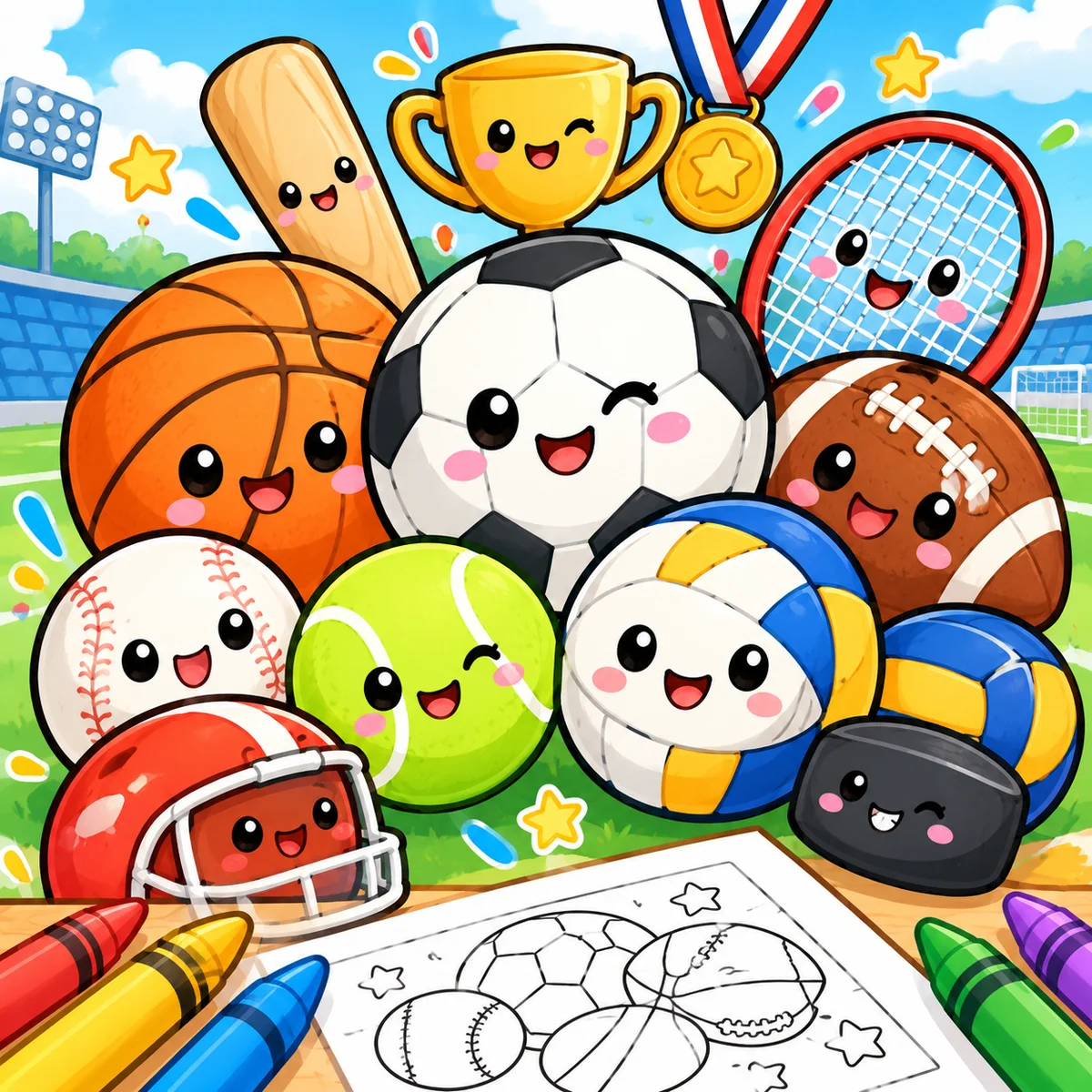
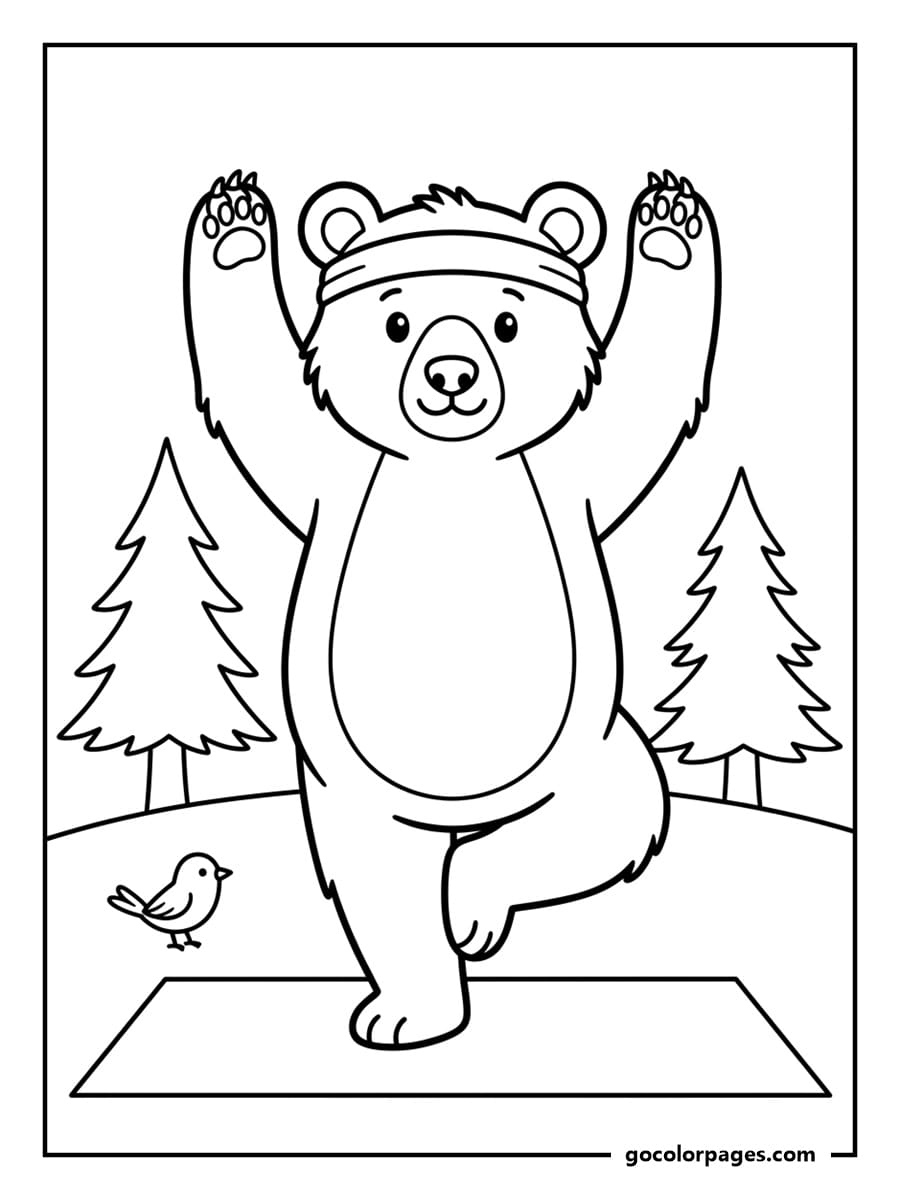
Sports coloring pages are a year-round staple for rainy-day rec-league practices, championship watch parties, and elementary P.E. units, yet most home printouts get abandoned halfway through the sheet. Young athletes and adult fans will spend ten careful minutes detailing a striker's cleats, a quarterback's facemask, or a point guard's sneakers, only to hit a wall when they reach the massive empty playing field underneath. Scrubbing a single flat green or orange crayon across half a page wears out your wrist in ninety seconds and buries the player's shoes in waxy mud, while leaving a white home uniform untouched makes the athlete look unfinished.
Across 160 youth sports banquets, after-school coaching clinics, and studio workshops, we found that making athletic line art look broadcast-ready comes down to three sideline habits. When you group sheets by playing surface, shade white home kits with cool stadium-shadow folds, and break open turf into alternating mower stripes, a static black-and-white page captures real ninety-mile-per-hour speed.
- Sort Printouts Across Six Playing Surfaces: Organize your downloads into Stadium Turf & Cleats, Hardwood Courts, Frozen Ice Rinks, Pool & Surf Lanes, Track & Skate Parks, and Customizable Team Jerseys so your background palette is locked in before you uncap a marker.
- Use the 80/20 Stadium-Blue Rule on White Jerseys: Keep 80% of a white home uniform bare paper while tucking two-millimeter wedges of icy sky blue or lavender into rib folds, and frame chest numbers with a one-millimeter contrasting border.
- Replace Solid Green Fields With Mower Stripes and Motion Wakes: Alternate one-inch horizontal bands of lime chartreuse and emerald green across grass pitches, drop vertical white light bars onto hardwood courts, and keep fastball trails bare white at the core.
Giant empty fields kill great action. Watch any young athlete tackle a stack of sports coloring pages, and you will see them spend ten careful minutes detailing a quarterback's helmet or a striker's cleats. Then they face the massive blank turf underneath, scrub a single dark green crayon edge to edge until their wrist aches, and bury the player's shoes in waxy mud. Swap that exhausting background scribble for alternating stadium mower stripes, high-contrast jersey folds, and bare-paper motion trails, and a static black-and-white outline looks caught at ninety miles per hour.
Six Athletic Collections Sorted by Playing Surface and Gear
Dumping four hundred unsorted athletic sheets into a single folder guarantees kids and adults will spend twenty minutes arguing over positions before anyone picks up a pencil. A hockey goalie, a surfer, and a Little League shortstop move through completely different physical environments, which means each sheet demands a different set of colors on your table.
When we organize our master library of printable coloring pages for families, coaches, and classroom teachers, we sort athletic templates by the surface under the player's feet rather than alphabetical sport names. Choosing your arena surface first tells you in three seconds whether to reach for earthy turf greens, warm honey-oak tans, or icy glacier blues.
- Stadium Turf, Cleats, and Diamond Classics: Bicycle-kick soccer strikers, diving football wide receivers, rugby scrums, and Little League batters frozen at home plate, complete with chalk foul lines and stadium floodlights.
- Hardwood Courts and Indoor Gymnasiums: Mid-air basketball slam dunks, volleyball net spikes, tennis baseline volleys, and Olympic balance-beam routines where polished oak floorboards and overhead scoreboards frame the leap.
- Frozen Rinks and Alpine Powder Slopes: Slap-shot ice hockey goalies, spinning figure skaters, curling stones, and halfpipe snowboarders built around crisp blade sprays and high-contrast winter gear.
- Pool Lanes, Surf Breaks, and Open Water: Butterfly-stroke swimmers, barrel-riding surfers, and whitewater kayakers that give your hand a break from dry land tones with foaming turquoise wakes and sunlit ripples.
- Track Ovals, BMX Ramps, and Street Skate Parks: Hurdle sprinters, airborne BMX riders, and kickflip skateboarders packed with concrete bowl curves, waffle sneaker treads, and checkered finish flags.
- Customizable Team Jerseys, Mascots, and Locker Pennants: Open-chest uniform templates, roaring sideline mascots, and blank championship banners where players can hand-letter their own last name and roster number before coloring.
"Choosing a sports sheet by its playing surface solves half your palette in three seconds an ice rink asks for glacier blues and slate, while a basketball key calls for warm honey oak and team neon."
The Home and Away Jersey Formula for Crisp Team Uniforms
Give a seven-year-old or a die-hard sports fan a blank player outline, and their first instinct is to put their favorite pro or local rec-league team uniform on the athlete. Trouble strikes the moment they try to color a white "Home" jersey like a classic pinstripe baseball uniform, a Real Madrid soccer kit, or a home basketball tank on white paper.
If they leave the shirt completely untouched, the character looks half-finished; if they scrub a standard gray crayon across the chest, the athlete looks like they rolled in wet cement. Professional uniform designers for the NFL, NBA, and FIFA solve stadium visibility from three hundred feet away using strict color-blocking ratios and high-contrast number borders. Borrowing three locker-room kit rules makes any custom jersey jump off the page.
- Shade White Home Kits With the 80/20 Cool Sky Fold Rule: Leave
- Shade White Home Kits With the 80/20 Cool Sky Fold Rule: Leave 80% of any white uniform, sock, or baseball pant completely bare white paper, and tuck crisp two-millimeter wedges of icy sky blue or pale lavender strictly inside the armpit creases, rib stretches, and waistband tuck.
- Frame Roster Numbers With a One-Millimeter Tackle-Twill Border: Before filling the jersey digits on printable coloring pages for kids, trace a razor-thin one-millimeter outline around the outside of the number in a contrasting trim shade such as athletic gold around navy digits, or bright white around crimson so the number never sinks into the chest fabric.
- Echo Collar Piping Down Into the Socks and Cleat Tongues: Lock a custom uniform together from head to toe by repeating the exact same two-color stripe pattern on the V-neck collar, shorts hem, wristband, and shin-guard socks.
How to Shade Leather Balls, Chrome Helmets, and Stitched Gear
A sports illustration lives or dies by the equipment at the center of the play. Because balls, helmets, and bats are compact geometric volumes, coloring them flat from edge to edge turns a speeding projectile into a cardboard cutout.
You don't need airbrushes or twenty blended markers to fake stitched cowhide, pebbled rubber, or polished polycarbonate shells. Mapping one small bare-paper highlight and curving your strokes along the seam lines gives athletic gear real weight in under two minutes.
Keeping Black Soccer Pentagons and Baseball Stitches From Vanishing
The classic 32-panel Telstar soccer ball modeled on a truncated icosahedron of twelve dark pentagons and twenty white hexagons is the single most common casualty on sports printouts. When kids or adults fill those twelve five-sided panels with a solid black marker or heavy black wax crayon, the dark pigment swallows the printed black seam lines and turns the ball into a lopsided inkblot.
Swap pure black for deep charcoal gray, midnight navy, or dark espresso on the twelve pentagons, and leave a tiny two-millimeter bare-white highlight dot near the upper-left corner of the top two dark panels. On the surrounding white hexagons and across the smooth leather of a 108-stitch baseball run a soft crescent of cool pebble gray strictly along the bottom-right curve before tracing the baseball's double stitches in bright scarlet red.
Curving Warm Sienna Shadows Around Basketballs and Football Pigskins
As anyone who has practiced how to draw three-dimensional spheres and ovals knows, straight up-and-down shading flattens a rounded ball instantly. A regulation Wilson basketball and an NFL leather pigskin both carry built-in black ribs and stitched laces that tell your hand exactly which way the surface curves.
Start by laying a glowing base of tangerine orange or warm golden amber near the upper-left ten-o'clock sun zone of the ball, leaving a tiny curved dash of bare white paper so the pebbled leather looks freshly inflated. Then pull curved, C-shaped pencil or marker strokes of burnt sienna and dark mahogany around the bottom-right belly, following the contour of the black rubber channels from pole to pole.
Faking Mirror Chrome on Football Helmets, Bats, and Trophies
Football helmet shells, tinted visor shields, and aluminum baseball bats act like curved convex mirrors that reflect both the stadium sky above and the turf below. Coloring a helmet shell or metal bat with a single flat gray or team-color crayon strips away all its protective shine.
Divide the curve of a helmet shell or aluminum bat barrel horizontally in half with a faint pencil line. Blend your team color or silver down from the crown toward a crisp, three-millimeter bare-white horizon band running right across the temple, then tuck a narrow strip of dark charcoal or turf green directly underneath that white band to mimic the reflected playing field.
Coloring Mowed Stadium Turf, Glossy Courts, and 90 MPH Motion Trails
Nothing drains the joy out of a coloring session faster than staring at thirty square inches of empty grass, court floor, or swimming pool water around your athlete. Trying to fill that massive background zone with a single marker causes streaks, drains ink, and tires out young hands before the page is done.
In the 1960s and 1970s, legendary Olympic sports painter LeRoy Neiman and high-speed photography pioneer Eadweard Muybridge proved that human eyes read athletic speed through broken rhythm and directional light slashes rather than solid walls of color. Breaking your playing surface into geometric bands cuts background coloring time in half while doubling the sense of motion.
- Alternate One-Inch Mower Stripes Across Grass Fields: Never color a soccer pitch, football gridiron, or baseball outfield one solid green; rule three or four horizontal bands across the grass and alternate bright lime chartreuse with deep emerald green just like a stadium groundskeeper's lawn roller.
- Drop Vertical White Reflection Bars Onto Hardwood Courts: Color basketball keys and gymnasium floorboards in warm golden ochre and honey tan, but leave three vertical, four-millimeter strips of bare white paper running straight down beneath the hoop to mimic overhead arena lights bouncing off polished varnish.
- Keep Bare-White Cores Inside Fastball and Slap-Shot Trails: Whether you are relaxing with bold cute and easy coloring pages or shading detailed intricate adult coloring pages, leave the center wake directly behind a flying ball or spinning skate blade pure white paper, and feather electric cyan, canary yellow, or fiery orange strictly along the outer speed lines.
- Scumble Infield Dust and Ice Spray With a Peeled Crayon Side: Peel the paper wrapper off a warm taupe, yellow-ochre, or glacier-blue crayon, lay it flat on its side, and rub broken, cloud-like ovals around sliding cleats or hockey skates so the white paper tooth shows through like flying dirt or shaved ice.
"A real stadium pitch is never one flat green crayon alternating light lime and deep emerald mower stripes cuts your coloring time in half while making the grass look broadcast-ready."
Turning Finished Sports Printouts Into Roster Trading Cards and Banquet Pennants
Youth coaches and team parents constantly hunt for affordable activities to keep twelve energetic players busy during rainy-day indoor practices or end-of-season pizza banquets. Leaving colored sports sheets loose on a folding table guarantees they will get crumpled under water bottles before the trophies are handed out.
When we help local rec leagues set up banquet tables often pairing athletic templates with championship cups from our celebration coloring pages three ten-minute cardstock builds consistently turn flat printouts into locker-room keepsakes.
- Nine-Up 2.5 by 3.5 Inch Custom Team Trading Cards: Open your PDF printer dialog, select "Multiple" or "9 Pages Per Sheet," and print action templates onto heavyweight cardstock so each frame shrinks to standard Topps or Panini trading-card size; let players color their own uniform number on the front, write their position and season stats on the back, and slide the cut cards into clear plastic penny sleeves.
- Wooden-Dowel Sideline Pennant Flags: Trim a colored mascot, jersey, or stadium sheet into an eleven-inch horizontal triangle, wrap the wide left paper margin around a 12-inch quarter-inch wooden craft dowel, and secure the seam with double-sided tape so siblings can wave custom team pennants on Saturday morning sidelines.
- Magnetic Locker-Door Starting Lineup Jerseys: Print blank jersey templates at 50% scale ("4 Pages Per Sheet"), have every athlete on the roster color their uniform and letter their surname across the shoulders, seal both sides with clear packing tape, and attach a two-inch adhesive magnet strip to the back for metal bedroom doors or the coach's tactical clipboard.
Frequently Asked Questions About Sports Coloring Pages
How do you color a white sports jersey on white paper so it doesn't look unfinished?
Leave roughly 80% of the white uniform completely bare paper so your eye reads it as crisp, sunlit fabric, then color the collar trim, sleeve cuffs, and chest numbers in bold team shades. To give the white shirt three-dimensional shape without making it look dirty, tuck a two-millimeter wedge of icy sky blue or pale lavender strictly inside the armpit creases, rib folds, and bottom waistband.
How can I color a soccer ball without the black pentagons swallowing the printed lines?
Avoid filling the twelve five-sided panels on a soccer ball with a pure black marker or heavy black crayon, which erases the printed seam contours and turns the ball into a flat blotch. Shade the dark pentagons with charcoal gray or deep navy blue instead, and leave a tiny two-millimeter bare-white highlight dot in the upper-left corner of the top dark panels so every geometric seam stays crisp.
What is the easiest way for kids to color a big grass field without getting tired?
Instead of scrubbing one green crayon across the entire bottom half of the page, have kids divide the grass into three or four horizontal strips and alternate between light yellow-green and deeper emerald green like mowed stadium turf. For even faster coverage on wide outfields, peel the paper off a green crayon and rub the flat side horizontally across the sheet to lay down a soft, even grass texture in ten seconds.
How do I print sports coloring pages as mini trading cards for a whole youth team?
Open your PDF file in Adobe Acrobat or your system print menu, choose the "Multiple" layout option, and set "Pages Per Sheet" to 9 (a 3-by-3 grid) on 65 lb or 110 lb white cardstock. Once printed and cut along the outer borders, each miniature sports sheet measures roughly 2.5 by 3.5 inches the exact dimension required to slip inside standard plastic trading-card sleeves and collector binders.
Lace Up Your Markers and Try the Stadium Mower Stripe Tonight
You don't need a fifty-piece studio marker kit to make a printed striker, gymnast, or point guard look like they are moving at full game speed. Grab any athletic printout from your folder and test two quick sideline upgrades in the next ten minutes.
- Test the 80/20 Sky-Blue Fold on a White Home Jersey (3 minutes): Pick any player sheet, color the collar piping and chest number in your favorite team's brightest shade, and tuck a thin sliver of pale sky blue strictly under the ribs and sleeves to watch the bare white shirt turn into sculpted 3D fabric.
- Stripe the Pitch With Two Greens (4 minutes): Pull one lime-chartreuse crayon and one forest-green crayon from your box, divide the grass beneath your athlete's cleats into three horizontal bands, and alternate the two greens to build a broadcast-ready stadium lawn with zero wrist fatigue.
Which sport takes over your kitchen table or classroom most often soccer pitches, basketball courts, football fields, or gymnastics mats and what team colors are going onto your jerseys first?